Android Developer Verification: 2027 Rollout and Requirements
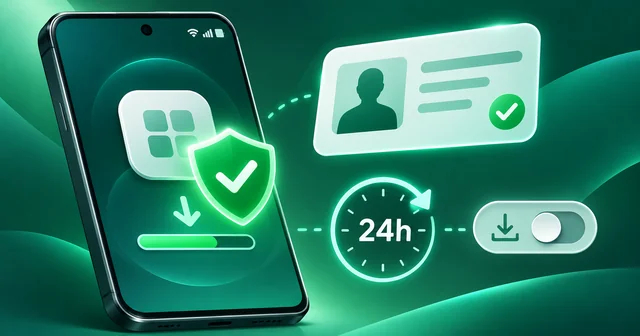
Android developer verification requirements are simple to state: from January 2027, apps installed on certified Android phones must come from a developer who has verified their identity and registered the app's package name with Google. Unregistered apps will still install, but only through the power-user "advanced flow" or ADB.
What Happened
On 19 November 2026, Google published "Expanding Android developer verification in 2027" on the Android Developers Blog, written by Matthew Forsythe, Director of Product Management. The post sets out how a rule that has so far applied to four countries will become a worldwide one.
The first phase went live on 30 September 2026 for participating app stores in Brazil, Indonesia, Singapore and Thailand. Google says the global rollout "will begin in January 2027" in partnership with seven app distributors: Google Play, Galaxy Store, Honor, Oppo, Xiaomi, Transsion and Vivo. From there, the protections will "gradually expand to all countries to cover all installation sources on certified Android devices over several months."
The post also gives progress figures. Google says millions of apps have been registered since verification opened to every developer in March 2026, and that those apps account for more than 99% of Android app installs worldwide. It says registering an app takes less than ten minutes.
Two changes came with the announcement. Limited distribution accounts, the free option for students and hobbyists that launched in August, can now share an app with 50 authorized devices instead of 20. And Google pointed developers to two automation tools it launched over the summer, the Android Developer ID Status API and the Android Developer Console API, which let teams register apps from their continuous integration pipelines.
Why It Matters
For most people, nothing will look different. If an app comes from Google Play or another big store and its developer has registered it, it installs the way it always has. Google's figure of 99% of installs is the point here: the developers behind almost every app people actually use have already signed up.
The change lands on the other 1%. That includes hobby projects passed around on forums, open-source apps whose maintainers have not registered, modified APKs, and apps from developers who would rather stay anonymous. Once the protections reach a user's country, an app like that will be blocked by default on a certified device. The user can still get it, but only after setting up the advanced flow.
Google's stated reason is scams. In its August 2025 announcement and the verification FAQ, the company argues that tying apps to a real identity makes it harder for criminals to put up a new malicious app as soon as the last one is taken down. Many of these scams start with a phone call and end with the victim sideloading a fake banking or delivery app, the kind of fraud Google is also targeting with its new scam protections in Google Messages and Android.
For developers who ship outside Google Play, the deadline is now real. Anyone whose users live outside the first four countries has until January to finish verification before their install experience starts to change, and the rollout will reach more countries in the months after.
How It Works
Verification has two halves: the developer proves who they are, and then claims their apps.
Choosing an account. Developers who publish only on Google Play are handled through Play Console, which registers most of their apps automatically. Developers who distribute anywhere else use the Android Developer Console. There, a full distribution account needs identity verification and, according to Google's FAQ, a $25 fee. An organization also needs a D-U-N-S number from Dun & Bradstreet, which is free but, the FAQ warns, can take up to 28 days to arrive. Google's new post tells Play developers to check Play Console for any unregistered packages, including ones they distribute outside Play.
Limited distribution. Students, hobbyists and personal projects can use a free limited distribution account instead. It needs no government ID; Google asks only for a Google Account with 2-Step Verification, a linked Google payments profile and a contact email. Under the limit Google raised on 19 November, an app shared this way reaches up to 50 authorized devices whose owners have explicitly approved it, through a QR code or link and a consent prompt on the phone. A limited account can later be upgraded to a full one, but not the other way round.
Registering a package. Developers then register each app's package name and prove ownership with the app's signing key. Google has published separate guides for apps on open-source registries and for app distributors that need to help their developer communities register.
What the phone checks. The FAQ says enforcement applies to certified Android devices running Android 8 (API level 26) or later, and that the checks are delivered through Google Play services. Because of that, phones still on older Android releases are covered as long as they run Android 8 or later.
The advanced flow. For users who want unregistered apps, Google described the advanced flow in March 2026. It is a one-time setup with five steps:
- Turn on developer mode in system settings.
- Pass a quick check confirming that nobody is coaching you through the process.
- Restart the phone and sign in again, which Google says cuts off any remote access or live call a scammer is using.
- Wait one day, then confirm with fingerprint, face unlock or the device PIN.
- Choose whether to allow unverified installs for 7 days or indefinitely.
After that, unregistered apps still show a warning saying they come from an unverified developer, with an "Install Anyway" button. The one-day wait is there to break the pressure a scammer builds on a phone call. Google cites a 2025 Global Anti-Scam Alliance report finding that 57% of surveyed adults had experienced a scam in the past year, with global consumer losses of $442 billion.
Exemptions. The FAQ lists several. Developers can install their own unregistered builds with ADB (Android Debug Bridge), which also covers people who modify an APK for their own device. Apps pushed from an organization's managed store to managed devices don't need verification. And because Google cannot do business with developers in comprehensively sanctioned countries, the checks don't run on certified devices physically located there.
What's Still Unknown
Google has not published a country-by-country schedule after January 2027. The post says only that protections will reach all countries "over several months". It also does not say exactly when the requirement moves past the seven launch partners to every installation source, such as direct website downloads, other app stores and file-sharing apps.
It is not yet clear how independent stores and open-source catalogues will handle apps whose maintainers never register. Google has published a registration guide for open-source registries, but whether a given project signs up is up to that project.
The details of the anti-coaching check in the advanced flow are also not public. Google has described its purpose but not how it decides whether a user is being coached. And there is no word on whether the $25 fee or the device limits will change again before the global launch.
Frequently Asked Questions
What are the Android developer verification requirements?
Developers must verify their identity in Play Console or the Android Developer Console, then register each app's package name and prove ownership with its signing key. A full distribution account costs $25 and needs ID verification; organizations also need a D-U-N-S number. Students and hobbyists can use a free limited distribution account with no government ID, shared to up to 50 authorized devices.
When is the Android developer verification rollout?
The first phase started on 30 September 2026 for participating stores in Brazil, Indonesia, Singapore and Thailand. Google says the global rollout begins in January 2027 with seven distributors: Google Play, Galaxy Store, Honor, Oppo, Xiaomi, Transsion and Vivo. Protections then expand to all countries and all installation sources on certified devices over several months, with no country-by-country dates published yet.
How does the Android sideloading advanced flow work?
It is a one-time setup. You turn on developer mode, pass a check that nobody is coaching you, restart and sign in again, then wait one day and confirm with your fingerprint, face or PIN. You can then allow apps from unverified developers for 7 days or indefinitely. Each install still shows a warning with an "Install Anyway" button.
Can you still sideload apps on Android after 2027?
Yes. Apps from registered developers sideload exactly as before, whether you download them from a website or another store. Apps from unregistered developers need either the advanced flow or an ADB install. Google says registered apps cover more than 99% of Android installs, so most sideloaded apps from known developers should be unaffected.
Does Android developer verification apply to ADB installs?
No. Google's FAQ says developers are free to install apps without verification using ADB, so they can build and test apps that aren't ready for wider release. The same applies to someone modifying an APK to install on their own device. The advanced flow's one-day wait does not apply to ADB installs.
Which Android versions does developer verification apply to?
Google's FAQ, last updated on 10 November 2026, says the requirements apply to all certified Android devices running Android 8 (API level 26) or higher. The checks are delivered through Google Play services, so phones on older releases are covered too, as long as they are certified and run Android 8 or later.
Do enterprise apps need Android developer verification?
Not when they are distributed through an organization's managed store to managed devices, because the IT admin has already vetted them. Google still recommends registering them. If the same app is installed from another source, or onto a phone the organization doesn't manage, a registered app installs without the warnings an unregistered one would get.
Related Reading
Google's change of direction on Android distribution started earlier this year. Our report on Google's new era for Android openness and the end of the Epic Games feud covers the billing changes, lower developer fees and the end of the Epic Games dispute that came before this rollout. If you build apps with AI tools, Google Play's personal apps for AI-built software explains another way to run your own apps without a developer account. For the scam side of the story, read about Android's Enhanced scam protection mode for Google Messages. And for a real example of what happens when software keeps running after nobody is accountable for it, see how an abandoned Popcorn Time updater nearly became a botnet.