Pixel Tag vs AirTag: How Google's $29.99 Tracker Compares
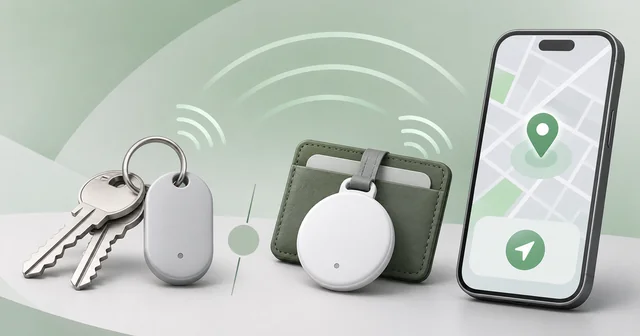
In a straight Pixel Tag vs AirTag comparison, the deciding factor is your phone, not the tag. Google's $29.99 Pixel Tag works only with Android 9 or later through Find Hub, and Apple's $29 AirTag works only with iPhone and iPad through Find My. They match on battery and water resistance; the Pixel Tag adds a ring-your-phone button.
What Happened
Google first showed the Pixel Tag at its August 2026 hardware event and put it on sale on November 11, 2026, as part of the November Pixel Drop. Google's November Pixel Drop post lists the price at $29.99 for one tag or $99.99 for a four-pack, and describes it as slim enough for a wallet with a battery that lasts more than a year.
9to5Google pointed out on November 10 that the tag was not yet orderable that day despite some early posts claiming it was, and that the November 11 date came straight from Google. TechCrunch, CNET, The Verge, Android Authority and Digital Trends all covered the launch, and most framed it the same way: this is Google's own answer to the AirTag, and the first Find Hub tracker Google has built itself after years of relying on partners such as Chipolo, Pebblebee and Motorola.
The Google Store product page gives the full specifications: 28 mm wide, 46.1 mm tall and 5.4 mm deep, 11.8 grams, IP67 water and dust resistance, Bluetooth Channel Sounding plus ultra-wideband (UWB), a user-replaceable CR2032 coin cell, a built-in speaker, an accelerometer and a one-year warranty. When we checked the store from India on November 11, it listed the tag "From ₹3,799" in a single colour, Fog.
Apple's side of the comparison is the second-generation AirTag, released in January 2026. It kept the $29 single and $99 four-pack prices of the 2021 original, along with the round 31.9 mm disc and CR2032 battery, but added a newer UWB chip that Apple says lets Precision Finding work from up to 1.5 times farther away, plus a speaker up to 50 percent louder, according to Apple's AirTag page and MacRumors' guide.
Why It Matters
Item trackers lock you into an ecosystem in a way few accessories do. A tracker is only as good as the crowd of phones around it that can hear its Bluetooth signal and quietly report where it is. Apple's Find My network uses iPhones, iPads and Macs. Google's Find Hub uses Android phones, which Google says number more than one billion. Neither network accepts the other's tags, so buying the "better" tracker for the wrong phone gets you nothing.
That is why the Pixel Tag matters more for Android owners than its spec sheet suggests. Until now, Android users who wanted an AirTag-like experience had to pick a third-party tag and accept its own app, its own quirks and often a missing feature or two. A first-party tag that pairs with Fast Pair, appears directly in the Find Hub app and on a Pixel Watch, and can be rung by asking Gemini is the closest thing Android has had to the AirTag's "it just works" setup.
It also matters for price watchers. The two tags now cost almost exactly the same in the US, so the decision is no longer about saving a few dollars. It is about which phone you carry, which network is denser where you live, and which small features you will actually use.
How It Works
Both tags work in two layers: a long-range layer that relies on other people's phones, and a short-range layer that guides you to the last few metres.
Long range: crowdsourced networks
When a Pixel Tag or AirTag is out of your phone's Bluetooth range, it keeps broadcasting a rotating, encrypted identifier. Any nearby phone on the matching network picks that signal up and sends an encrypted location report, which only the owner can read. Google's store page says location data is encrypted and not stored on the Find Hub network. Apple describes Find My the same way.
The difference is density and policy. Apple has had a dense network since 2021. Google's Find Hub launched later and, by default, only reports a tag's location when several Android devices see it, a privacy choice that makes it weaker in quiet areas. In its early review, 9to5Google called the network still "hit or miss" and said it is recovering from a messy launch. In a city, both work well. On a rural road, an AirTag has the stronger track record.
Short range: UWB and Channel Sounding
Once you are close, both tags use ultra-wideband radio to show an arrow and a distance counter on screen. The AirTag needs an iPhone 11 or later with Apple's U1 or U2 chip. The Pixel Tag uses UWB on phones that have it, which in Google's lineup has generally meant the Pro models, and it also supports Bluetooth Channel Sounding, a Bluetooth 6.0 feature that measures distance more accurately than signal strength alone on phones that support it.
9to5Google found the Pixel Tag's directional arrow reliable on a Pixel 11 Pro XL but said the cues dropped out at about 10 to 12 feet. Apple's second-generation AirTag claims a 50 percent longer Precision Finding range than the original, so on paper the AirTag is better for finding keys lost somewhere in a large room.
Spec comparison
Pixel Tag: $29.99, 28 x 46.1 x 5.4 mm, 11.8 g, IP67, CR2032 battery rated for over a year, UWB plus Channel Sounding, NFC, a physical button, Android 9 or later only.
AirTag (2nd generation): $29, 31.9 mm round and 8 mm thick, 11.8 g, IP67, CR2032 battery rated for about a year, second-generation UWB, NFC, no button, iPhone and iPad only.
Features one has and the other lacks
The Pixel Tag's clearest advantage is its button. Double-press it and your paired phone rings loudly, even on silent, which the AirTag cannot do. It also has three volume levels for its own chime, topping out at roughly 80 decibels according to TechCrunch, and a "Notify when left behind" option set during pairing. You can share a tag's location with up to 10 people, which suits family car keys.
The AirTag's advantages are its denser network, its longer Precision Finding range and its Lost Mode NFC page: anyone with an NFC phone, Android included, can tap a lost AirTag and see the owner's contact details. The Pixel Tag supports NFC, but tapping it opens the tag's settings on the owner's phone. Google says Lost mode can share your email, phone number and a message with a finder, but it has not described an AirTag-style tap-to-read page for strangers.
Neither tag has a built-in keyring hole. Google partnered with Bellroy for cases instead of making its own: a two-pack silicone Lite Case Duo for $24.99 and a leather tag case for $29.99.
What's Still Unknown
Several things are not yet clear from Google's launch materials:
- Country availability. Google's footnote says Find Hub works on Android 9 phones in all regions, and the Indian store already lists the tag, but Google has not published a full list of countries where it ships.
- Unknown tracker alerts. Since May 2024, iPhones and Android phones have warned users about unfamiliar Bluetooth trackers travelling with them under a joint Apple–Google standard. Launch coverage does not detail how the Pixel Tag behaves when it is separated from its owner, though it would be expected to follow that standard.
- Real battery life. Google's "over one year" figure is a claim. Samsung's Galaxy SmartTag 3 promises up to 550 days, so the Pixel Tag is not the leader on paper.
- Network growth. Whether Find Hub's coverage outside busy areas will catch up with Find My is the biggest open question for Android owners.
Frequently Asked Questions
Is the Pixel Tag better than the AirTag?
Neither is better for everyone, because each works with only one platform. The Pixel Tag is the better choice for Android owners, with a ring-your-phone button and native Find Hub support. The AirTag is the better choice for iPhone owners, with a denser network and longer Precision Finding range. On price, size, battery and IP67 rating the two are nearly identical.
What is the Pixel Tag price?
In the US, the Pixel Tag costs $29.99 for one tag or $99.99 for a four-pack, according to Google's November 2026 Pixel Drop post. That is one dollar more than Apple's AirTag at $29 and $99. Bellroy cases are sold separately: a silicone two-pack costs $24.99 and a single leather case costs $29.99.
What is the Pixel Tag price in India?
When we checked on November 11, 2026, the Google Store for India listed the Pixel Tag "From ₹3,799" in the Fog colour. Google has not issued a separate India announcement, so prices for the four-pack, bank offers and delivery dates may change. Check the store page before you buy, because availability can differ by city.
What is the Pixel Tag release date?
Google announced the Pixel Tag in August 2026 and put it on sale on November 11, 2026, alongside the November Pixel Drop. 9to5Google reported that it could not be ordered on November 10, even though some early posts said it was available that day. Third-party retailers were expected to follow the Google Store.
Does the Pixel Tag work with iPhone?
No. Google lists compatibility as Android phones running Android 9 or later, and the tag joins your account through Fast Pair and the Find Hub app. iPhone owners who want one tracker for both platforms should look at dual-network tags from Chipolo or Pebblebee, or Samsung's SmartTag 3, which works with iPhone through SmartThings Find.
How accurate is the Pixel Tag tracker?
Accuracy depends on your phone. With UWB, the Pixel Tag shows an arrow and distance, and phones with Bluetooth 6.0 can use Channel Sounding for more precise ranging. In 9to5Google's early test on a Pixel 11 Pro XL, directional guidance worked well but faded at about 10 to 12 feet. Farther away, it depends on nearby Android devices.
Can I replace the Pixel Tag battery?
Yes. Like the AirTag, the Pixel Tag uses a standard CR2032 coin cell. You press down on the circular battery door on the back and twist it counterclockwise to open it, then swap in a new cell. Google rates the battery for more than a year, while the AirTag is rated for about a year.
Related Reading
If you are weighing replaceable batteries across wearables too, our look at what the Fitbit Edge's replaceable battery changes covers the same trade-off for fitness trackers. Parents comparing trackers for children should read our guide to the best kid tracker devices, since item tags are not designed for tracking people. For background on how Android caught up with Apple's tracking features, see Google's Android location sharing and luggage tracking update. If you need a phone that supports UWB first, our roundup of the best Android phones is a good start, and our tips to avoid losing your stuff help whichever tag you buy.