Wearable Tech in 2026 Explained: What’s Actually Worth Paying Attention To
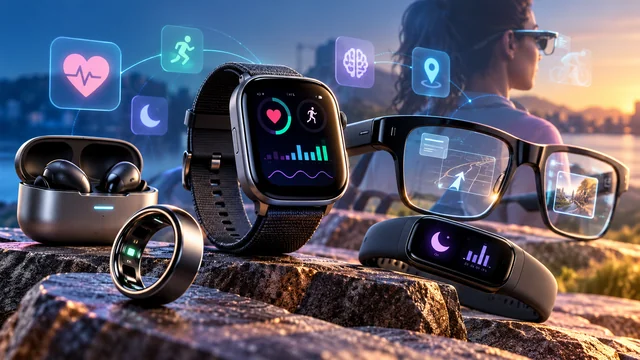
Wearable technology has moved well beyond counting steps and displaying phone notifications. In 2026, smartwatches can monitor health trends, smart rings track sleep without a screen, and AI-powered glasses allow people to capture moments without holding a camera.
But more features do not always mean a better experience. Some wearables solve everyday problems, while others introduce extra subscriptions, charging routines, and information people may never use.
So, which developments actually deserve attention? The answer depends less on how advanced a device sounds and more on what it can reliably do for you.
Smartwatches Remain the Most Practical All-Rounders
Smartwatches are no longer particularly exciting as a concept, but their maturity is exactly what makes them useful.
They combine activity tracking, notifications, navigation, communication, and selected health features in one familiar device. Depending on the model, users can also make payments, track workouts, and receive emergency alerts.
For someone who wants a single wearable, a smartwatch remains a sensible starting point.
However, buying the most expensive model is rarely necessary. A casual walker may have little reason to pay extra for advanced training metrics designed for endurance athletes.
Battery life, smartphone compatibility, comfort, and the features you actually use should guide the decision.
If you're comparing current options, a practical guide to the best smartwatches in 2026 can help narrow the choices according to budget and everyday needs.
Smart Rings Are Worth Watching for Sleep and Recovery
Not everyone wants another screen on their wrist.
Smart rings appeal to people who prefer a smaller device that can track activity, nighttime heart rate, and sleep-related metrics without frequent notifications.
Their discreet design is particularly useful for overnight monitoring, when a bulky smartwatch may feel uncomfortable.
However, smart rings have limitations. They generally lack the display, navigation, and communication features of a smartwatch. Some also require paid memberships to unlock detailed insights.
This makes the buying decision relatively straightforward.
If you're primarily interested in sleep patterns and longer-term wellness trends, a smart ring may be worth considering. If you also want calls, maps, workout displays, and everyday notifications, a smartwatch offers broader functionality.
The growing selection of smart rings and connected jewelry shows how wearable technology is expanding beyond conventional wrist devices.
AI Smart Glasses Are Becoming More Useful
Smart glasses are among the most interesting developments in wearable technology because they introduce a different way to interact with digital devices.
Instead of relying entirely on a screen, compatible models use microphones, speakers, cameras, and voice assistants to provide selected features hands-free.
This can be useful during travel, outdoor activities, or everyday moments when pulling out a smartphone would interrupt what you're doing.
For example, glasses that record video offer a way to capture first-person footage while keeping your hands available. Certain models also support open-ear audio, calls, and AI-assisted interactions.
The attraction is convenience rather than replacing a smartphone. Smart glasses remain limited by battery capacity, camera performance, app compatibility, and the availability of specific AI features.
Privacy also deserves attention. Recording in public or shared spaces requires consideration for other people, especially when cameras are less conspicuous than conventional recording equipment.
Still, smart eyewear is moving beyond novelty. Manufacturers are offering more frame designs and features intended for regular use rather than occasional demonstrations.
Earbuds Are Quietly Becoming More Capable
Wireless earbuds may not receive the same attention as smart glasses, but they remain one of the most widely adopted wearable categories.
Beyond music and calls, newer models offer adaptive noise cancellation, conversation-aware audio, improved voice assistance, and, in some supported ecosystems, live translation.
These additions can be useful during commuting, travel, and busy workdays.
Recent industry figures show that hearables made up roughly two-thirds of worldwide smart wearable device shipments, dominating total hardware distribution across the sector.
That is an important reminder: the most commercially successful wearable technology is not necessarily the most futuristic.
For most buyers, comfortable earbuds with reliable connectivity, good microphones, and appropriate noise control will provide more immediate value than experimental AI gadgets.
Health Tracking Is Improving, but Accuracy Still Matters
Health monitoring remains a major reason people buy wearables.
Heart rate, activity levels, sleep duration, and recovery estimates can help users recognize patterns and build more consistent routines.
However, not every measurement carries the same level of reliability. Some figures are directly measured by sensors, while others are algorithm-generated estimates.
A sleep score, for example, should not automatically be treated as a medical assessment.
These devices can support healthier habits and provide information worth discussing with a physician, but their data should not independently determine diagnoses or treatment decisions.
This is particularly important as devices introduce increasingly detailed wellness dashboards.
More measurements can be helpful, but only when users understand their limitations.
What About AI Pendants and Other Experimental Wearables?
AI-powered pendants, clips, and similar accessories are attracting attention because they promise assistance without requiring a screen.
Some are designed around voice notes, reminders, or conversational interactions.
The concept is interesting, especially for people who want to capture ideas throughout the day. But these devices face a difficult question: what do they offer that a smartphone, smartwatch, or pair of earbuds cannot already do?
There are also practical concerns around microphone access, privacy, battery life, and subscription costs.
Until a device demonstrates a clear advantage in everyday use, it makes sense to approach these products cautiously rather than paying for their novelty.
How to Decide Which Wearable Is Worth Buying
Before purchasing wearable technology, identify the problem you want it to solve.
Consider these questions:
-
Will I use its main features several times a week?
-
Does it work properly with my current smartphone?
-
How often will I need to charge it?
-
Are important features locked behind a subscription?
-
How is my personal data collected, stored, and shared?
-
Does it replace an existing device or simply duplicate its functions?
The answers matter more than promotional claims about artificial intelligence.
A smartwatch may be ideal for someone managing workouts and notifications. A smart ring might suit someone focused on sleep. Smart glasses may appeal to travelers and content creators, while advanced earbuds could offer the most useful upgrade for a frequent commuter.
Final Thoughts
Wearable technology in 2026 is becoming more specialized. Instead of one device trying to do everything, consumers can choose products built around health, communication, convenience, or hands-free assistance.
Smartwatches and earbuds remain dependable everyday choices. Smart rings offer a more discreet approach to wellness tracking, while AI glasses introduce new possibilities for interacting with technology.
The most important development isn't that wearables are becoming smarter. It's that buyers have more opportunities to choose technology that fits their lives.
And that's ultimately what makes a wearable worth paying for.