Tesla Cybercab Price: What $29,990 Plus $299 a Month Buys
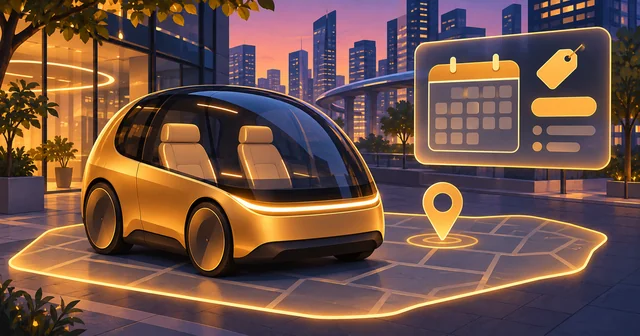
The Tesla Cybercab price is $29,990, but that is not the whole bill. Every personal-use Cybercab also needs a mandatory $299-a-month Autonomy Subscription, a $1,000 non-refundable deposit to reserve one, and a home inside Tesla's Texas Robotaxi zones. Over five years the car and subscription come to roughly $47,900 before tax, insurance and charging.
What Happened
On Friday, 13 November 2026, Tesla's Robotaxi account on X said that "select customers" were being invited to buy a Cybercab "for personal use." Screenshots of the order page, reported by TechCrunch and Engadget, list a $29,990 price and a $299 monthly Autonomy Subscription. The estimated delivery window is December 2026, and the invitation email warns that "initial availability is limited."
The fine print, posted by YouTuber Marques Brownlee and summarised by Digital Trends, adds several limits. Buyers must accept delivery in one of five Texas cities: Austin, Dallas, Fort Worth, Houston or San Antonio. Each buyer is limited to one car. Reserving one takes a $1,000 non-refundable deposit. The Verge reported that the terms forbid commercial use, so owners cannot put the car on Uber, a delivery app or Tesla's own Robotaxi network.
Elon Musk replied to Brownlee that the Cybercab "will be available nationwide, as we receive regulatory approval," and, unusually, that the monthly fee was "too high." He suggested it should match the cost of Full Self-Driving plus connectivity on other Teslas, "more like ~$115/month." Tesla has not changed the price on the order page.
The offer arrives about ten weeks after the Cybercab started carrying paying passengers in Austin in early September. The Verge, citing the crowd-sourced Robotaxi Tracker, put the number of Cybercabs in service at 278, about 40 percent of Tesla's Robotaxi fleet. Earlier this year Tesla ended the Model S and Model X, and it has since said Cybertruck production will wind down to free capacity for more Cybercabs.
Why It Matters
The $29,990 sticker matches the "under $30,000" promise Musk made when he unveiled the two-seater at the "We, Robot" event in October 2024. That pitch had two halves: a cheap driverless car, and the idea that owners could add it to Tesla's network and earn money while they slept or worked. The current terms deliver the first half on paper and drop the second for now.
That changes the maths. A Cybercab owner pays $3,588 a year in subscription fees with no way to earn it back. Tesla AI chief Ashok Elluswamy has floated the second quarter of 2027 as a possible date for letting customer cars join the Robotaxi network, but nothing in the order terms promises it.
It also matters because the car has no fallback. With an ordinary Tesla, cancelling Full Self-Driving just means you drive yourself. The Cybercab has no steering wheel and no pedals, so without the subscription it cannot be used on public roads at all. The subscription is not an add-on; it is the car's licence to move.
For readers who followed our earlier coverage of Tesla dropping the Model S and Model X to bet on the Cybercab, this is the first time that bet has reached an order page an ordinary person can see, even if only a few invited buyers can use it.
How It Works
The personal-use Cybercab is the same vehicle Tesla runs in its Robotaxi service, sold under a different set of rules. Here is how the pieces fit together.
The price, line by line. The vehicle is $29,990. The Autonomy Subscription is $299 a month, or $3,588 a year. Over a five-year ownership period that is 60 payments, or $17,940, for a combined $47,930 before sales tax, registration, insurance and electricity. The Verge, which counts the first month as included, puts the figure at about $47,600. Either way, it is more than a new Model 3 or Model Y that can be driven anywhere.
What the subscription covers. According to the terms reported by The Verge, the subscription covers autonomous driving, maintenance and towing. It does not cover car insurance. Tesla only has to give 30 days' notice before raising the fee, continuing to use the service counts as accepting new terms, and there is no partial refund if you cancel or Tesla suspends access mid-month.
Where it can drive. The terms say the car is "operable only within Tesla-enabled Robotaxi geofences and other operating limits Tesla supports." Elluswamy described it as working "unsupervised inside all the same geo locations as @robotaxi, just serving the owners' needs." Tesla's Robotaxi service runs in parts of Austin, Dallas, Fort Worth, Houston and San Antonio in Texas and Miami, Orlando and Tampa in Florida, but the personal-use delivery cities announced so far are all in Texas. A trip that leaves the geofence is not something the car will do.
How you get one. You cannot simply walk into a showroom. Tesla is sending invitations to selected customers, and has not said how it chooses them or how many cars are set aside for private buyers versus its own fleet. An invited buyer places the $1,000 deposit, accepts delivery in a supported Texas city, and must keep the subscription active to use the car.
Why the car is legal at all. In the United States, carmakers do not get vehicles approved in advance. They self-certify that a car meets the Federal Motor Vehicle Safety Standards (FMVSS), and the National Highway Traffic Safety Administration can investigate afterwards. Many of those standards assume a human driver with a steering wheel, pedals and mirrors. Tesla decided some of them do not apply to a car with no human controls. As Electrek reported, NHTSA opened Audit Query AQ26002 on 3 September 2026, covering an estimated 1,000 Cybercabs, to examine "the extent to which Tesla's certification depended on determinations that certain FMVSS are inapplicable to the Cybercab." We covered a related rule in our explainer on NHTSA's proposed cyan robotaxi marker lights.
According to The Verge, Tesla sent NHTSA its legal reasoning in October and asked for the entire response to be kept confidential. The audit is still open, which means Tesla is taking deposits on a car whose certification the regulator has not yet ruled on.
What's Still Unknown
Several questions a buyer would ask have no public answer yet.
Insurance. The subscription excludes insurance, and Tesla has not explained how a personal insurer should underwrite a car with no human driver, or how liability is split between owner and Tesla if the car causes a crash while driving itself.
The audit outcome. NHTSA's audit query is a request for records and reasoning, not a finding that anything is wrong. But until it closes, there is a risk that its result changes where or how the Cybercab can be used.
The fee. Musk says $299 is too high and suggests about $115. Whether Tesla will lower it, when, and whether early buyers would get the lower rate is not stated.
Expansion. "Nationwide, as we receive regulatory approval" is not a timeline. There is no date for delivery outside Texas, for buyers outside the invitation list, or for any market outside the United States.
Earning money. The second quarter of 2027 has been floated for adding customer cars to the Robotaxi network, but nothing in the order terms commits to it, or says how revenue would be shared.
Frequently Asked Questions
How much does the Tesla Cybercab cost?
The Tesla Cybercab price is $29,990 for the car, plus a mandatory Autonomy Subscription of $299 a month, which is $3,588 a year. Reserving one takes a $1,000 non-refundable deposit. Over five years the car and subscription total about $47,900 before sales tax, registration, insurance and charging, so the real cost is well above the sticker price.
What is the Tesla Cybercab release date?
Tesla's order page gives an estimated delivery window of December 2026 for invited personal-use buyers, though the invitation warns that initial availability is limited and the date is not guaranteed. The Cybercab itself launched earlier, carrying paying Robotaxi passengers in Austin from early September 2026. There is no release date yet for buyers outside Tesla's invitation list.
Can I buy a Tesla Cybercab for personal use?
Only if Tesla invites you and you can accept delivery in Austin, Dallas, Fort Worth, Houston or San Antonio, Texas. Each buyer can order one car, and it will only drive inside Tesla's Robotaxi geofences. The terms bar commercial use, so it is strictly for your own trips. Tesla has not said how it chooses invited customers.
Is there a Tesla Cybercab price in India?
No. Tesla has not announced a Cybercab price, launch date or any sale plans for India. The personal-use offer is limited to invited buyers taking delivery in five Texas cities, and the car only works inside Tesla's US Robotaxi zones. Any Indian rupee figure you see online is a currency conversion of the $29,990 US price, not an official Tesla price.
What is inside the Tesla Cybercab?
The Cybercab is a two-seater with no steering wheel, no brake or accelerator pedal and no side mirrors, because it is designed to drive itself at all times. Passengers sit in the cabin and the car is controlled by Tesla's self-driving software. That design is exactly why NHTSA is auditing how Tesla certified it under federal safety standards.
Can a Cybercab owner earn money on the Robotaxi network?
Not under the current terms. The personal-use order terms prohibit commercial use, which rules out ride-hailing, delivery work and adding the car to Tesla's own Robotaxi network. Tesla AI chief Ashok Elluswamy has floated the second quarter of 2027 as a possible date for customer cars to join the network, but Tesla has not committed to it in writing.
What happens if I cancel the Cybercab Autonomy Subscription?
The car stops being usable on public roads. Unlike other Teslas, where cancelling Full Self-Driving simply returns control to you, the Cybercab has no steering wheel or pedals, so the subscription is what lets it move. The terms also say there is no partial refund for the month you have already paid if you cancel or Tesla suspends access.
Is the Cybercab $1,000 deposit refundable?
No. Tesla describes the $1,000 reservation deposit as non-refundable, and it secures a place in line for an estimated December 2026 delivery rather than a guaranteed date. Because NHTSA's audit of the Cybercab's certification is still open, buyers should weigh that risk before paying, since the outcome could affect when and where the car can be used.
Related Reading
For background on how Tesla got here, read how the company launched its Robotaxi service in Dallas and Houston, two of the cities where personal Cybercabs can now be delivered. Our report on Full Self-Driving's first European approval explains the software the Cybercab relies on, and our look at Waymo's $16 billion robotaxi expansion shows the rival Tesla is racing. Engadget's report on the order terms quotes NHTSA's audit notice in full.