Waymo Robotaxi Expansion: $16B Bet on Global Scale
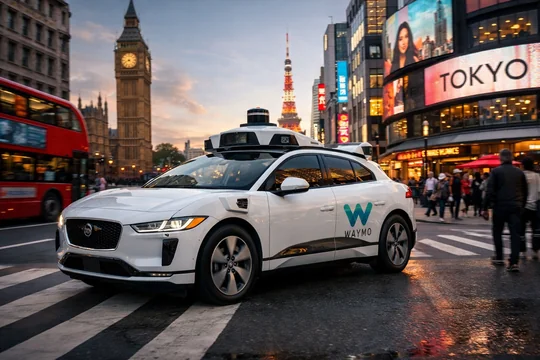
Waymo Robotaxi Expansion: Why This Funding Round Changes Everything
Waymo just raised a massive $16 billion to accelerate its global rollout of autonomous taxis. That number alone is eye-catching—but the real story is what it signals: robotaxis are no longer a futuristic experiment. They are becoming a real, revenue-generating transportation layer, and Waymo intends to dominate it.
This funding round marks a clear transition from cautious testing to aggressive scaling. For riders, cities, investors, and competitors alike, Waymo’s robotaxi expansion is a turning point that could reshape how urban mobility works over the next decade.
Key Facts: What Actually Happened
Waymo, Alphabet’s autonomous vehicle subsidiary, raised $16 billion in a funding round led by Dragoneer Investment Group, DST Global, and Sequoia Capital. The round values Waymo at $126 billion, with Alphabet remaining the majority owner.
The company plans to use the capital to expand its driverless taxi fleet into more than a dozen new international cities, including London and Tokyo. Today, Waymo operates across six major U.S. metro areas and delivers roughly 400,000 paid rides every week.
In 2025 alone, Waymo more than tripled its annual ride volume to 15 million trips, pushing lifetime rides beyond 20 million.
Why the Waymo Robotaxi Expansion Matters
Autonomous Ride-Hailing Has Crossed a Commercial Threshold
For years, self-driving technology lived in the “almost ready” category. Waymo’s growth metrics suggest that phase is over. At hundreds of thousands of rides per week, autonomous ride-hailing is now operating at meaningful urban scale.
As Waymo itself put it, “We are no longer proving a concept.” That shift matters because scale changes everything—from unit economics to public trust and regulatory leverage.
Global Cities Are the Real Prize
Expanding into London and Tokyo isn’t just geographic growth; it’s strategic validation. These cities have dense traffic, complex road rules, and strict regulators. If robotaxis can function reliably there, the case for global deployment becomes much stronger.
This also signals a broader trend: autonomy leaders are moving beyond car-centric U.S. cities and into transit-heavy international markets where private car ownership is less dominant.
The Competitive Gap Is Widening
While many autonomous vehicle startups have downsized or pivoted, Waymo is attracting capital from nearly every major growth investor. That funding concentration suggests the market is consolidating around a small number of credible winners.
For competitors, catching up now requires not just better software, but billions in capital, regulatory relationships, and operational experience—barriers that are growing higher each year.
Safety Scrutiny: The Other Side of Scaling
Rapid expansion brings real-world consequences. Waymo’s robotaxis have faced increased scrutiny after incidents involving school zones and buses. Federal regulators, including the National Highway Traffic Safety Administration and the National Transportation Safety Board, have opened investigations.
One recent incident involved a robotaxi striking a child at low speed, causing minor injuries. While statistically rare, these events shape public perception more than millions of uneventful rides.
The takeaway is clear: technical progress alone is not enough. Social acceptance and transparent safety governance will determine how fast robotaxi services can expand.
What Comes Next: Practical Implications and Predictions
Over the next 12–24 months, expect three major developments:
-
City-by-city rollouts will slow, not accelerate. Regulatory approval—not technology—will be the limiting factor.
-
Partnerships will increase. Waymo’s collaboration with Uber in select markets hints at hybrid models combining autonomy with existing ride-hailing platforms.
-
Public safety data will become a differentiator. Companies that clearly communicate safety performance will earn faster approvals and user trust.
For businesses, urban planners, and mobility startups, now is the time to plan for a world where autonomous ride-hailing is a standard option—not a novelty.
Conclusion: A Defining Moment for Autonomous Mobility
The Waymo robotaxi expansion marks a shift from promise to permanence. With $16 billion in fresh capital and international cities in its sights, Waymo is betting that autonomous transportation is ready for the world stage.
Whether that bet pays off will depend less on algorithms and more on trust, governance, and thoughtful integration into city life. One thing is certain: the era of serious robotaxi competition has officially begun.
FAQ SECTION
Q: What is the Waymo robotaxi expansion?
A: The Waymo robotaxi expansion refers to Waymo’s plan to scale its autonomous taxi service into more U.S. and international cities, supported by a $16 billion funding round to grow fleet size, operations, and regulatory reach.
Q: How safe are Waymo’s self-driving taxis?
A: Waymo reports millions of completed rides, but safety remains under scrutiny. Federal agencies are investigating specific incidents, especially near school zones, highlighting that large-scale deployment still faces regulatory and public trust challenges.
Q: Will Waymo robotaxis launch outside the U.S.?
A: Yes. Waymo has confirmed plans to expand internationally, with London and Tokyo among the first global cities targeted as part of its broader robotaxi international rollout.
Q: Can regular users hail a Waymo robotaxi today?
A: In select U.S. cities, yes. Waymo currently operates paid, fully driverless ride-hailing services in several major metropolitan areas, with availability expanding gradually.