Best Portable Tech Gadgets for Every-Day Use (2026)
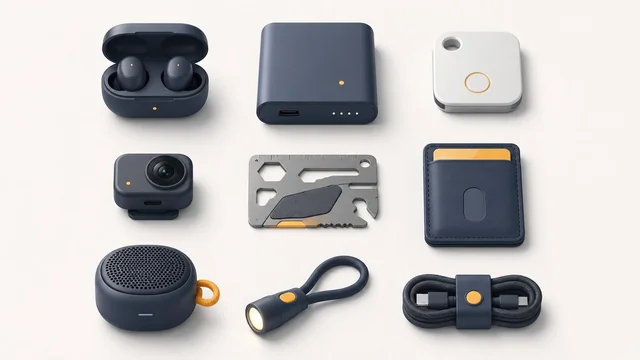
Pocket-sized tech has quietly gotten very good. The wireless earbuds you can buy for $30 in 2026 outperform $200 noise-cancelling models from five years ago. Power banks have shrunk to the size of a credit card. Bluetooth trackers can tag anything you regularly lose. Below are the most useful portable tech gadgets to keep in a backpack, pocket or glove box this year — chosen for usefulness over novelty, with what to look for at each price tier.
The portable-tech-gadget shortlist for 2026
| Category | Pick | Why | Approx price |
|---|---|---|---|
| Wireless earbuds | Soundcore Liberty 4 NC | Active noise cancelling, multipoint, 50h with case | $80–$100 |
| Power bank | Anker Nano 10K (USB-C) | Slim, two phone charges, fits any pocket | $25–$40 |
| Item tracker | Apple AirTag / Tile Mate / Chipolo | Find your keys, bag, luggage | $25–$30 |
| Bluetooth speaker | JBL Clip 5 or Soundcore Motion 100 | Waterproof, clip-on, 12+ hours | $60–$80 |
| Multi-port USB-C charger | Anker 65W GaN cube | Charges laptop + phone + earbuds at once | $40–$60 |
| Magnetic phone wallet | MagSafe card holder | Snap-on, two cards + ID | $15–$50 |
| EDC pocket flashlight | Olight i3T or Streamlight Nano | Rechargeable, <30g | $15–$45 |
| Card multitool | Leatherman Style PS / wallet-card tool | Screwdrivers + ruler + scissors in wallet | $10–$30 |
| Clip-on phone lenses | Moment / Sandmarc M-series | Real glass, magnetic mount | $50–$150 |
| USB-C hub | Anker 7-in-1 / UGREEN Revodok | HDMI + SD + USB-A from one USB-C port | $30–$60 |
1. True-wireless earbuds with active noise cancellation
True-wireless earbuds are the single most-used portable gadget for most people in 2026. The interesting development is at the budget end: Anker’s Soundcore Liberty 4 NC ($80–$100) ships with active noise cancelling that meaningfully reduces commute and aeroplane drone, multipoint pairing (one earbud connected to laptop and phone simultaneously), and 50+ hours of total battery with the case. Apple AirPods Pro 2 and Sony WF-1000XM5 are still the premium picks at $200–$300 if you live in those ecosystems — but at $80, the budget tier is now genuinely usable for everyday listening.
2. A compact USB-C power bank
The single most useful gadget in a daypack. Look for: 10,000 mAh capacity (two full phone charges), USB-C PD (so it can charge as fast as your phone supports), and a built-in USB-C cable or short tether so you don’t have to remember a separate cable. The Anker Nano 10K ($25–$40) is the safe default; Anker Prime / Baseus Blade if you want a slimmer credit-card form. Avoid anything claiming 30,000 mAh in a pocket-sized brick — the specs are usually optimistic.
3. A Bluetooth item tracker
Attach to whatever you regularly lose: keys, wallet, suitcase, child’s school bag. Apple AirTag ($29) is the best choice if you have an iPhone — it taps into Apple’s 1+ billion device Find My network. Tile Mate or Chipolo One ($25–$30) are the Android-friendly equivalents, with Chipolo also offering an AirTag-compatible variant that works inside Apple’s network. Google’s own Find My Device network — rolled out in 2024 — now also supports compatible trackers (Pebblebee, Eufy).
4. A waterproof clip-on Bluetooth speaker
Useful for beach, pool, bike ride, kitchen, camping. The JBL Clip 5 ($79) and Soundcore Motion 100 ($60–$80) are the two safest 2026 picks — both IP67 dust/water resistant, both around 12 hours of playback, both with a carabiner for clipping to a bag. Skip anything noticeably cheaper unless you only need it for an afternoon.
5. A multi-port USB-C GaN charger
Replaces three separate wall chargers with one. The Anker 65W GaN II (around the size of two stacked credit cards) drives a 13-inch MacBook Pro at full speed on its USB-C port while charging a phone and earbuds on the other two ports. The bigger 100W or 140W variants charge 16-inch laptops; pick the wattage to match your laptop’s peak draw. GaN technology is what lets these chargers be smaller than the box-style 30W bricks of five years ago.
6. A magnetic phone wallet
If you carry an iPhone (or an Android with a magnetic case), a thin MagSafe-compatible card holder that snaps to the back of the phone replaces a separate wallet for ID + transit card + one credit card. Apple’s own MagSafe Leather Wallet (now FineWoven) and Nomad’s Magnetic Card Holder are the pricier picks; ESR, Spigen, and dozens of $15 alternatives work fine. For Android, the magnetic case + wallet combo is the equivalent.
7. A pocket EDC flashlight
An LED keychain or pocket flashlight saves a phone battery and is brighter than any phone torch. The Olight i3T EOS ($25, AAA battery) and the Streamlight Nano ($15, button-cell) are both safe picks — both fit on a keychain, both push 100+ lumens, both will outlast the phone you bought them with. The 2026 trend is rechargeable USB-C variants like the Olight i5R ($45) which don’t need replacement batteries.
8. A card-sized multitool
A credit-card-shaped multitool slides into a wallet and survives airport security in most countries (without a blade). Look for: a small ruler, a couple of screwdriver bits, a bottle opener, scissors-style cuts. The Leatherman Style PS ($30, blade-free) is the safest travel pick; ROCKETBOOK, Vargo and lots of generic Amazon brands sell flat-card variants in the $10–$20 range.
9. Clip-on smartphone lenses
Smartphone cameras in 2026 don’t need the lens add-ons they did five years ago — the iPhone Pro and Pixel Pro both ship 5x optical — but for ultra-wide macro and true fish-eye, a good clip-on lens still beats software. Moment (US) and Sandmarc (US/EU) make real-glass lenses with a magnetic mount system that snaps to compatible cases. Skip the $20 plastic clip kits unless you’re fine with soft corners.
10. A USB-C hub for your laptop
If your laptop has dropped its full-size USB and HDMI ports (every recent MacBook, most slim Windows ultrabooks), a pocket USB-C hub is the difference between “I have the right cable” and “I can’t plug into this projector”. The Anker 7-in-1 ($40–$60) and UGREEN Revodok 1131 ($30) are reliable defaults with HDMI + 100W passthrough USB-C + USB-A + SD/microSD + Ethernet.
How to pick what to actually carry
The mistake with pocket tech is buying gadgets you use once and never again. Three useful filters:
- Does it fix a problem I’ve had in the past month? If yes, buy. If no, skip.
- Will it actually fit in the bag / pocket I’m carrying every day? A 20,000 mAh power bank you leave at home is useless.
- Is there a USB-C version? In 2026 there’s no excuse for buying micro-USB or proprietary chargers. Standardising on USB-C means one cable charges everything.
Frequently asked questions
What is the most useful portable tech gadget to carry every day?
A 10,000 mAh USB-C power bank. It solves the single most common pocket-tech problem — phone running low at the wrong time — for $25–$40 in a credit-card form factor that fits any pocket or bag. The Anker Nano 10K is the safe default.
What is the best Bluetooth tracker in 2026?
For iPhone owners, the Apple AirTag — nothing else taps into the 1+ billion device Find My network. For Android users, Chipolo or Pebblebee on Google’s Find My Device network (rolled out in 2024) give the equivalent coverage. Tile Mate still works on both platforms but Tile’s network is smaller than either Apple’s or Google’s in 2026.
Are budget wireless earbuds really good enough now?
Yes — for the first time. The $80–$100 tier (Soundcore Liberty 4 NC, EarFun Air Pro 4, JBL Tune 270NC) ships with usable active noise cancelling, multipoint pairing and 30+ hour total battery. They’re still not as good as $250 AirPods Pro 2 or Sony WF-1000XM5, but the gap is small enough that for most listeners the budget tier is the right choice.
Do I need a USB-C hub for my laptop?
If your laptop has full-size HDMI and USB-A ports, no. If it doesn’t (every recent MacBook, most modern Windows ultrabooks), a $40 multi-port USB-C hub is one of the most-used items in a daypack — HDMI to a meeting-room projector, SD card from a camera, USB-A for a wired mouse or external drive, all from one port.
Will MagSafe wallets damage credit cards?
No. The magnets in a MagSafe wallet are weak enough not to damage modern chip-and-PIN or contactless cards. Older magnetic-stripe cards (still common on US debit cards in some banks) are also fine in the short term, though prolonged contact with stronger magnets can degrade the stripe over months or years. Apple’s own MagSafe Wallet and major third-party brands are tested specifically for this.
For more buyer guides, see our roundup of best music apps for iPhone and the best AI tools for YouTube thumbnails.