Amazon Leo vs Starlink: Price, Speed and Latency in 2026
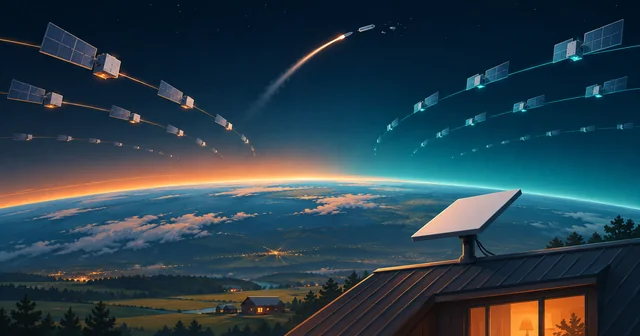
Amazon Leo vs Starlink comes down to this today: Starlink is a working service with published prices, while Amazon Leo has no consumer price yet and is still in an enterprise preview. On paper, Leo's dishes match or beat Starlink's speeds, but the loss of 40 Leo satellites on a failed rocket launch pushes its wider rollout further out.
What Happened
On Sunday, November 15, 2026, a United Launch Alliance Vulcan rocket lifted off from Cape Canaveral at 12:40 p.m. EST carrying 40 Amazon Leo satellites, and none of them reached orbit. ULA said the vehicle suffered an anomaly 10 minutes into the flight, according to Spaceflight Now's report on the Vulcan failure. It was the first outright failure of a ULA rocket since the company was formed in 2006.
The flight mattered to Amazon well beyond one batch of satellites. It was the first of 38 Vulcan launches Amazon has bought for Leo, and Spaceflight Now noted it would have taken the total number of Leo satellites launched to 436. Blue Origin's New Glenn, another rocket Amazon is counting on, has been grounded since an explosion on the pad in May. ULA said it will work with its customer to find the cause, take corrective action and return to flight as quickly as possible. It has not said what went wrong.
That leaves the question people actually search for after a story like this: if you need satellite internet, should you wait for Amazon Leo or buy Starlink now? The rest of this explainer compares the two on price, speed, latency and coverage, using only what each company has published.
Why It Matters
Amazon Leo, formerly Project Kuiper, is the first serious Western rival to SpaceX's Starlink in low Earth orbit broadband. Competition is the main reason readers care: a second network with its own dishes gives rural homes, RV owners, airlines and businesses a choice, and usually pushes prices down.
The gap in scale is still enormous. Jonathan McDowell's Starlink statistics page, updated on November 16, 2026, counts 11,213 Starlink satellites in orbit, 11,199 of them working. Amazon's own figure for its first-generation design is more than 3,000 satellites, and Spaceflight Now puts the total Amazon needs at more than 3,300. Every failed launch widens the gap, because satellites are the capacity: fewer satellites overhead means fewer places and fewer customers Leo can serve.
For most buyers, the practical point is simple. Starlink is something you can order today. Amazon Leo is something you can sign up to hear about.
How It Works
Both services use the same basic design. A large fleet of satellites in low Earth orbit passes overhead, a flat phased-array dish on your roof or vehicle tracks them electronically, and ground gateway stations connect the satellites to the internet. Because the satellites are far closer than the geostationary satellites used by older services, the signal round trip is much shorter, which is what makes video calls and gaming usable.
Amazon Leo dishes and speeds
Amazon's Amazon Leo FAQ lists three customer terminals. Leo Nano is a 7x7-inch model rated at downlink speeds up to 100 Mbps. Leo Pro is an 11x11-inch model rated up to 400 Mbps. Leo Ultra is an enterprise antenna rated up to 1 Gbps down and up to 400 Mbps up. Amazon says its satellites will orbit between 590 and 630 kilometers, and that it has secured more than 80 launches from Arianespace, Blue Origin, SpaceX and ULA to deploy the first constellation.
Amazon has not published a monthly price or a retail dish price. In his April 2026 shareholder letter, Andy Jassy said Leo's performance "will come at a lower cost than alternatives", as reported by PCMag, but gave no figure.
Starlink plans and prices
Starlink's US residential plans were repriced in June 2026. According to 9to5Google's breakdown of the June price change, Residential 100 Mbps costs $55 a month, Residential 200 Mbps costs $85 and Residential Max costs $130. Starlink also dropped the option to buy the residential dish outright in the US, moving new customers to rented hardware, while the portable Starlink Mini can still be bought for $199.
Side by side
- Price: Starlink publishes its prices; Amazon Leo has published none.
- Top speed: Leo Pro is rated up to 400 Mbps and Leo Ultra up to 1 Gbps; Starlink sells capped 100 and 200 Mbps plans plus a Max tier.
- Availability: Starlink sells to consumers now; Leo is limited to an enterprise preview that began in November 2025.
- Portable dish: Leo Nano versus the Starlink Mini, with Nano rated up to 100 Mbps.
Rated speeds are ceilings, not guarantees. Real-world speed on both networks depends on how many satellites are overhead and how many people share them, which is exactly where Starlink's head start counts most.
What's Still Unknown
The biggest unknown is when ordinary customers can buy Amazon Leo. Amazon's Leo FAQ still says it will roll the service out more widely in 2026 as it launches more satellites. With weeks left in the year, a Vulcan grounded pending an investigation and New Glenn not yet back in service, that wider rollout depends on rockets Amazon does not control.
Price is the second unknown. Jassy's "lower cost" line is a promise, not a plan, and it is unclear whether Amazon will charge for the dish, rent it, or bundle Leo with Prime the way it bundles other services.
Latency is the third. Amazon says low Earth orbit gives "even lower latency than traditional satellite internet", but it has not published a measured latency figure for Leo, and there is no independent public test of the consumer service because there is no consumer service yet. Finally, which countries get Leo first is not confirmed; Amazon has not published a launch-country list for consumers.
Frequently Asked Questions
Is Amazon Leo cheaper than Starlink?
Nobody can say yet, because Amazon has not announced Leo pricing. Andy Jassy has said Leo will cost less than alternatives, but gave no figure. Starlink's US residential plans cost $55, $85 or $130 a month after the June 2026 change, according to 9to5Google. Until Amazon publishes its plans, any Leo price you see online is a guess.
Amazon Leo vs Starlink speed: which is faster?
On rated speeds, Amazon Leo's dishes are competitive. Amazon's Leo FAQ rates Leo Pro up to 400 Mbps and the enterprise Leo Ultra up to 1 Gbps. Starlink sells 100 Mbps and 200 Mbps plans plus a Max tier. Real speeds depend on network load, and Starlink has far more satellites sharing that load today.
Amazon Leo vs Starlink latency: which has lower lag?
Both are low Earth orbit networks, so both have much lower latency than older geostationary satellite internet. Amazon has not published a measured latency figure for Leo, and there is no public consumer test yet. Amazon says its satellites fly between 590 and 630 kilometers up, per its FAQ. Expect broadly similar lag; real comparisons need launch-day testing.
How many satellites do Amazon Leo and Starlink have?
Starlink has 11,213 satellites in orbit, 11,199 of them working, according to Jonathan McDowell's tracker on November 16, 2026. Amazon's first-generation Leo design calls for more than 3,000 satellites, and it has launched a few hundred so far. The 40 satellites lost on November 15 would have been part of that build-out.
Amazon Leo vs Starlink: which is better right now?
Right now, Starlink, simply because you can buy it. It has published plans, a consumer dish and service in many countries. Amazon Leo is limited to an enterprise preview and has no consumer price or launch date. If you need internet now, Starlink is the only one of the two you can order. If you can wait, Leo may add price pressure once it launches.
Amazon Leo Nano vs Starlink Mini: which portable dish wins?
It is too early to call. Amazon rates the 7x7-inch Leo Nano up to 100 Mbps, but it is not on sale and has no price. The Starlink Mini is on sale and, per 9to5Google, still costs $199 to buy outright in the US. Until Nano ships, the Mini is the only portable option of the two you can use.
Did the Vulcan rocket failure delay Amazon Leo?
Amazon has not announced a new schedule, but the failure removes 40 satellites and grounds a rocket Amazon bought 38 launches on, per Spaceflight Now. With New Glenn also grounded, Amazon has fewer rockets ready to fly its satellites, which makes the promised wider 2026 rollout harder to hit.
When can I sign up for Amazon Leo?
You can join Amazon's interest list now on the Amazon Leo website, but you cannot order service. Amazon's Leo FAQ says it began an enterprise preview in November 2025 for select business customers and will roll the service out more widely in 2026 as it launches more satellites. It has not named the first consumer countries or a date.
Related Reading
Amazon's aviation plans show where Leo is aimed first: read how the Amazon Leo aviation antenna promises 1 Gbps in-flight Wi-Fi. For the business side of the rivalry, see why Amazon bought Globalstar to take on Starlink. The rocket maker at the centre of this failure had already been through upheaval, covered in why the ULA CEO's resignation mattered. SpaceX's own numbers on Starlink are in our look at the SpaceX S-1 filing, and once your dish is up, a good router helps: see our guide to the best Wi-Fi 7 routers for home use.