Liquid Dispensing Plans for Busy Worksites
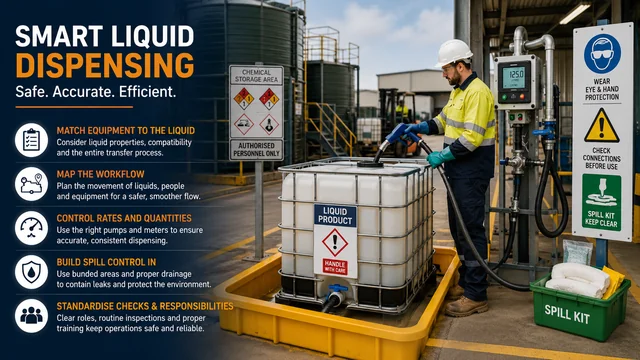
Busy worksites need liquid dispensing systems that support steady production without compromising safety, accuracy or product quality. Whether handling fertilisers, cleaning agents, brewing ingredients, fuels or industrial chemicals, a clear plan should define how liquids are stored, transferred, measured and contained. Effective planning also reduces delays caused by unsuitable equipment, difficult container access and avoidable spills.
Match Equipment to the Liquid
Start by documenting each liquid’s viscosity, temperature, hazard classification and compatibility requirements. These properties influence the appropriate intermediate bulk container, pump, hose, valve, seal and dispensing method. Stainless steel may suit products requiring greater durability or hygiene control, while compatible plastic containers can provide a practical solution for many agricultural and chemical applications.
When evaluating providers such as Tank Management Australia liquid storage and dispensing solutions, worksites should consider the entire transfer process rather than selecting a container in isolation. Every component in the fluid pathway must be suitable for the liquid because an incompatible seal or hose can undermine an otherwise appropriate storage system.
Map the Dispensing Workflow
A dispensing plan should show how liquids move from delivery and storage through to their final point of use. Map the people, equipment and work zones involved, including forklift routes, production areas and vehicle access. This helps identify unnecessary handling, long hose runs and points where workers or moving machinery may cross the transfer path.
Frequently used liquids should be positioned close enough to their dispensing points to reduce travel without obstructing operations. Less frequently accessed stock can be stored farther away, provided it remains clearly identified and readily available. The resulting layout should support a logical, controlled flow rather than relying on workers to improvise during busy periods.
Control Dispensing Rates and Quantities
Flow requirements vary significantly between topping up a small process vessel and transferring hundreds of litres into production equipment. Pumps, valves and meters should therefore be sized for the expected volume, liquid characteristics and required dispensing speed. Excessive flow can cause splashing or overfilling, while insufficient flow may create queues and production delays.
Where accurate quantities matter, incorporate calibrated flow meters, preset controls or batch dispensing systems. These measures can improve consistency, reduce product waste and support traceability. Equipment should also allow operators to stop the flow quickly if a receiving container fills unexpectedly or a connection begins leaking.
Build Spill Control Into the Layout
Spill response begins with containment, not clean-up. Containers and dispensing points should be positioned within bunds that meet applicable bunding requirements for foreseeable leaks or overflows. Hoses, valves and connection points deserve particular attention because dispensing activities involve repeated movement and are common locations for accidental releases.
The required bund capacity depends on the liquids stored, container volumes and applicable workplace or environmental requirements. Drainage routes should also be reviewed so a spill cannot enter soil, stormwater systems or active work areas. Suitable spill kits must remain accessible without being placed where leaked liquid could prevent workers from reaching them safely.
Standardise Checks and Responsibilities
Clear responsibilities keep a dispensing plan functional once the worksite becomes busy. Nominate who may operate the equipment, inspect containers, verify labels, record quantities and report faults. Workers should understand the correct connection sequence, required personal protective equipment and immediate actions for leaks or damaged fittings.
Routine checks should cover valves, hoses, seals, pumps, meters, labels and containment systems. A simple maintenance schedule based on usage and manufacturer guidance helps identify deterioration before failure occurs. Records also provide evidence that equipment has been inspected and can reveal recurring issues requiring a change in layout or procedure.
Keep Dispensing Safe and Efficient
A reliable liquid dispensing plan connects suitable equipment with an orderly workflow, controlled transfer rates, effective containment and defined responsibilities. Reviewing the plan whenever liquids, volumes or worksite layouts change helps prevent outdated procedures from creating new risks. With these controls in place, busy sites can move bulk liquids efficiently while protecting workers, products and the surrounding environment.