Amazon Alexa Tablets: What the Switch to Android Changes
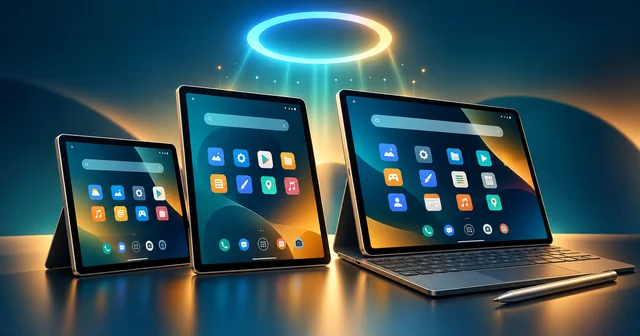
Amazon's new Alexa Tablets drop Fire OS and the Amazon Appstore for standard Android with the full Google Play Store. Buyers get the same apps as on any Samsung or Lenovo tablet, plus Alexa+ built into the system. The trade-off is price: the cheapest model now starts at $229.99, not under $100.
What Happened
On October 8, 2026, Amazon announced three tablets under a new name: the Alexa Tablet 8, the Alexa Tablet 11 and the Alexa Tablet 12 Pro. In Amazon's announcement, written by devices vice president Kevin Keith, the company says the tablets "run Android" with full Google Play Store access, naming YouTube, Netflix, Gmail and Google Docs among the apps. An Amazon spokesperson told TechCrunch that this is an "all-new product line" with new hardware and a new operating system, not a rebrand of Fire tablets.
Amazon's published prices and specifications are:
- Alexa Tablet 8, $229.99: an 8.7-inch all-aluminium tablet with an eight-core processor, 4GB of RAM, 64GB of storage, Wi-Fi 6 and up to 14 hours of video playback. It weighs 329g and is 7.95mm thin.
- Alexa Tablet 11, $329.99: an 11-inch 2.5K display at 90Hz, 8GB of RAM, 64GB of storage, dual Dolby Atmos speakers and up to 15 hours of video.
- Alexa Tablet 12 Pro, $499.99, or $549.99 with Amazon's "Nanomatte" anti-glare glass developed with Corning: a 12-inch 120Hz display in a 3:2 shape, a 4nm eight-core chip, up to 16GB of RAM, Wi-Fi 6E, four Dolby Atmos speakers, a 6.5mm body and up to 16 hours of video.
The 12 Pro has two accessories: a magnetic Pro Keyboard at $149.99 and a USI 2.0 Pro Pen at $89.99 with 4,096 pressure levels. Amazon says the tablets ship on October 14 in the US, Mexico and Canada, and on October 19 in the UK, Germany, France, Italy and Spain. They are sold through Amazon.com, Best Buy and Target.
Retail listings fill in two details the announcement leaves out. AFTVnews and 9to5Google report that the 8 and 11 show lockscreen ads at their headline prices, that removing the ads costs $20 more, and that 128GB versions cost $50 more. AFTVnews reports the tablets run Android 16. Amazon is also releasing Amazon Kids Tablets in 8.7-inch and 11-inch sizes, each with a kid-proof case and a year of Amazon Kids+.
Why It Matters
For more than a decade, Fire tablets competed on price. They were cheap because Amazon expected to earn its money later, from Prime Video, Kindle books and shopping, and because they ran Amazon's own version of Android without Google's apps. The cost of that model was the app gap. YouTube, Gmail, Google Docs, Google Maps and many banking and school apps were missing from the Amazon Appstore, or worked poorly because they depended on Google services the tablet didn't have.
The Alexa Tablets close that gap. A parent buying a tablet for homework, or a commuter who lives in Google Workspace, no longer has to sideload the Play Store or accept a smaller app catalogue. This also changes who Amazon competes with. The 12 Pro, with its keyboard and pen, is aimed at productivity buyers who might otherwise choose an iPad Air or a Samsung Galaxy Tab. The 8 and 11 move into the budget Android range rather than the impulse-purchase range Fire tablets used to own.
For Amazon, the bet is that Alexa+ can be the reason to choose its tablet when the app store is the same everywhere. Amazon's generative assistant costs $19.99 a month, or is free with Prime. Putting it in the system, rather than in an app that has to be opened, is how Amazon plans to stand out on hardware that otherwise looks like everyone else's.
The move also completes a retreat from Amazon's separate app economy. Amazon already wound down its Appstore on non-Amazon Android devices in 2025. With its own tablets now shipping Google Play, developers have less reason to keep separate Fire builds of their apps.
How It Works
Every Android tablet starts from the same open-source code, the Android Open Source Project. What separates a "Google Android" device from a fork like Fire OS is a licensing layer on top of that code, not the code itself.
The fork model Fire OS used
Fire OS took the open-source Android base, replaced the launcher and settings with Amazon's own, and shipped without Google Mobile Services. Google Mobile Services is the bundle that includes the Play Store, Google Play Services, Gmail, YouTube and Maps. Without Play Services, apps that rely on Google for sign-in, push notifications, location or in-app purchases either needed a separate Amazon version or broke. Amazon also had to rebuild each new Android release itself, which is why Fire OS usually ran several versions behind Google's.
The licensed model the Alexa Tablets use
To preload the Play Store and Google's apps, a manufacturer licenses Google Mobile Services, and the device has to pass Google's compatibility and security testing. Google describes this in its Play Protect certified devices programme: hundreds of security tests and more than 100,000 compatibility tests, so that Play Store apps behave the same as on other certified hardware. Amazon hasn't published certification details for these models, but shipping Gmail and the Play Store generally depends on this process. Amazon's customisation now sits on top of Android instead of replacing parts of it: a custom launcher, a "Dynamic Tab" on the home screen, and preinstalled Prime Video, Kindle, Audible, Amazon Music, Amazon Quick and Amazon Luna.
Where Alexa+ fits
Alexa+ is built into the system, not installed as an app. You can say "Alexa" or press an "Ask Alexa" button from anywhere, and it appears over whatever is on screen. Two features depend on that system-level access:
- On-Screen Intelligence lets Alexa read what's on screen and act on it. Amazon's examples are comparing hiking trails on a page, or adding game dates to a calendar and flagging conflicts. It is off by default and has to be switched on.
- Live sessions keep a conversation going without repeating the wake word, and can include screen sharing if On-Screen Intelligence is on.
Amazon says a visual indicator appears whenever Alexa is active or can see the screen, and that each feature can be turned off. Reading also gets dedicated treatment. Opening a book in the Kindle app silences notifications, reduces blue light, offers paper-tone and grayscale themes, and, Amazon says, stretches battery life to up to 20 hours of reading. Notes written with the Pro Pen sync to Kindle Scribe.
What's Still Unknown
Several questions that matter for a purchase are unanswered so far:
- Update commitment. Amazon hasn't said how many years of Android version upgrades or security patches the tablets will get. Samsung and Google now publish multi-year promises, so this is the most important missing figure.
- Existing Fire tablets. Amazon's announcement doesn't mention Fire tablets or Fire OS. It hasn't said how long current Fire models will get updates, whether they will stay on sale, or whether the Amazon Appstore will keep working on them.
- Alexa+ on the tablet for non-Prime buyers. The tablet announcement doesn't say whether buyers without Prime pay the $19.99 monthly fee to use the assistant built into the system, or get a limited version.
- Exact configurations and kids pricing. Retail reports differ on some 12 Pro memory and storage combinations, and Amazon hasn't listed Kids Tablet prices in its announcement.
- Real-world performance. The 8 and 11 use a mid-range MediaTek chip, according to retail listings, and nobody has published independent tests yet.
Frequently Asked Questions
Do Amazon's Alexa Tablets have the Google Play Store?
Yes. Amazon says all three Alexa Tablets include full Google Play Store access, and it names YouTube, Netflix, Gmail and Google Docs as examples. This is the main difference from Fire tablets, which used the Amazon Appstore and lacked Google's apps. You don't need to sideload anything or change developer settings to install apps from Google Play on the new models.
Are the Alexa Tablets just renamed Fire tablets?
No, according to Amazon. A spokesperson told TechCrunch the Alexa Tablets are an all-new product line with new hardware and a new operating system, not a rebrand. The new models run standard Android with Google services instead of Fire OS. They also use aluminium bodies and cost noticeably more than the Fire tablets they follow.
How much do the Alexa Tablets cost?
The Alexa Tablet 8 starts at $229.99, the Alexa Tablet 11 at $329.99 and the Alexa Tablet 12 Pro at $499.99, or $549.99 with the Nanomatte anti-glare display. Retail reports say the 8 and 11 prices include lockscreen ads, which cost $20 to remove. The Pro Keyboard is $149.99 and the Pro Pen is $89.99.
When do the Alexa Tablets ship and where?
Amazon says the tablets ship on October 14, 2026 in the US, Mexico and Canada, and on October 19 in the UK, Germany, France, Italy and Spain. They are sold on Amazon.com and at Best Buy and Target. Amazon Kids Tablets also ship in Japan on October 14.
Do I need Prime to use Alexa+ on the tablet?
Amazon prices Alexa+ at $19.99 a month, and Prime members get it at no extra cost. The tablet announcement doesn't say whether non-Prime buyers have to pay that fee to use the assistant built into the system, or whether they get a reduced version. If Alexa+ is your main reason to buy, check this before ordering without Prime.
Can Alexa see what is on my tablet screen?
Only if you allow it. Amazon says On-Screen Intelligence, which lets Alexa read and act on what's on screen, is off by default and has to be turned on. A visual indicator shows whenever Alexa is active or can see the screen. You can turn the feature off at any time, along with other Alexa+ capabilities.
What happens to my existing Fire tablet?
Nothing changes right away. Your Fire tablet keeps running Fire OS and the Amazon Appstore. Amazon's announcement doesn't mention Fire tablets, and it hasn't said how long current models will get software updates or whether they will stay on sale. The new tablets don't replace Fire OS on older hardware, so an existing Fire tablet won't get Google Play through an update.
Are the Alexa Tablets good for reading Kindle books?
Amazon has added a reading mode. Opening a book in the Kindle app turns off notifications, reduces blue light and offers natural, paper-tone and grayscale themes. Amazon says battery life reaches up to 20 hours while reading. Notes made with the Pro Pen on the 12 Pro sync across Kindle apps and Kindle Scribe.
Related Reading
If you are weighing the Alexa Tablet 11 against established rivals, our roundup of the best Android tablets for every budget covers the Samsung and Lenovo models it now competes with directly. Buyers interested in the 12 Pro's pen should compare it with the options in our guide to the best tablets with a stylus for drawing and notes. Once the Play Store is on your tablet, our list of free Android apps for power users is a good place to start. If the new price floor rules out an Alexa Tablet, see our picks of the best tablets at every budget. And for Amazon's wider hardware plans, read about Amazon's Transformer smartphone project after the Fire Phone.