Airport Medical Emergency: Why Sudden Cardiac Events Are Rising
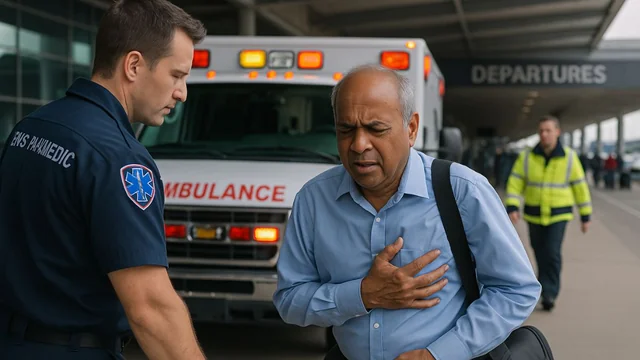
When a Routine Trip Turns Critical: What a Recent Airport Medical Emergency Reveals About Modern Travel
As reported by The Times of India [LINK TO SOURCE], a 42-year-old Bengaluru-based professional died after collapsing at Lucknow’s Chaudhary Charan Singh International Airport. While the police are awaiting a final autopsy, early findings point to a heart attack.
But beyond the tragedy itself lies a pressing question for frequent travelers: Are rising travel pressures creating a perfect storm for medical emergencies?
This incident forces us to look deeper at health vulnerabilities that often go ignored until it's too late.
Key Facts From the Report
-
The victim, Anoop Kumar Pandey, worked for an MNC in Bengaluru and had arrived at the airport to board a late-evening flight.
-
He collapsed in the parking area shortly after arriving and was rushed to a nearby hospital, where he was declared dead.
-
According to police officials, he had travelled from Kanpur by road and faced significant delays due to traffic.
-
Preliminary observations suggest a cardiac event, though the official cause awaits the post-mortem report.
-
His family members were traveling from Bengaluru to Lucknow by road amid widespread flight disruptions that same weekend.
These facts establish the sequence, but the implications stretch far beyond one heartbreaking story.
Why This Airport Medical Emergency Matters
1. Travel-Related Stress Is Becoming a Silent Health Threat
Pandey’s journey included long road travel, time pressure, and flight coordination—all factors known to elevate stress hormones. For many frequent travelers, this combination becomes routine. But biologically, these stress spikes can be dangerous, especially for individuals with undiagnosed heart risks.
2. Airports Are Not Designed for Health Emergencies—Yet
Airports prioritize logistics, security, and passenger flow. Medical readiness varies widely across Indian airports. While larger airports have emergency response teams, smaller or mid-tier ones often rely heavily on local hospitals for urgent care.
When seconds matter, this gap becomes critical.
3. India Is Witnessing a Surge in Early-Onset Heart Conditions
Cardiologists have repeatedly warned that Indians face higher cardiac risks at younger ages due to lifestyle, stress, and genetics.
This incident is a stark reminder that health emergencies aren’t age-selective, even in seemingly healthy individuals.
4. Organisations Need Better Travel Health Protocols
Many MNCs have extensive travel policies for safety and compliance—but not always for employee health.
Routine wellness checks before frequent corporate travel could prevent tragedies.
What Travellers Can Learn: Practical Implications
1. Recognize Early Warning Signs
Not all heart attacks involve dramatic collapse. Early symptoms may include:
-
Chest tightness
-
Sudden fatigue
-
Nausea or dizziness
-
Shortness of breath
Travel amplifies these symptoms. When in doubt, stop and seek help.
2. Buffer Your Travel Time Generously
Rushing—especially after long road journeys—puts the body under extreme physiological strain.
A buffer of at least 90–120 minutes reduces stress both mentally and physically.
3. Hydration and Movement Matter More Than You Think
Long car rides restrict blood flow. Adequate hydration and periodic stretching can reduce the risk of clots and cardiac load.
4. Companies Should Implement Pre-Travel Health Screening
Particularly for employees who travel frequently or work high-pressure roles.
What’s Next? A Broader Shift in Travel Safety
Incidents like these often trigger internal reviews—by airports, airlines, and corporate employers. Expect discussions around:
-
On-site medical readiness upgrades
-
Faster emergency transport protocols
-
Heart-health awareness campaigns for frequent flyers
The broader trend is clear: Travel health is no longer optional—it’s essential.
Conclusion
This tragedy underscores a harsh reality: airport medical emergencies are becoming more common as travel intensity rises. While investigators determine the exact cause of death, the incident serves as a crucial reminder for travelers and organizations alike to prioritize health as much as logistics.
As air travel resumes at scale, the question isn’t just how we travel—but how safely we do it.