Air India Indigo Cut Domestic Flights June Fares Rise
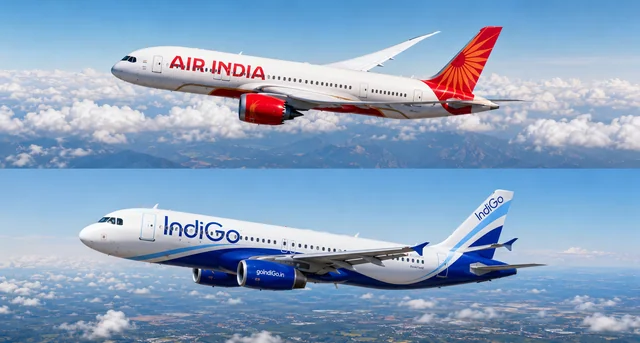
Air India, IndiGo to Cut Hundreds of Domestic Flights From June — Fares Set to Rise Further
New Delhi, May 27, 2026 — Planning a domestic flight this summer? You may want to book right now. India's two largest airlines — Air India and IndiGo — are slashing domestic flight operations from June 1 through August 31, 2026, as skyrocketing jet fuel prices and geopolitical turbulence in the Middle East squeeze airline finances to a breaking point.
Together, these two carriers control over 90% of India's domestic aviation market — meaning this isn't just a corporate reshuffle. It will directly hit your travel plans and your wallet.
How Many Flights Are Being Cut?
- Air India is reducing domestic operations by up to 22%, cutting frequencies across multiple routes from its key hubs in Delhi and Mumbai.
- IndiGo is scaling back services by 5–7%, partly anticipating softer demand after the school holiday season ends.
- The reductions run from June 1 to August 31, 2026.
- No routes will be completely suspended — only frequencies will be reduced.
Aviation analytics firm Cirium had already flagged early signs of this trend: India's four largest airlines saw combined flight operations fall nearly 6% in March–April 2026 compared to the same period last year. Air India had already cut services by 7.5%, while Air India Express saw an even steeper decline of 17.1%.
What's Driving the Cuts?
Jet Fuel Prices Have Nearly Doubled
Aviation Turbine Fuel (ATF) accounts for almost 40% of an airline's operating costs. A senior Air India official put it bluntly: ATF prices have surged from ₹80,000 per kilolitre to over ₹1 lakh, depending on the city, due to varying state-level VAT rates.
"It is not financially viable to operate flights on certain routes at these ATF prices," the official said.
The Middle East Conflict Has Forced Costly Reroutes
Since military strikes involving the US, Israel, and Iran earlier this year, Iranian airspace has been closed to Indian carriers. This forces airlines to take longer westbound routes, burning significantly more fuel on each flight. Add to that the ongoing closure of Pakistani airspace, and Indian airlines are effectively paying a steep detour tax on every international leg — costs that ripple into domestic operations too.
Post-Holiday Demand Slump
The school summer vacation season is winding down, and airlines are already seeing weaker passenger loads on domestic routes. IndiGo, which operates roughly 1,950 flights daily, is proactively trimming capacity to avoid flying half-empty planes at a loss.
Which Routes Will Be Affected?
The biggest impact will be felt on metro-to-metro and hub routes:
- Delhi and Mumbai — the primary hubs where Air India and IndiGo are concentrating cuts
- Mumbai → Bhopal, Nagpur, Ahmedabad — frequencies on these routes are expected to be reduced
- Hyderabad, Chennai, Bengaluru — metro connections will see trimmed schedules
International feeder traffic is also a factor — with Air India having already cut international services by 25% (1,200 flights across 33 routes), fewer international passengers are connecting to domestic flights, making those connecting domestic services unviable.
What Does This Mean for Ticket Prices?
Simply put: fares will go up. Fewer seats chasing the same demand always pushes prices higher.
- Domestic airfares are already up 15% year-on-year.
- International fares have jumped 35–40% since the Middle East conflict began.
- Last-minute bookers heading anywhere between June and August should brace for a significant premium.
Expert advice: Book now. Every week you wait closer to departure, especially on popular metro routes, is likely to cost you more.
Air India's Financial Bleeding
The flight cuts aren't just about fuel — Air India is fighting for financial survival. The Tata Group-owned carrier reportedly posted a staggering loss of ₹26,800 crore in FY 2025–26, a 12-fold increase over the previous year's losses. The scale of the losses is putting intense pressure on Tata Group to inject fresh capital into the airline.
The domestic cuts follow Air India's earlier decision to reduce international operations, and analysts say cost rationalization will remain a priority for the airline throughout the year.
One Airline Bucking the Trend: Akasa Air
While the big players pull back, Akasa Air is seizing the opportunity. Despite having a smaller fleet, Akasa is actively expanding its domestic services and aims to capture a larger slice of the market as Air India and IndiGo create gaps in coverage.
What Should Travelers Do Right Now?
- Book immediately — if your travel falls between June and August, waiting will cost you more.
- Check alternate dates — flying mid-week or avoiding peak weekend slots can still save money.
- Consider trains for shorter routes — with fare hikes likely on short-haul routes like Mumbai–Ahmedabad or Delhi–Jaipur, trains become a strong alternative.
- Watch for schedule changes — airlines may adjust timings as they reduce frequencies; keep an eye on your booking confirmation.
- Compare Akasa Air — on routes they serve, Akasa may offer better availability and competitive pricing during this period.
The Bottom Line
India's aviation sector is going through one of its most difficult stretches in recent years. A perfect storm of Middle East conflict, soaring fuel costs, airspace closures, and post-season demand dips has forced the country's two biggest airlines to make uncomfortable choices. For travelers, the message is clear: the window to fly affordably this summer is closing fast.
Published: May 27, 2026 | Tags: Air India, IndiGo, domestic flights, aviation, flight prices, travel tips, ATF prices