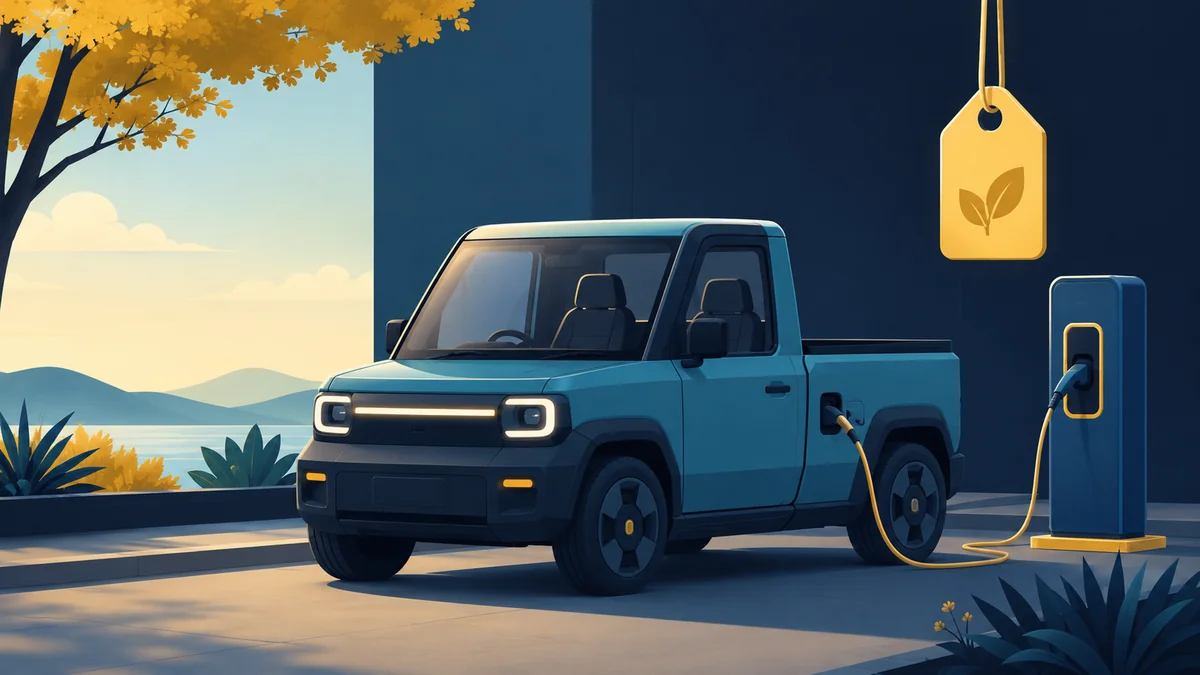
The electric-vehicle industry has a dirty little secret: most EVs are expensive, gadget-stuffed and out of reach for ordinary buyers. On June 24, 2026, a startup decided to attack that problem head-on. Slate Auto — backed by Jeff Bezos — revealed the starting price of its electric pickup: $24,950, which it says makes it the cheapest truck in America.
The twist? It's cheap because it's gloriously, deliberately basic. Crank windows. Optional speakers. Two seats. This is a bet that, in a market obsessed with more, the winning move might be less. Here's the full story.
What Happened
Slate opened preorders on June 24, 2026, confirming the headline number everyone wanted: a $24,950 starting price. After teasing a radically simple, customizable EV, the company finally put a figure on it — and it undercuts essentially every other new truck on sale in the US.
The Price That Turns Heads
In an EV world where "affordable" often means $35,000+, Slate's pricing is genuinely disruptive:
| Configuration | Starting price |
|---|---|
| Slate pickup truck (2-seat) | $24,950 |
| SUV conversion (5-seat) | + ~$5,000 |
| SUV variants (Squareback / Fastback) | from ~$29,950 |
For context, that base price is in the territory of a modest gas economy car — not a new electric truck. It's the kind of number that could pull in buyers who've watched the EV revolution from the sidelines because of cost.
Radically Simple by Design
How do you hit $24,950? By ruthlessly stripping out cost. Slate's truck leans into a back-to-basics philosophy that's almost shocking in 2026:
- Crank windows instead of power windows.
- Speakers are optional — not standard.
- No giant infotainment screen dominating the dash.
- Two seats, focused on utility over frills.
The clever part is that simplicity isn't just cost-cutting — it's the product. Buyers start cheap and add what they actually want, rather than paying for features they don't. It's the opposite of the everything-included approach that defines pricey rivals — and a world away from the feature-maximalist gadgets we usually cover, like Meta's new AI smart glasses.
The Specs
Nobody's buying this for spec-sheet bragging rights, but the numbers are perfectly sensible for everyday use:
- ~205 miles of range (Slate's estimate) — notably up from an earlier 150-mile target.
- Single 65 kWh LFP battery (~63 kWh usable) — durable, cheaper chemistry.
- Rear motor: 181 hp, 195 lb-ft of torque.
The bump to ~205 miles is significant: range anxiety is a top reason people hesitate on cheaper EVs, so clearing 200 miles makes the Slate far more credible as a daily driver.

One Vehicle, Many Forms
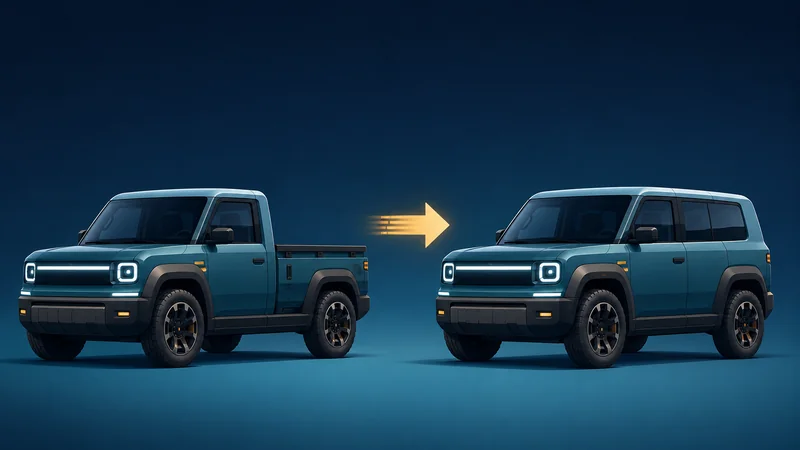
Slate's other big idea is modularity. The same base truck can transform into a five-passenger SUV for around $5,000 more, offered as two body styles — the Squareback and Fastback — starting near $29,950. Buy the cheap truck now; reconfigure or accessorize it as your needs (and budget) grow. It's a refreshingly different ownership model that mirrors the broader shift toward affordable, practical electric vehicles reshaping the market.
When & Where
Preorders are open now, and first deliveries are expected by the end of 2026. Notably, Slate plans to build the trucks in the US, at a reindustrialized plant in Warsaw, Indiana, where it says it will invest nearly $400 million and create more than 2,000 jobs — a domestic-manufacturing story layered on top of the affordability one.
Can It Actually Work?
Here's the skeptic's question: cheap cars are notoriously hard to make money on. Slate insists it has an answer — the company claims the truck will be profitable and is targeting positive cash flow next year. The logic: fewer parts and less complexity lower costs, while paid upgrades and accessories add margin on top.
History is littered with affordable-car dreams that collapsed under their economics, so healthy skepticism is warranted. But if any approach can crack it, "make it dead simple and let people add extras" is a genuinely fresh take.
Frequently Asked Questions
How much does the Slate electric truck cost?
Slate Auto's electric pickup starts at $24,950, which the company says makes it the cheapest truck in America. It can be converted into a five-seat SUV for about $5,000 more, with SUV variants (the Squareback and Fastback) starting around $29,950. Slate opened preorders on June 24, 2026.
Who makes the Slate truck and who is behind it?
It's built by Slate Auto, a US electric-vehicle startup backed by billionaire Jeff Bezos. The company is positioning itself as the antidote to expensive, gadget-laden EVs — betting that a stripped-down, affordable, customizable truck can reach buyers the rest of the industry has priced out.
What's the range and what are the specs?
Slate estimates about 205 miles of range — up from an earlier 150-mile target — from a single 65 kWh LFP battery pack (around 63 kWh usable) driving a rear motor with 181 horsepower and 195 pound-feet of torque. It's a two-seat truck focused on practicality and price rather than performance numbers.
Why does it have crank windows and optional speakers?
That's the whole point: radical simplicity to cut cost. Slate strips out expensive extras most buyers take for granted — power windows, a big infotainment screen, even standard speakers — so the base price can stay near $24,950. Buyers can add features and accessories later if they want, keeping the entry price as low as possible.
When will the Slate truck be available and where is it built?
First deliveries are expected by the end of 2026, with preorders already open. Slate plans to assemble the vehicles at a reindustrialized plant in Warsaw, Indiana, where it says it will invest nearly $400 million and create more than 2,000 jobs.
Can a $24,950 EV actually be profitable?
Slate says yes — it claims the truck will be profitable and is targeting positive cash flow next year. The bet is that extreme simplicity (fewer parts, less complexity) plus paid upgrades and accessories can make a cheap EV sustainable, where many low-cost car projects have failed. Whether it works at scale is the big open question.
Why does this matter for the EV market?
EVs have largely been premium products, leaving a big gap at the affordable end. A genuinely cheap, no-frills electric truck could pull in price-sensitive buyers and pressure rivals to compete on value, not just features. If Slate succeeds, it could help move EVs from luxury toward mainstream — a long-promised but rarely delivered shift.
Final Thoughts
Slate's $24,950 truck is the most interesting EV in ages precisely because it refuses to play the spec-and-screen arms race. Crank windows in 2026 sound like a punchline — until you remember that price, not horsepower, is what actually keeps most people out of EVs.
Whether Slate can survive the brutal economics of cheap cars is genuinely uncertain. But the idea — start dead simple, stay affordable, let owners build up from there — is the freshest swing the EV world has taken in years. If it lands, "less is more" might just be how electric finally goes mainstream. We'll be watching the first deliveries closely.