White House Considers AI Pre-Release Vetting — Federal Review for High-Risk Models
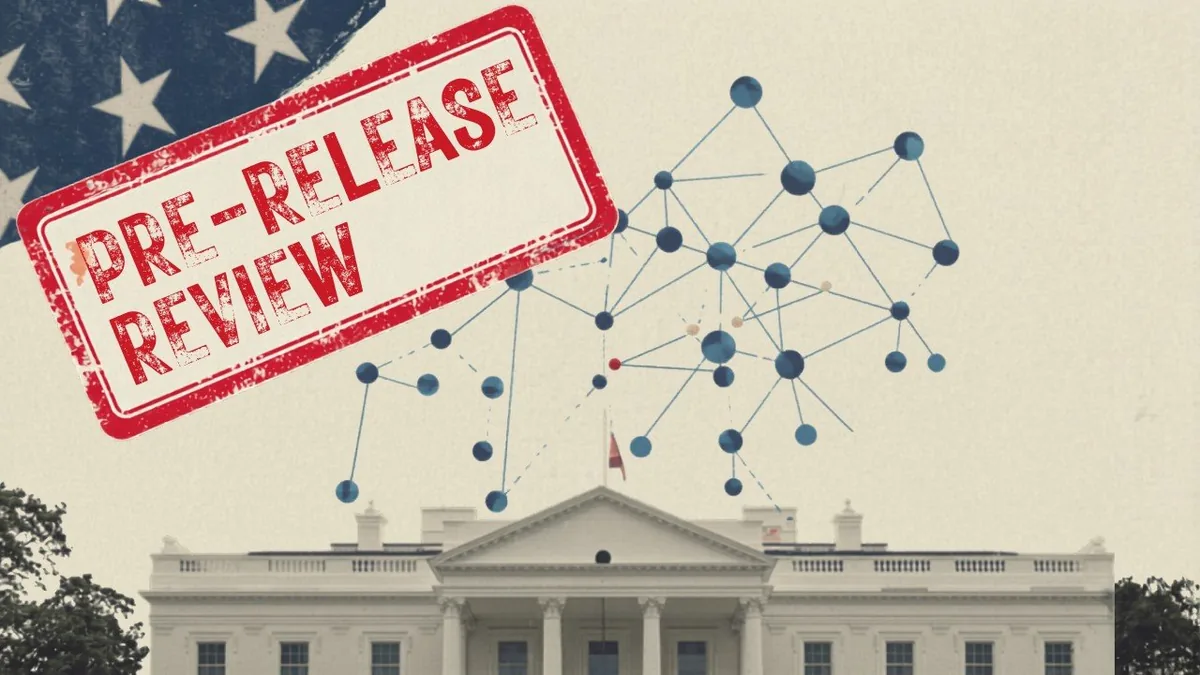
The Trump administration is actively discussing an executive order that would establish a federal AI working group with authority to vet major frontier AI models before public release, according to multiple New York Times and Bloomberg reports yesterday. The framework — described by officials as an "AI safety review" rather than a licensing regime — would represent the most consequential reversal of the administration's previously deregulatory AI posture and creates significant compliance complexity for OpenAI, Anthropic, Google, Meta, and other frontier labs.
The catalyst, per reporting, was Anthropic's "Mythos" incident — the safety controversy around the Claude Mythos preview that surfaced in mid-April. The administration's working group has been studying that case and concluded that meaningful oversight of high-capability models is necessary even within the broader deregulatory framework. The proposed pre-release review would apply only to "high-risk" models defined by capability thresholds (likely tied to compute used in training or to specific dangerous-capability evaluations), not to the broader AI software ecosystem.
What's actually being discussed
Three structural components are reportedly under active discussion. First, a capability threshold trigger — likely 10^25 to 10^26 FLOPs of training compute (matching the Biden-era EO 14110 framework that the Trump administration formally rescinded in early 2025, but with a higher threshold and narrower scope). Second, a federal AI safety panel drawn from NIST, DOE, NSA, and possibly DOD with authority to review pre-release model evaluations. Third, a 30-day review window with the AI lab's deployment plan and safety case, after which the model can be released absent a specific objection.
Importantly, the framework being discussed is not a licensing regime in the strict sense. Labs would not need explicit approval; they would need to submit and respond to specified questions, with default-allow if the panel doesn't raise objections within the review window. That distinction matters legally — licensing regimes face significant First Amendment and constitutional challenges; review-and-respond frameworks typically don't.
The political and industry context
The pivot is striking because the Trump administration's signature AI posture has been deregulatory. The first executive action of the term rescinded Biden's EO 14110, removed pre-deployment testing requirements, and pushed responsibility onto industry self-regulation. The Mythos incident appears to have shifted internal calculations — particularly because Anthropic itself flagged the issue, demonstrating that voluntary safety frameworks were producing real concerns that the public and lawmakers could read.
Industry response has been mixed. Anthropic has publicly supported the directional framing, consistent with its long-running policy posture. OpenAI has been more cautious, expressing concern about specific implementation details rather than the overall framework. Google and Meta have not publicly commented. Civil society and AI safety organizations have broadly supported the framework while calling for stricter rather than narrower scope. The most pointed opposition has come from open-source advocates and some venture capital firms who argue any pre-release review creates anti-competitive incumbents-favor structures.
My Take
This is the right policy at the wrong political moment. Pre-release safety review for the most capable AI models is a structurally defensible position — the asymmetric downside risk of dangerous capabilities reaching public deployment without external evaluation justifies the friction. The 30-day default-allow framework is well-designed and should not meaningfully delay legitimate releases.
The political moment, though, is awkward. Trump-administration AI policy has staked itself on deregulatory positioning, and reversing on safety review will produce internal tensions and external criticism from allies who supported the deregulatory frame. The administration's path forward depends on whether the pivot is positioned as "narrow safety addition" or as a broader rethinking. Narrow framing preserves political cover; broad rethinking provides more robust safety architecture but invites political pushback.
For frontier AI labs, the practical implication is that pre-release evaluations need to become formalized parts of release processes regardless of whether the EO is enacted. Anthropic's existing pre-deployment evaluation framework is the de facto template; OpenAI, Google, and Meta will likely converge on similar processes whether voluntarily or by mandate. Founders of smaller AI labs face less near-term pressure (most won't cross the capability threshold) but should expect downstream regulatory clarity within 12-18 months.
What this means for the AI policy landscape
Three implications. First, expect narrow but formal pre-release review to become U.S. policy within 60-90 days, applied only to the largest frontier model releases. Second, expect international alignment pressure — the EU AI Act already includes similar provisions for general-purpose AI models; aligning US policy reduces friction in transatlantic AI deployment. Third, expect continued debate over the capability threshold — open-source advocates will push for higher thresholds, civil society will push for lower ones, and the actual number will end up where political compromise dictates.
For investors, this is mildly negative for frontier-AI lab valuations in the near term (compliance overhead) and structurally positive in the long term (reduces tail risk of major incident-driven regulation). The labs that handle this transition with operational maturity will compound their lead; the labs that fight it visibly will face reputational costs.
Frequently Asked Questions
Is this a licensing regime?
No, per the framing being discussed. The proposed framework is a review-and-respond model with default-allow if no specific objection is raised within 30 days. Labs do not need explicit approval, just submission and response.
What models would be subject to review?
Only models above a high capability threshold — likely 10^25 to 10^26 FLOPs of training compute. This captures the largest frontier models from OpenAI, Anthropic, Google, Meta, and a handful of others; smaller models would be unaffected.
When would this take effect?
If the executive order is signed, likely 60-90 days from announcement. Implementation details (who serves on the panel, evaluation methodology, etc.) would take longer to formalize.
How does this compare to the Biden EO 14110?
Similar in spirit but narrower in scope. The Biden EO required pre-deployment testing for any model above the threshold; the proposed Trump framework adds a federal review layer rather than just internal testing requirements.
The Bottom Line
The Trump administration's reported pivot toward AI pre-release vetting is the most significant U.S. AI policy shift of 2026 to date. Expect a narrow, structured executive order within 60-90 days that adds a federal review layer to the largest frontier model releases without becoming a full licensing regime. The Mythos incident was the catalyst; broader safety architecture is the strategic outcome.
Related Articles
- Anthropic Launches Claude Security in Public Beta
- OpenAI Staff Flagged Violence-Reporting Failures
- OpenAI Restricts Cyber Tool After Criticizing Anthropic