Withings+ Paywall: What It Changes for Apple Health Sync
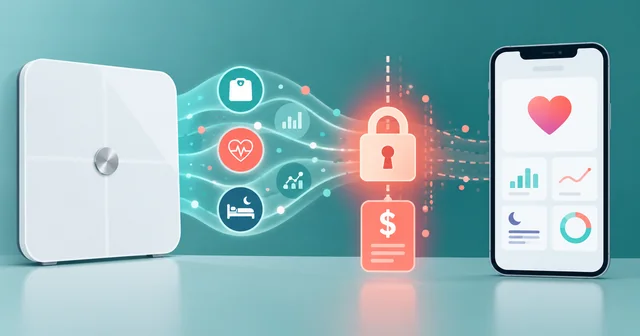
Withings now charges new customers for automatic syncing to Apple Health, Google's Health Connect and other third-party apps. Accounts created on or after mid-October 2026 need a Withings+ membership, roughly $100 a year in the US, to keep that data flowing. Existing accounts keep free syncing, and manual CSV or PDF exports remain free for everyone.
What Happened
The change surfaced on October 13, 2026, when a Withings customer posted on the company's support community that Apple Health syncing had disappeared behind a paywall on a newly created account. An official Withings reply in that thread confirmed it: for accounts created from October 13, automatic sync to third-party apps is part of Withings+, the company's paid membership. Withings support material names Apple Health and Health Connect, Google's Android health-data hub, as covered destinations.
The same rule appears on the developer side. A banner on the Withings Partner Hub says Withings+ "becomes required on the Start for Free API plan" from October 12, 2026. Withings accounts created after that date will need a membership to share health data through apps on that free API tier, and the notice says this applies to apps that are already live, not only to new ones. Accounts created before the date are unaffected, and Withings says its paid Enterprise plan lifts the requirement for specific use cases.
Price reports vary slightly. MacRumors, in its October 15 report, puts Withings+ at $99.50 a year in the US. Engadget rounded that to $100, and Gadgets & Wearables cited $9.99 a month or $99.99 a year. Whichever figure is current, it is a recurring cost on top of hardware that Engadget notes runs from about $280 for a mid-range scale to $600 for the Body Scan 2.
Withings has given a short rationale. According to Gadgets & Wearables, the company says subscription revenue helps pay for clinical validation, regulatory work and the infrastructure behind its health platform. Withings has not published a longer explanation, and Engadget reported that the company had not responded to its request for further comment.
Why It Matters
For most Withings owners, Apple Health or Health Connect is where the scale, blood-pressure cuff or sleep mat actually becomes useful. Those hubs are how a weight reading reaches a calorie-tracking app, how a coach sees a resting heart rate trend, and how an iPhone's Health app builds a single timeline from devices made by different companies. Making that connection a paid feature changes what a Withings device is: no longer a one-time purchase that plugs into your existing health setup, but a device whose most useful export now carries an annual fee for new buyers.
The cut-off is tied to the account, not the hardware. MacRumors noted that an existing customer who buys a new scale keeps free syncing, because the rule follows the account creation date. That creates two classes of Withings user with identical devices: people who signed up before mid-October 2026, and everyone after. A household where one person already has a Withings account and another sets one up next week could see different behaviour from the same scale on the same shelf.
The developer change reaches further than the consumer one. Many independent apps and home-automation tools read Withings data through the free Public API rather than through Apple Health. The Home Assistant Withings integration documentation now states that a Withings+ subscription is required for accounts created after October 11, 2026. So a new customer who hoped to route measurements into a self-hosted dashboard, rather than through Apple or Google, hits the same requirement. Withings told Gadgets & Wearables that users cannot get around it by sharing through Apple Health or Google's ecosystem instead.
It also fits a wider pattern. Hardware makers with thin margins have been moving features into subscriptions for several years, from fitness coaching to advanced sleep analysis. What makes this case stand out is that syncing is plumbing rather than analysis: it moves data the user already generated to somewhere else the user chose.
How It Works
To see what Withings is actually gating, it helps to trace a single weigh-in. A Withings scale measures you, then sends the reading over Wi-Fi or Bluetooth Low Energy to Withings' own cloud. The Withings Public API overview describes this path: devices upload to Withings servers, where data is stored in a cloud that Withings says meets HDS and HIPAA standards. The Withings phone app then shows you the reading from that cloud.
From there, data can leave Withings in three main ways.
1. The phone's health hub. On an iPhone, the Withings app can write measurements into Apple Health using Apple's HealthKit framework, after you grant permission for each data type. On Android, the equivalent is Health Connect, which stores health records on the device and lets apps read and write them with user consent. Neither Apple nor Google charges for this; HealthKit and Health Connect are free system services. The decision to stop writing for non-members is made inside the Withings app and service, which checks whether your account has an active Withings+ entitlement before pushing new data across.
2. The Withings Public API. Third-party services such as fitness platforms, nutrition apps or Home Assistant connect directly to Withings' cloud. You authorise them through an OAuth consent screen, which gives the app a token to fetch your data. Withings also offers a notification and webhook system, so a partner learns about a new measurement shortly after it arrives instead of repeatedly polling. The new requirement sits on the free "Start for Free" API plan: when the account behind the token was created after the cut-off and has no membership, the data stops being shared, even if the app was working before.
3. Manual export. According to Withings' reply on its community forum, non-members can still export their full history as a CSV or PDF file at any time, keep importing data from other apps into Withings, and share readings with a doctor through its HealthLink feature and PDF reports. That keeps your data portable in principle, but turns an automatic, continuous feed into a chore: you would need to re-export and re-import every time you want other apps to see fresh numbers.
Withings also says syncing works during the Withings+ free trial, and that if a membership lapses, sync pauses but no data is deleted. In practice that means a new customer can set everything up during the trial, see it working, and then watch Apple Health or Health Connect stop updating when the trial ends, while the Withings app itself continues to show every measurement.
One consequence of account-based gating is worth spelling out. Because the check is on the account, not on the device's serial number, the entitlement travels with your login. Keeping one older account for the whole household, rather than creating new profiles, is the obvious way existing families will keep free sync. Whether Withings treats new profiles under an older account differently from brand-new accounts has not been clarified.
What's Still Unknown
The exact cut-off date. Withings' sources disagree. The forum reply and support FAQ say accounts created from October 13, the developer portal says October 12, and the Home Assistant documentation says after October 11. If you set up an account in that window, check the Withings app directly rather than relying on any single date.
Whether existing accounts stay grandfathered. Withings says the change does not apply retroactively. It has not said that will remain true indefinitely, and companies that introduce a split between old and new users often revisit it later.
Which partner apps are affected. Withings names Apple Health and Health Connect. Coverage has not confirmed whether specific services such as Strava or MyFitnessPal connect through the Start for Free plan or through a separate commercial agreement that might exempt them under the Enterprise terms.
Regional pricing and regulators. Prices outside the US have not been widely reported. In the European Union, data-portability rights under the GDPR and the Data Act could shape how far a company can go in charging for automated transfers of user-generated data, but no regulator has commented on this change.
Retail returns. Buyers who purchased a Withings device just before or after mid-October without knowing about the fee may ask retailers for refunds. How stores and Withings handle those requests is unclear.
Frequently Asked Questions
Do existing Withings users have to pay for Apple Health sync?
No. Withings says accounts created before the October 2026 cut-off keep free automatic syncing to Apple Health, Health Connect and other third-party apps. MacRumors reported that this is tied to the account creation date, so an existing customer who buys a new Withings scale or monitor and adds it to their current account should keep syncing for free.
How much does Withings+ cost?
Reports put Withings+ at about $100 a year in the United States. MacRumors listed $99.50 a year, while Gadgets & Wearables cited $9.99 a month or $99.99 a year. Withings offers a free trial during which syncing works. Prices in other countries have not been widely reported, so check the Withings app for the figure in your region before subscribing.
Can new users still move their Withings data without paying?
Yes, but only by hand. According to Withings' reply on its support forum, non-members can export their full history as a CSV or PDF file at any time and share readings with a doctor through HealthLink and PDF reports. What they lose is the automatic, continuous feed into Apple Health, Health Connect and apps on the free Withings API plan.
Does the change affect Android and Google Health Connect?
Yes. Withings support material names Health Connect, Google's Android health-data platform, alongside Apple Health as a destination that now requires Withings+ for new accounts. Withings told Gadgets & Wearables that users cannot avoid the requirement by routing data through Apple's or Google's ecosystems instead, so Android owners with new accounts face the same fee as iPhone owners.
What happens if my Withings+ membership lapses?
Withings says syncing to third-party apps pauses when a membership ends, but no data is lost. Your measurements continue to appear in the Withings app and stay stored in your Withings account. Apple Health, Health Connect and connected apps would simply stop receiving new readings until you subscribe again or export the missing period manually.
Does this affect Home Assistant and other API apps?
Yes, for new accounts. The Withings developer portal says Withings+ becomes required on its free Start for Free API plan from October 12, 2026, including for apps already live. Home Assistant's Withings integration documentation now states that a subscription is required for accounts created after October 11, 2026. Accounts created before those dates are unaffected.
Why is Withings charging for data syncing?
Withings has said subscription revenue helps fund clinical validation, regulatory work and the infrastructure behind its health platform, according to Gadgets & Wearables. The company has not given a fuller explanation. Critics on its own support forum argue that syncing is basic plumbing for data the user already generated, rather than a premium analysis feature that justifies an annual fee.
Related Reading
If you are weighing a Withings scale against other options, our guide to Withings' smart scale with nerve and artery health checks explains what the company's higher-end hardware measures. For broader shopping advice, see our roundup of the best activity trackers and fitness wearables of 2026 and our explainer on how to choose a sleep tracker. For the history of health-data syncing between platforms, read about how Google and Samsung joined forces to sync fitness data across apps, and for another recent change in wearable ownership costs, see what Fitbit Edge's replaceable battery changes for trackers.