Best POS Systems for Small Businesses in 2026: Retail, Restaurant & Mobile Compared
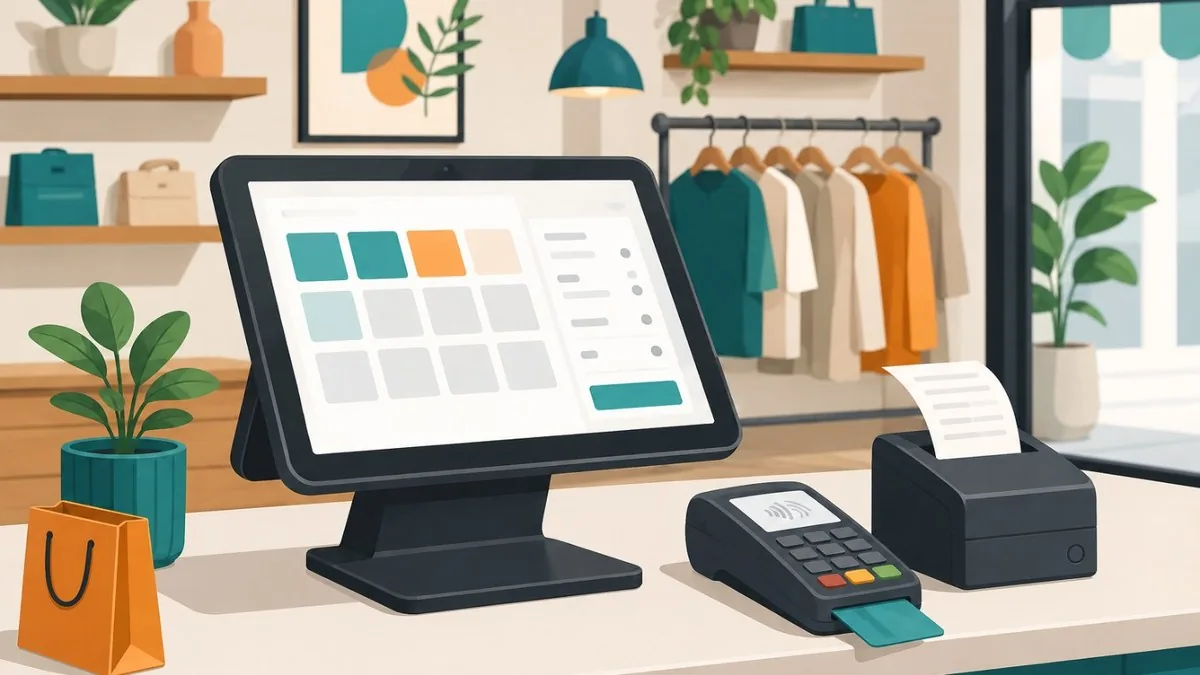
Choosing a point-of-sale system in 2026 means weighing software fees, payment-processing rates, hardware costs and how well a platform fits your specific industry. The market has split into clear leaders — Square and Shopify for general retail and mobile selling, Toast and SpotOn for restaurants, and interchange-plus processors like Helcim for higher-volume merchants who want to cut fees. Below are the leading systems this year, with current pricing and the use case each one wins.
Key takeaways:
- Square is the best default POS for most small businesses thanks to a free plan, free starter hardware and no contracts.
- Shopify POS wins for sellers who operate both online and in-store because inventory and orders stay synced across channels.
- Restaurants should choose a purpose-built system — Toast for depth, SpotOn for lower processing rates, or Lightspeed Restaurant for inventory analytics.
- Once you process more than about $5,000 a month, interchange-plus pricing from Helcim (or Clover's bring-your-own-processor option) typically beats flat-rate fees.
- Always calculate total cost of ownership — software plus realistic processing fees plus hardware and add-ons — rather than comparing headline monthly prices.
Best POS Systems at a Glance
- Square POS — General retail/mobile · Free plan (Plus $49/mo, Premium $149/mo) · 2.6% + 15¢ in-person · Best for new and small sellers
- Shopify POS — Omnichannel retail · POS Lite free with any plan, Pro $89/mo per location · ~2.4–2.6% + 10¢ · Best for online + in-store
- Toast — Restaurants · Free Starter Kit, POS $69/mo, Build-Your-Own from ~$110/mo · 2.49–2.99% + 15¢ · Best for full-service restaurants
- Clover — Retail & restaurant · Software from ~$15/mo per device · ~2.3–2.5% + 10¢ · Best for processor choice
- Lightspeed Retail — High-SKU retail · Basic $89/mo, Core $149/mo, Plus $289/mo (annual) · 2.6% + 10¢ · Best for inventory-heavy retail
- Helcim — Value/low-fee processing · No monthly fee · Interchange + 0.4% + 8¢ in-person · Best for $5K+/mo merchants
- Stripe Terminal — Developer/online-first · No monthly fee · 2.7% + 5¢ in-person · Best for tech-forward, online-first businesses
- SpotOn — Restaurants (value) · From ~$25–$99/mo · 1.99% + 25¢ · Best for restaurants wanting lower fees than Toast
- Lightspeed Restaurant — Restaurants · From ~$189/mo · Lightspeed Payments · Best for restaurants needing strong inventory
- PayPal Zettle — Micro-business/mobile · No monthly fee · ~2.29% + 9¢ in-person · Best for tiny sellers already on PayPal
The Picks, Reviewed
1. Square POS
General retail/mobile · Free plan (Plus $49/mo, Premium $149/mo) · 2.6% + 15¢ in-person · Best for new and small sellers
Square remains the default all-in-one POS for most small businesses thanks to a genuinely free plan that bundles the POS app, a free tap reader, basic inventory, invoicing and a free online store. In-person card payments run 2.6% + 15¢ on the free plan, with paid Plus ($49/mo) and Premium ($149/mo) tiers dropping rates slightly. Hardware ranges from a $59 reader up to the ~$799 Square Register. It is the easiest system to set up with no contracts, though most merchants outgrow flat-rate pricing once they process well above $15,000–$20,000 a month.
2. Shopify POS
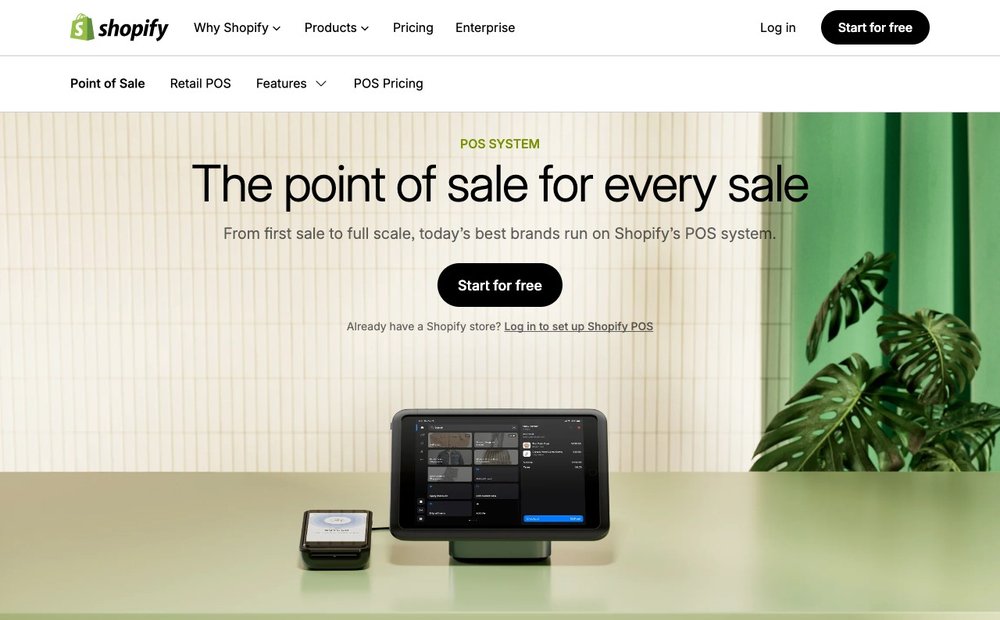
Omnichannel retail · POS Lite free with any plan, Pro $89/mo per location · ~2.4–2.6% + 10¢ · Best for online + in-store
Shopify POS is the strongest pick for merchants who sell both online and in a physical shop, because in-store and web inventory, orders and customers stay synced in real time. POS Lite is included free with any Shopify subscription, while POS Pro ($89/mo per location) adds unlimited staff accounts, demand forecasting and buy-online-pickup-in-store. In-person processing runs roughly 2.4–2.6% + 10¢, and 2026 adds Quick Count inventory adjustments and Klarna buy-now-pay-later at checkout.
3. Toast
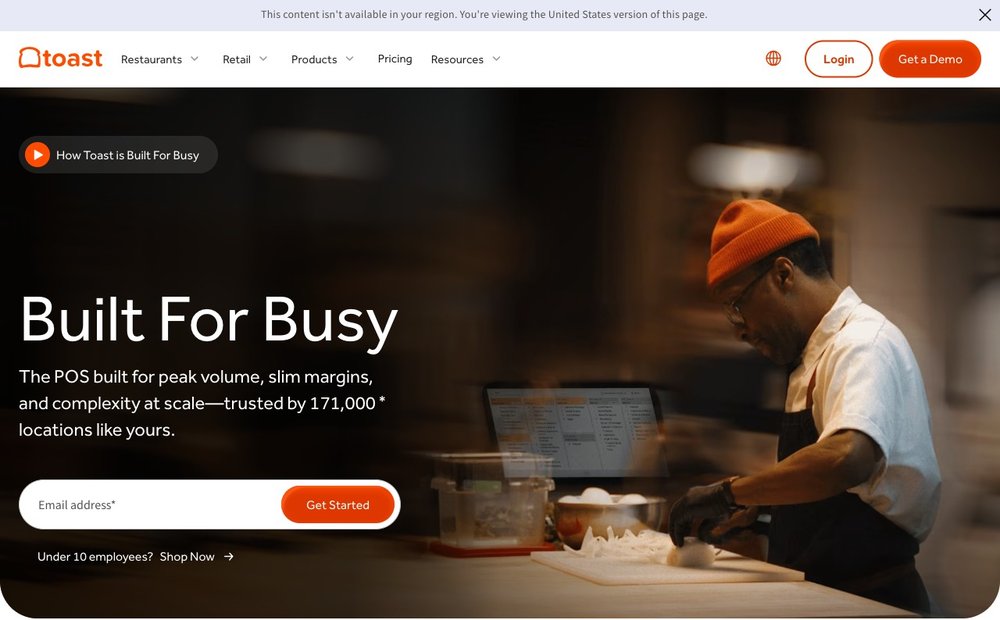
Restaurants · Free Starter Kit, POS $69/mo, Build-Your-Own from ~$110/mo · 2.49–2.99% + 15¢ · Best for full-service restaurants
Toast is the purpose-built restaurant POS, with spill-resistant Android hardware, deep menu and kitchen tools, tableside ordering and a kitchen display system. A free Starter Kit plan carries higher processing (around 2.99% + 15¢), while the $69/mo Point of Sale plan lowers that to 2.49% + 15¢, and modular plans start near $110/mo. Add-ons such as online ordering and loyalty cost extra, so full-service restaurants typically land at $1,000–$2,000+/month all-in. Its standout strength is restaurant-specific depth general POS systems cannot match.
4. Clover
Retail & restaurant · Software from ~$15/mo per device · ~2.3–2.5% + 10¢ · Best for processor choice
Clover, owned by Fiserv, is an all-in-one hardware-and-software ecosystem and the one major brand here that lets you bring your own payment processor — so you can shop for interchange-plus rates instead of being locked to flat pricing. Retail software starts around $15/month per device, with restaurant plans from $135–$179/mo; in-person rates run about 2.3–2.5% + 10¢. Hardware is pricey (Station Solo/Duo run $1,699–$2,099) and direct purchases often carry 36- to 48-month contracts, so buying through a reseller can lower rates but makes terms vary widely.
5. Lightspeed Retail
High-SKU retail · Basic $89/mo, Core $149/mo, Plus $289/mo (annual) · 2.6% + 10¢ · Best for inventory-heavy retail
Lightspeed Retail is the POS to choose when inventory is the hard part of your business — bike shops, wine stores, sporting goods and multi-location operations with thousands of SKUs. Plans run Basic ($89/mo), Core ($149/mo) and Plus ($289/mo) on annual billing, with Lightspeed Payments at 2.6% + 10¢ in-person. Its inventory engine handles variants, bundles, serialised items, purchase orders, vendor catalogues of 8M+ preloaded items and real-time multi-location stock — a level above Square, Clover or Shopify.
6. Helcim
Value/low-fee processing · No monthly fee · Interchange + 0.4% + 8¢ in-person · Best for $5K+/mo merchants
Helcim is the value standout for businesses past the startup stage: free POS software, no monthly fee, no contracts and no PCI compliance charge. Crucially it uses interchange-plus pricing — interchange + 0.4% + 8¢ in person — which is structurally cheaper than flat-rate systems once you are processing real volume. Automatic volume discounts lower your rate further as sales grow, with no need to renegotiate. For most merchants doing $5,000+/month, Helcim delivers the lowest total cost on this list.
7. Stripe Terminal
Developer/online-first · No monthly fee · 2.7% + 5¢ in-person · Best for tech-forward, online-first businesses
Stripe Terminal extends Stripe's developer-friendly payments platform into the physical world, ideal for online-first brands that want in-store and e-commerce payments under one API and dashboard. In-person card payments run a flat 2.7% + 5¢ and online 2.9% + 30¢, with no monthly fee. Flat-rate pricing is easy to budget but costs more than interchange-plus at higher volumes, and Terminal requires more technical setup than plug-and-play rivals. It shines when you have developer resources and a custom checkout.
8. SpotOn
Restaurants (value) · From ~$25–$99/mo · 1.99% + 25¢ · Best for restaurants wanting lower fees than Toast
SpotOn is the strongest value alternative to Toast for restaurants and bars, frequently undercutting it on processing at around 1.99% + 25¢ per transaction. Pricing starts near $25/month for a base restaurant POS, with counter-service packages from about $99/mo. It covers tableside ordering, online ordering, loyalty and handheld devices, and has built a reputation for hands-on local support. For high-volume restaurants, its lower processing rate can save meaningfully versus Toast or Square over a year.
9. Lightspeed Restaurant
Restaurants · From ~$189/mo · Lightspeed Payments · Best for restaurants needing strong inventory
Lightspeed Restaurant is the food-service counterpart to Lightspeed Retail, aimed at restaurants that care about menu engineering, ingredient-level inventory and detailed analytics as much as fast service. It offers tableside ordering, floor plans, a kitchen display system and contactless payments, with plans typically starting around $189/month. It is a credible Toast alternative for operators who want deeper cost-of-goods tooling, and it fits multi-location groups well, so it suits established restaurants rather than first-time owners.
10. PayPal Zettle
Micro-business/mobile · No monthly fee · ~2.29% + 9¢ in-person · Best for tiny sellers already on PayPal
PayPal Zettle is a simple, low-commitment mobile POS aimed at micro-businesses, market vendors and service providers who already use PayPal. There is no monthly software fee, the card reader is inexpensive, and in-person card payments run about 2.29% + 9¢, with payouts flowing into a familiar PayPal balance. It handles basic inventory, sales reporting and contactless payments, and ties into PayPal's online checkout. It lacks the depth of Square or Lightspeed, but for the smallest sellers it is an easy, cheap way to start taking cards.
How to Choose the Right POS System
Start with your industry. The single biggest factor is the type of business you run. Restaurants need menu management, tableside ordering and a kitchen display system, which means restaurant-built platforms like Toast, SpotOn or Lightspeed Restaurant. High-SKU retailers need serious inventory tools and should look at Lightspeed Retail, while general retailers and mobile sellers are usually best served by Square or, if they also sell online, Shopify POS.
Understand the two costs that matter: software and processing. Many systems advertise a free or cheap monthly plan but make their money on payment-processing fees. Flat-rate pricing (roughly 2.4%–2.9% + a fixed cents charge) is simple and fine at low volume. But once you are processing more than about $5,000–$20,000 a month, interchange-plus pricing from a processor like Helcim — or Clover's bring-your-own-processor option — can save hundreds of dollars a year.
Factor in hardware and contracts. A basic mobile reader can cost as little as $59, but full registers and restaurant terminals run $700–$2,000+ each. Watch for multi-year commitments: Clover and many restaurant systems lock you into 36- to 48-month contracts with early-termination fees, whereas Square, Helcim and Stripe have no contracts. Also budget for add-ons — online ordering, loyalty and advanced reporting frequently cost extra each month.
Check integrations and total cost of ownership. Make sure the POS connects to the accounting, e-commerce and payroll tools you already use, and confirm it supports contactless, Apple Pay, Google Pay and increasingly buy-now-pay-later. Then add it all up — monthly software, realistic monthly processing on your volume, hardware and any per-employee fees. The cheapest headline price is rarely the cheapest system once processing is included.
Sources & Further Reading
- NerdWallet's Square fees guide
- Fit Small Business: best POS systems
- Tech.co: Square vs Clover vs Toast
Frequently Asked Questions
What is the best POS system for a small business in 2026?
For most small businesses, Square is the best all-around choice because it has a genuinely free plan, free starter hardware, no contracts and the easiest setup. The best system depends on your industry, though: restaurants are better served by Toast or SpotOn, omnichannel retailers by Shopify POS, high-SKU shops by Lightspeed, and higher-volume merchants who want the lowest fees by interchange-plus processors like Helcim.
How much does a POS system cost per month?
Software ranges from $0 (Square, Helcim, Stripe, PayPal Zettle) to roughly $89–$289/month for advanced retail plans like Shopify POS Pro or Lightspeed. Restaurant systems often run $69–$179+/month before add-ons. On top of software you pay payment-processing fees of roughly 2.3%–2.9% per transaction, plus one-time hardware costs from $59 for a reader to $2,000+ for a full terminal.
What is the difference between flat-rate and interchange-plus pricing?
Flat-rate pricing charges the same percentage on every card (for example 2.6% + 15¢), which is simple and predictable. Interchange-plus passes through the card networks' true cost plus a small fixed markup, so you pay less on cheaper card types. Flat-rate is fine at low volume, but interchange-plus (offered by Helcim, or via Clover's bring-your-own-processor option) usually costs less once you process more than about $5,000 a month.
Which POS system is best for restaurants?
Toast is the most popular restaurant POS, with durable hardware and deep menu, kitchen and tableside tools built specifically for food service. SpotOn is the leading value alternative, often beating Toast on processing rates at around 1.99% + 25¢, and Lightspeed Restaurant is strong for operators who want detailed inventory and menu-engineering analytics. The right pick depends on your service style and budget.
Do I have to sign a long-term contract for a POS system?
Not always. Square, Helcim, Stripe and PayPal Zettle have no long-term contracts, so you can leave anytime. However, Clover and many restaurant systems — especially when bundled with financed hardware — often require 36- to 48-month commitments with early-termination fees. Always read the contract terms and check for cancellation penalties before signing.
Information is based on public sources and vendor pages current as of June 2026. Prices, plans and features change frequently — verify on the official site before purchasing. SaveDelete may earn a small commission on purchases made through some links on this page, at no extra cost to you.