The 5 Best Music Streaming Services in 2026
Is this the end of music ownership? For most listeners in 2026, it already is. A single subscription now puts more than 100 million tracks on every device you own — phone, laptop, smart speaker and car — for about the price of one album a month. You stream it; you don't keep it.
The field has settled into a handful of genuinely excellent services, and the differences that matter now are sound quality, recommendations, price and which gadgets you already live with. Spotify still leads on discovery and reach, but Apple Music, Tidal and Amazon have quietly closed the gap on catalog and pulled ahead on hi-res audio.
This guide ranks the five services worth paying for in 2026, with honest notes on where each one wins and where it falls short — followed by a shortlist of niche options (audiophile, indie, radio-style) that are worth a look for the right listener.
All prices are US dollars for the standard individual plan as of 2026. Streaming prices have crept up steadily, and family and student tiers change often, so treat the numbers as a strong guide and confirm the current rate on each service before you subscribe.
Short answer:
Want the best all-rounder? Get Spotify. Want the most sound quality for your money? Apple Music. Live in an Alexa/Prime household? Amazon Music Unlimited. Care most about hi-res audio and paying artists fairly? Tidal (or Qobuz). Just want free? Spotify or YouTube Music.
The 5 Best Music Streaming Services Compared
| Service | Best for | Catalog | Top audio quality | Free tier | From (US/mo) |
|---|---|---|---|---|---|
| Spotify | All-round experience & discovery | 100M+ | Lossless (Premium) | Yes (ads) | $11.99 |
| Apple Music | Apple users & hi-res sound | 100M+ | 24-bit/192kHz + Dolby Atmos | No (trial) | $10.99 |
| YouTube Music | Video, remixes & live versions | 100M+ (plus YouTube) | 256kbps AAC | Yes (ads) | $10.99 |
| Amazon Music Unlimited | Alexa & Prime households | 100M+ | Ultra HD lossless + spatial | No (trial) | $10.99 (Prime) |
| Tidal | Audiophiles & artist payouts | 110M+ | HiRes FLAC + Dolby Atmos | No (trial) | $10.99 |
The Picks, Reviewed
1. Spotify
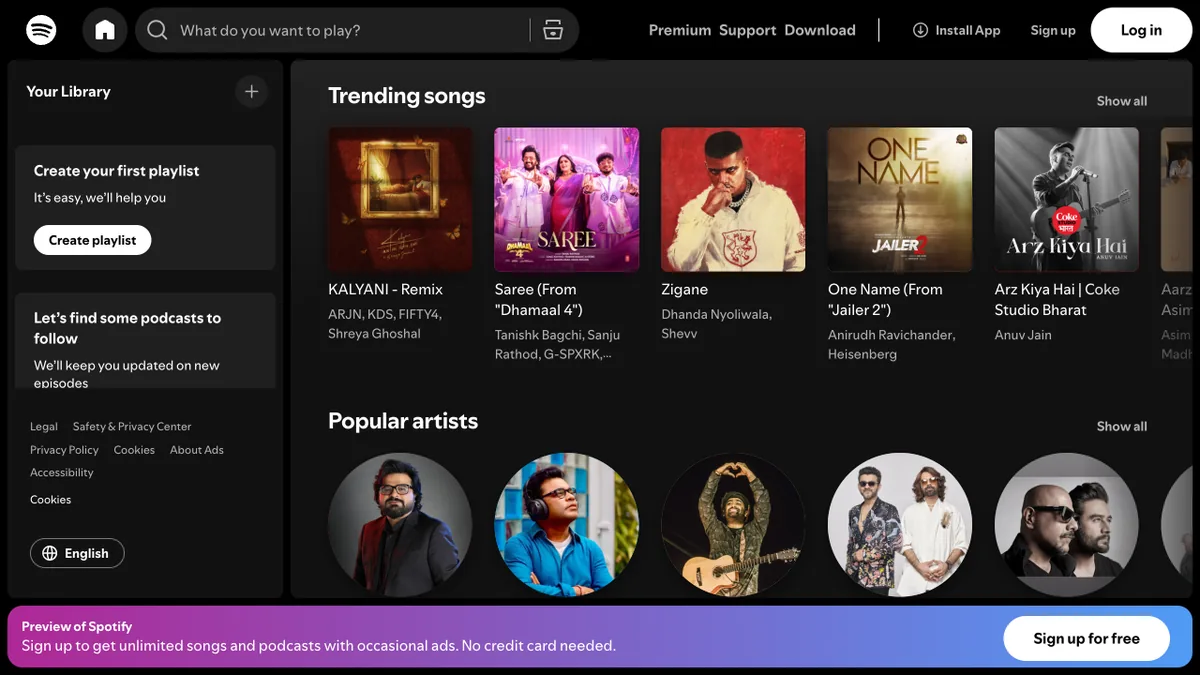
Best all-rounder · Free (ad-supported) + Premium from $11.99/mo · 100M+ tracks
Spotify is still the poster child for streaming, and for good reason: the app is fast, the library is vast, and nothing else matches its recommendation engine. Discover Weekly, Release Radar and the conversational AI DJ consistently surface music you actually want to hear. It also folds in the biggest podcast library and, increasingly, audiobooks. In 2025 Spotify finally added lossless audio to Premium, closing its biggest long-standing gap against Apple and Tidal. The free tier is the most useful in the business — unlimited on-demand play on desktop, shuffle on mobile — which is why so many people never leave.
For: Best-in-class recommendations; huge podcast catalog; slick cross-device experience; genuinely usable free tier.
Against: Lossless arrived late and rolls out gradually; artist payouts are among the lowest.
Verdict: The default choice, and still the one to beat.
2. Apple Music
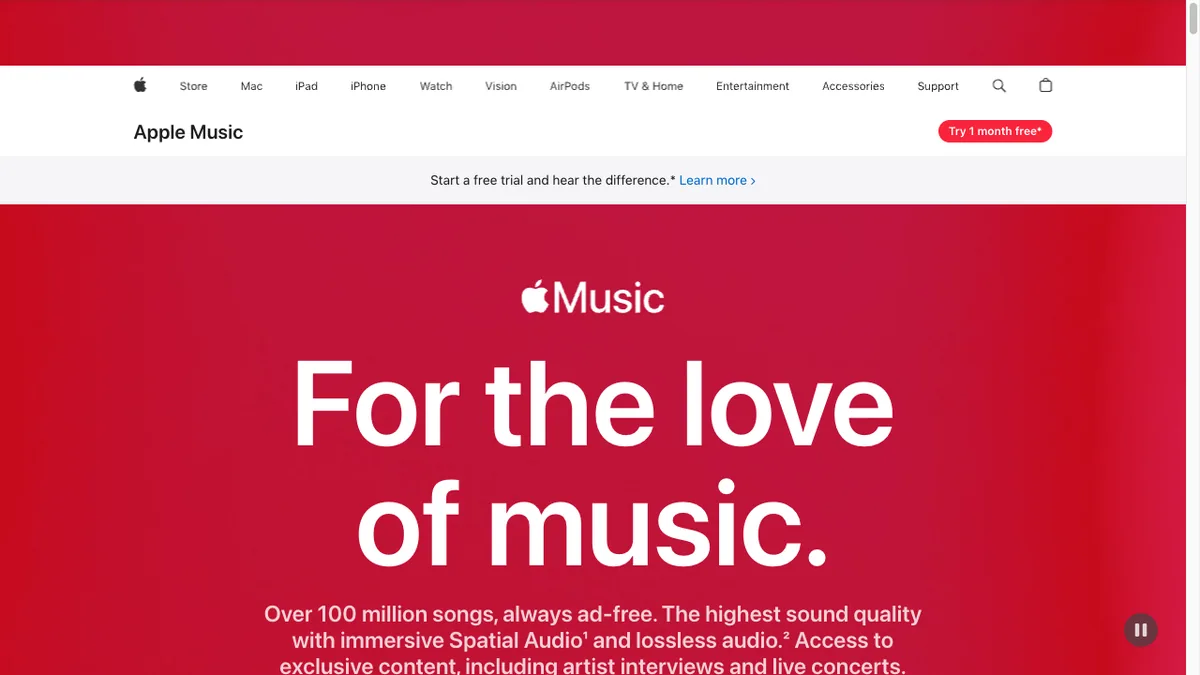
Best for sound quality & Apple users · No free tier (1-month trial) + $10.99/mo · 100M+ tracks
Apple Music quietly offers the most audio for your money. Every subscription includes Hi-Res Lossless up to 24-bit/192kHz and Dolby Atmos spatial audio at no extra charge — something Tidal and Qobuz treat as a premium selling point. Human-curated playlists and radio (including live shows) give it a more editorial feel than algorithm-first rivals, and it's baked into every iPhone, Mac, Apple Watch and HomePod with Siri control. On non-Apple hardware it's less seamless, and there are no podcasts in the app. But for anyone in the Apple ecosystem who cares about sound, it's the obvious pick.
For: Hi-res lossless and spatial audio included; deep Apple/Siri integration; strong human curation.
Against: No free tier; no podcasts; clunkier on Android and Windows.
Verdict: The best value in high-quality streaming — especially if you own an iPhone.
3. YouTube Music
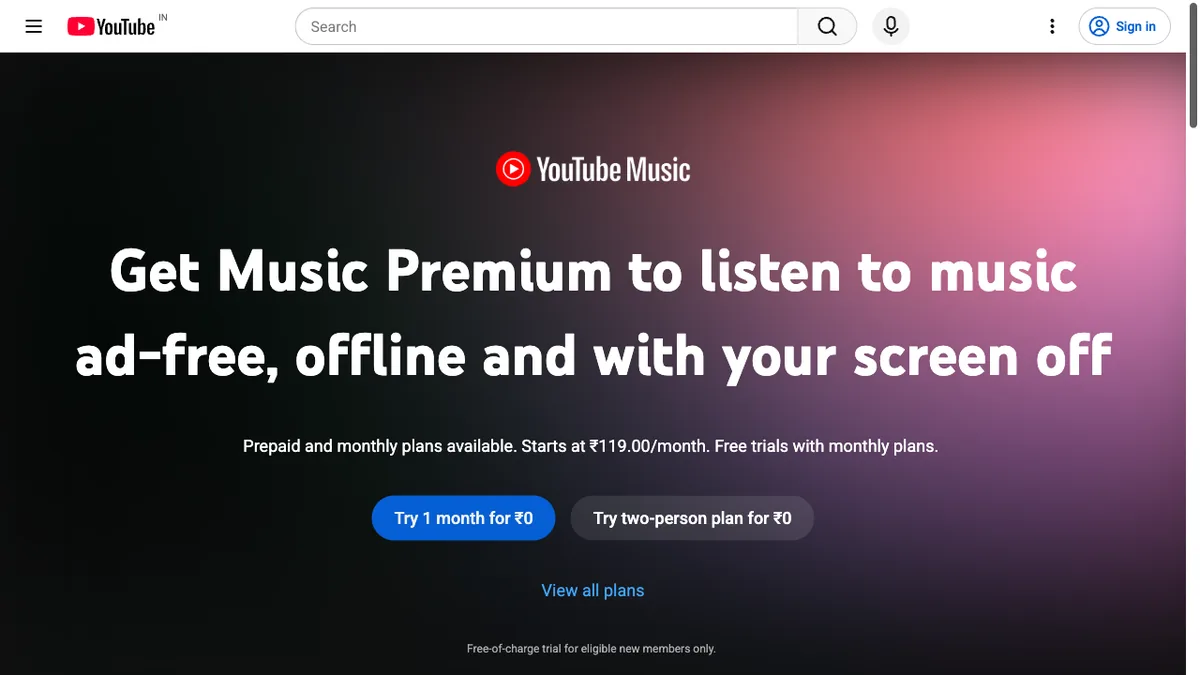
Best for video & deep cuts · Free (ad-supported) + $10.99/mo · 100M+ tracks plus all of YouTube
YouTube Music's superpower is the catalog behind it. On top of 100M+ official tracks, it can pull from the entire YouTube library — live sessions, remixes, covers, rare uploads and songs that never made it to other platforms. If you constantly hunt for the exact live version or an obscure remix, nothing else comes close. It's pre-installed on Android, offers a solid free tier (with the screen on), and a single YouTube Premium subscription ($13.99) makes both YouTube Music and all of YouTube ad-free. The trade-off: no lossless, and the music-plus-video hybrid can feel less focused than a pure audio app.
For: Unmatched breadth of live versions, remixes and rarities; bundles with ad-free YouTube; good free tier.
Against: No lossless (256kbps ceiling); interface juggles music and video.
Verdict: The best pick for anyone who lives on YouTube already.
4. Amazon Music Unlimited
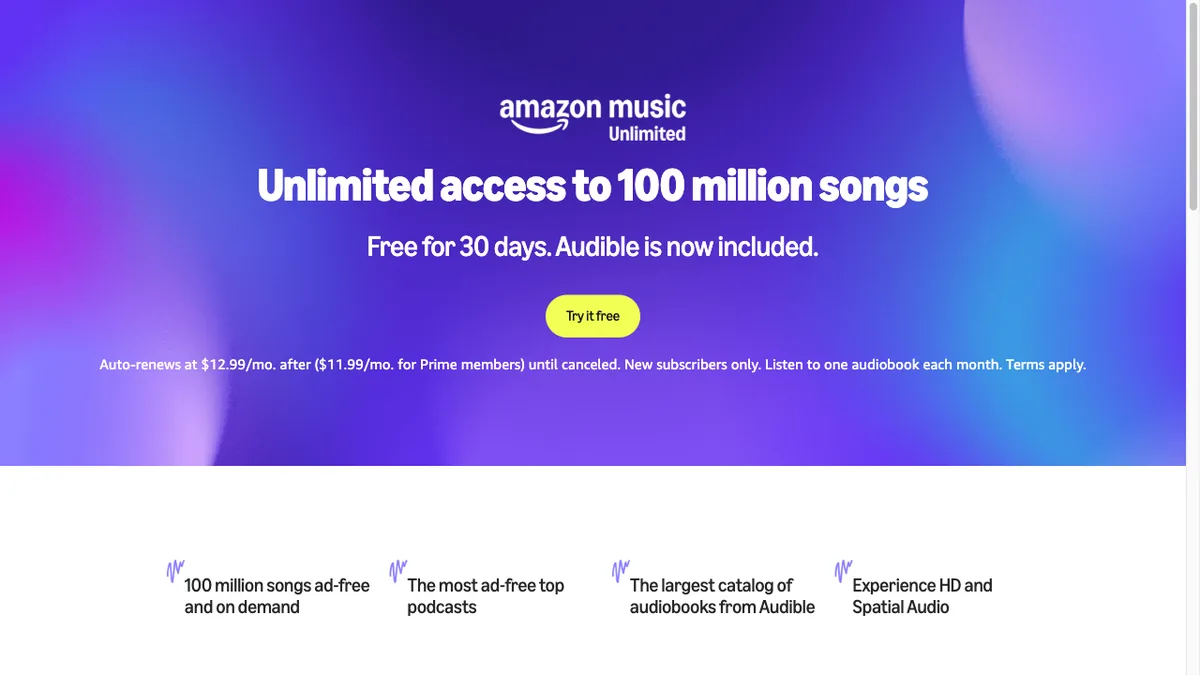
Best for Alexa & Prime homes · No free tier (trial) + $10.99/mo for Prime members · 100M+ tracks
If your home already runs on Alexa, Amazon Music Unlimited is the path of least resistance. Prime members pay $10.99/month (non-Prime $11.99), and the service includes Ultra HD lossless and spatial audio at no extra cost, putting it alongside Apple and Tidal on sound. Voice control through Echo speakers is the best in the business — ask for a song, an artist, or "music for cooking" and it just plays. It's less exciting on discovery and playlists than Spotify, and the cheaper Prime Music tier (included free with Prime) is shuffle-limited and much smaller. But for households built around smart speakers, it's hard to beat.
For: Best Alexa voice control; Ultra HD lossless included; discounted for Prime members.
Against: Weaker recommendations; the free-with-Prime tier is heavily limited.
Verdict: The natural choice if you've gone all-in on Echo and Prime.
5. Tidal
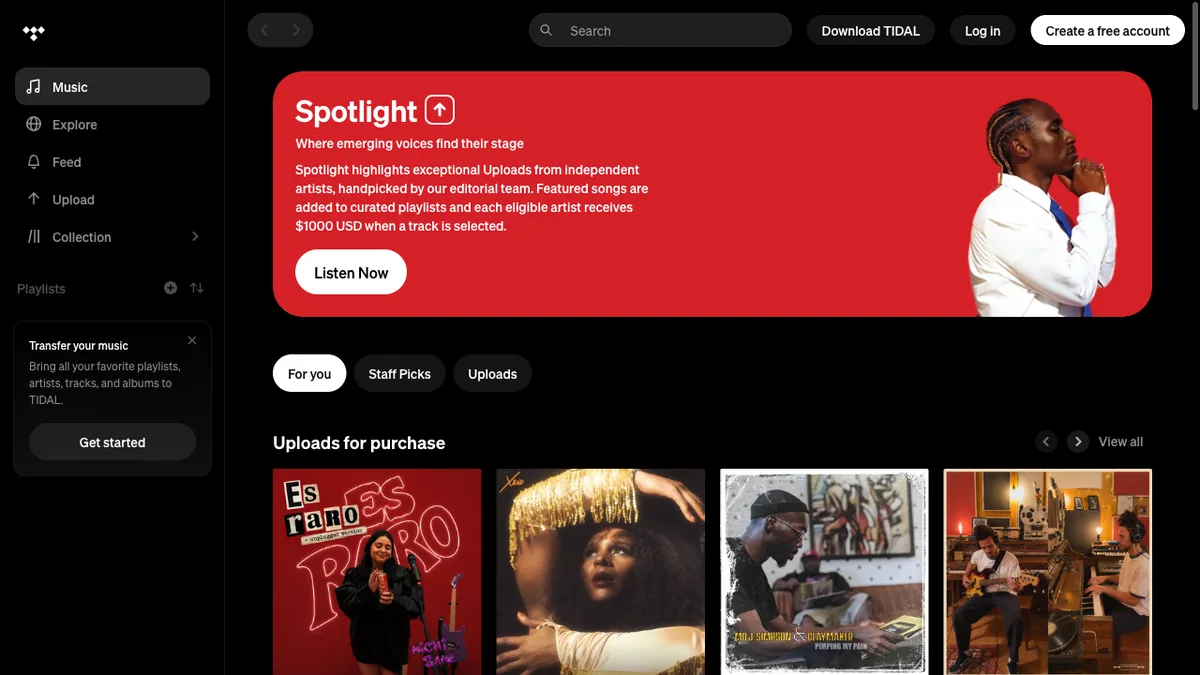
Best for audiophiles & fair artist pay · No free tier (trial) + $10.99/mo · 110M+ tracks
Tidal rebuilt itself around two ideas: pristine sound and paying artists fairly. Its 2024 pricing overhaul folded everything — HiRes FLAC up to 24-bit/192kHz and Dolby Atmos — into a single $10.99/month plan, undercutting where it used to charge a premium. It pays roughly $0.01 per stream, two to three times Spotify's rate, which matters if supporting musicians factors into your choice. The catalog (110M+) is the largest here, and editorial credits and liner-note detail are a nice touch for serious listeners. The interface isn't as polished as Spotify's, and there's no permanent free tier, but for sound-quality obsessives it's a genuine bargain now.
For: Full hi-res and Atmos in one cheap plan; highest artist payouts; largest catalog.
Against: No free tier; app and discovery lag Spotify.
Verdict: The audiophile's value pick in 2026.
Best Service for Each Kind of Listener
If you already know what matters most to you, skip the shortlist and go straight to the right service:
| What you care about | Best pick | Why |
|---|---|---|
| Discovering new music | Spotify | Best recommendation engine and AI DJ |
| The best sound for the price | Apple Music | Hi-res + Dolby Atmos included at $10.99 |
| Live versions, remixes, rarities | YouTube Music | Pulls from all of YouTube |
| Voice control at home | Amazon Music Unlimited | Best Alexa/Echo integration |
| Audiophile quality & artist pay | Tidal or Qobuz | Full hi-res; higher per-stream payouts |
| Listening for free | Spotify or YouTube Music | The most usable ad-supported tiers |
| Supporting indie artists directly | Bandcamp | Buy and own; most money reaches artists |
Other Services Worth Considering
The big five cover almost everyone, but a few specialists do one thing better than the mainstream apps:
Qobuz
The audiophile's audiophile service. Qobuz streams hi-res up to 24-bit/192kHz, leans hard into editorial reviews and liner notes, and also sells hi-res downloads if you still want to own files. There's no free tier and it's around $12.99/month, but for classical, jazz and serious listening it's a favorite.
Deezer
Big in Europe, Deezer offers a 120M+ catalog, lossless FLAC, a genuinely good free tier, and clever features like Flow (a personalized endless mix) and SongCatcher song ID. It made headlines recently because a large share of its uploads are now AI-generated — a growing industry issue worth knowing about.
SoundCloud
Home to 200M+ user-uploaded tracks, SoundCloud is where you find remixes, DJ sets, demos and emerging artists you won't hear anywhere else. The free tier is generous; Go+ (~$11.99) adds offline and higher quality. It's a discovery playground more than a polished mainstream service.
Pandora
A US-only veteran built around the Music Genome Project, Pandora still does radio-style, lean-back personalization better than anyone. There's a free ad-supported tier, with Plus (~$4.99) and Premium (~$10.99) on top. Best if you'd rather hit play and let it run than build playlists.
Bandcamp
Not a subscription at all, but the best way to genuinely support musicians: you buy albums and tracks (often DRM-free hi-res), and a far larger share of the money reaches the artist. Ideal for indie fans who want to own — and fund — the music they love.
Choosing the Right Music Streaming Service
Start with your gear. If you own an iPhone, HomePod or Apple Watch, Apple Music is the smoothest fit; if your home runs on Echo speakers, Amazon Music Unlimited wins on voice control. The service that plays effortlessly on the devices you already use will get far more listening than the one with a marginally bigger catalog.
Then weigh sound quality against your setup. Hi-res and lossless only matter if you have gear that can reveal the difference — a decent DAC, wired or high-end wireless headphones, or good speakers. On cheap earbuds, Spotify's standard quality is indistinguishable from Tidal's hi-res, so don't pay extra for bits you can't hear. If you do have the kit, pair a hi-res plan with a capable set of over-ear headphones or wireless earbuds to actually benefit.
Finally, do the math on plans. Individual tiers cluster at $10.99–$11.99, but a family plan (around $17–$20 for up to six accounts) is dramatically cheaper per person, and students typically pay about half. Almost every service offers a free month, so trial two or three and check that your favorite artists, podcasts and playlists are all present before you commit.
Frequently Asked Questions
Which music streaming service is best overall in 2026?
Spotify remains the best all-rounder thanks to its recommendation engine, huge library, podcasts and the most usable free tier. Apple Music is a very close second and actually beats Spotify on sound quality, since it includes hi-res lossless and Dolby Atmos at no extra cost. The "best" one for you usually comes down to which devices you already own.
Which service has the best sound quality?
For pure fidelity, Tidal, Qobuz and Apple Music lead, all offering hi-res audio up to 24-bit/192kHz. Amazon Music Unlimited also includes Ultra HD lossless. Spotify added lossless to Premium in 2025 but tops out lower. Remember that hi-res only makes an audible difference on capable headphones or speakers.
What's the cheapest way to stream music?
Free, ad-supported tiers from Spotify, YouTube Music, Deezer, SoundCloud and Pandora cost nothing. If you want ad-free listening cheaply, share a family plan (about $17–$20 for up to six people works out to a few dollars each), use a student discount, or bundle Amazon Music Unlimited with an existing Prime membership.
Is lossless or hi-res audio actually worth it?
Only if your equipment can reveal it. Lossless and hi-res carry more detail than standard streams, but on typical wireless earbuds or laptop speakers the difference is inaudible. If you have a good DAC, wired headphones or quality speakers, it's a worthwhile upgrade — and since Apple, Amazon and Tidal include it at no extra cost, you may already have it.
Which streaming service pays artists the most?
Tidal and Apple Music pay roughly $0.01 per stream, about two to three times Spotify's rate of around $0.003–$0.005. If directly supporting musicians matters to you, those services pay more — and buying music outright on Bandcamp sends a far larger share straight to the artist.
Can I move my playlists between services?
Yes. No service lets you export playlists to a rival directly, but third-party tools such as FreeYourMusic, Soundiiz and TuneMyMusic can transfer playlists, albums and liked songs between Spotify, Apple Music, Tidal, YouTube Music and others in a few clicks — handy when you switch or run a free trial elsewhere.
Do any services still have a free tier?
Yes — Spotify, YouTube Music, Deezer, SoundCloud, Pandora and a limited version of Amazon Music all offer free, ad-supported listening. Apple Music, Tidal and Qobuz have no permanent free tier, but each gives you a free trial (usually one month) to test the service.
Do I still need to buy or download music?
For most people, no — a single subscription covers virtually everything, and Premium tiers let you download tracks for offline listening within the app. Buying still makes sense if you want to truly own files (via Bandcamp or Qobuz), keep music if you cancel, or support artists more directly.
Prices and features are current as of 2026 and reflect US individual plans. Streaming plans and pricing change frequently — verify on the official service before subscribing.