Best Web Analytics Tools in 2026: GA4, Plausible, Matomo & 5 More

Tracking who lands on your website, where they come from and what they do once they arrive used to mean one default answer — Google Analytics. In 2026 the picture is more interesting. Google retired the original Universal Analytics in mid-2023 and replaced it with the very different GA4, GDPR — and a wave of cookie-less, privacy-first competitors have eaten meaningfully into Google’s share. This guide rounds up the web analytics tools actually worth installing in 2026, what each is best at, and the dead and dying tools you should remove from your shortlist.
Best web analytics tools in 2026 (at a glance)
| Tool | Pricing | Best for | Cookie-free? |
|---|---|---|---|
| Google Analytics 4 (GA4) | Free (paid GA360 for enterprise) | Most teams, esp. with Google Ads | No (consent-mode aware) |
| Plausible Analytics | $9 / month (10K visitors) | Privacy-first, no cookie banner | Yes |
| Fathom Analytics | $15 / month (100K pageviews) | GDPR/HIPAA-friendly small sites | Yes |
| Matomo (formerly Piwik) | Free self-host, $29 cloud | Self-hosted GA4 alternative | Configurable |
| Microsoft Clarity | Free, unlimited | Heatmaps + session replay | First-party |
| Cloudflare Web Analytics | Free | Sites already on Cloudflare | Yes |
| Mixpanel | Free up to 1M events, then $24+ | Product analytics & funnels | No |
| Umami | Free self-host, $20 cloud | Open-source Plausible-style | Yes |
| PostHog | Free up to ~1M events, then usage-based | All-in-one product analytics + replay | First-party |
1. Google Analytics 4 — still the default for most teams
Google Analytics 4 replaced Universal Analytics on 1 July 2023 and is now the only Google option. It is free, supports a single event-based data model across web and apps, has deep integration with Google Ads, Search Console, BigQuery and Looker, and powers most marketing dashboards. The trade-off versus the old UA: a steeper learning curve, an interface widely criticised as harder to navigate, no out-of-the-box bounce rate (replaced by “engaged sessions”), and ongoing pressure from EU regulators on whether Google’s data-transfer model is GDPR-compliant. For most teams — especially anyone running Google Ads — GA4 is still the right default; just expect to spend more time configuring custom reports than you used to.
2. Plausible Analytics — the privacy-first favourite

Plausible is the highest-profile of the new wave of GDPR-friendly, cookie-less analytics tools. It loads a 1 KB script, doesn’t use cookies or fingerprinting, doesn’t require a cookie consent banner under EU law, and provides a single-page dashboard that fits everything you actually look at on one screen. Pricing starts at $9 / month for 10K monthly visitors; data is stored in the EU (Germany). It is the obvious pick if your top frustration with GA4 is that it’s overcomplicated, slow to load, or a GDPR risk.
3. Fathom Analytics — the polished sibling
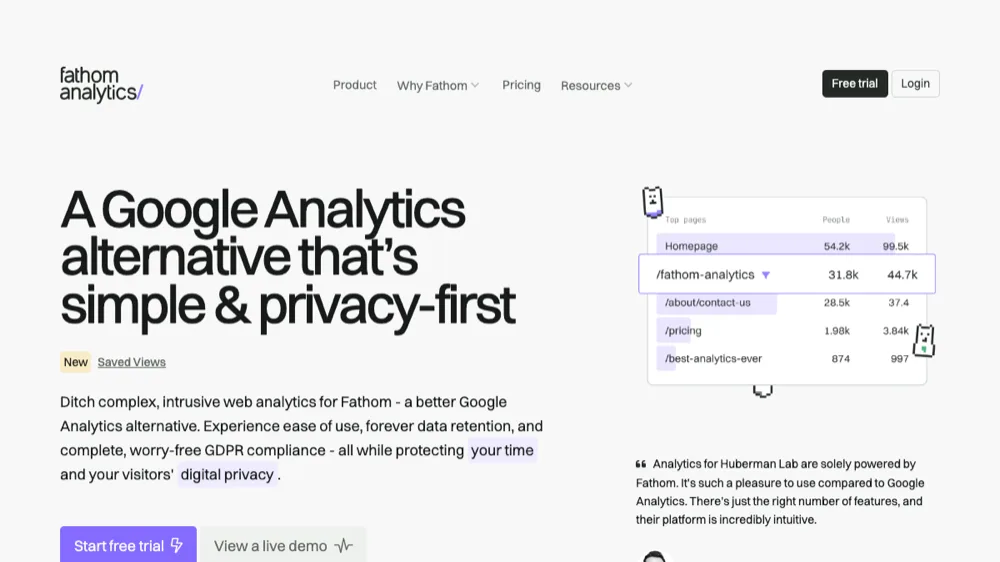
Fathom Analytics covers nearly the same ground as Plausible — cookie-free, GDPR / CCPA / HIPAA-compliant, single-page dashboard, no consent banner required. The differences are mostly cosmetic and operational: Fathom’s dashboard is slightly more polished, the pricing starts higher ($15 / month for up to 100K pageviews including unlimited domains), and its data is stored on Fathom-owned infrastructure across the US, Canada and Germany. If you run multiple sites and want a single bill, Fathom is the better-priced option than Plausible.
4. Matomo (formerly Piwik) — the self-hosted classic

Matomo is the rebrand of Piwik, the open-source web analytics platform that’s been around since 2007. It is the only tool in this list that lets you fully self-host your analytics on your own server — meaning the visitor data never leaves your infrastructure. That matters for healthcare, financial services, government and anyone with strict residency requirements. The hosted (cloud) version starts at $29 / month; the free open-source version requires you to run it on your own PHP server. Feature parity with GA4 is close: events, goals, funnels, heatmaps, A/B testing, custom dimensions, e-commerce tracking.
5. Microsoft Clarity — free heatmaps + session replay
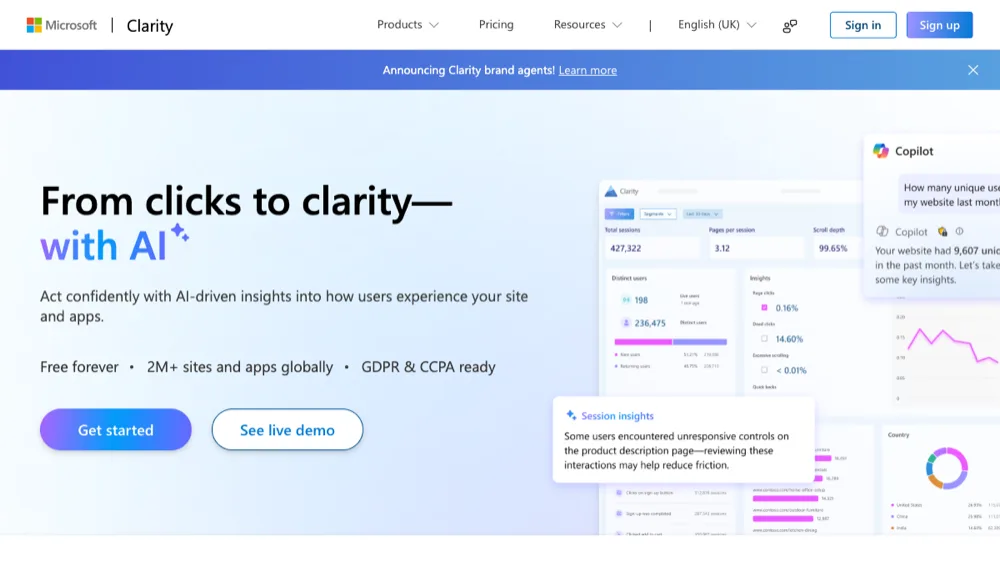
Microsoft Clarity is genuinely free, unlimited and excellent. It complements rather than replaces a traditional analytics tool: where GA4 tells you how many people visited a page, Clarity tells you what they did — full session replays, heatmaps, scroll maps, rage-click and dead-click detection, frustration scores. Install it alongside GA4 or Plausible. There is no usage cap and no paid tier; Microsoft funds it because the data feeds back into Bing’s search-ranking models.
6. Cloudflare Web Analytics — the free default for Cloudflare sites
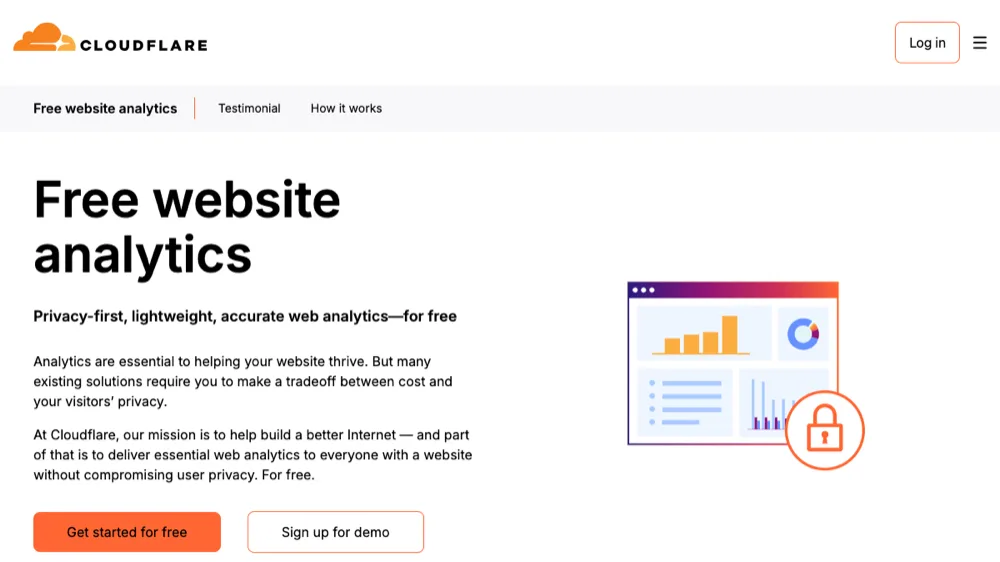
Cloudflare Web Analytics is free, server-side, cookie-less and built directly into the Cloudflare CDN. If your site already proxies through Cloudflare it adds zero client-side JavaScript — the analytics are derived from the edge requests Cloudflare already routes. The dashboard is intentionally simple: visits, page views, referrers, top countries, devices. Best for sites already on Cloudflare where you want lightweight numbers without slowing the page down.
7. Mixpanel — for product analytics, not just web
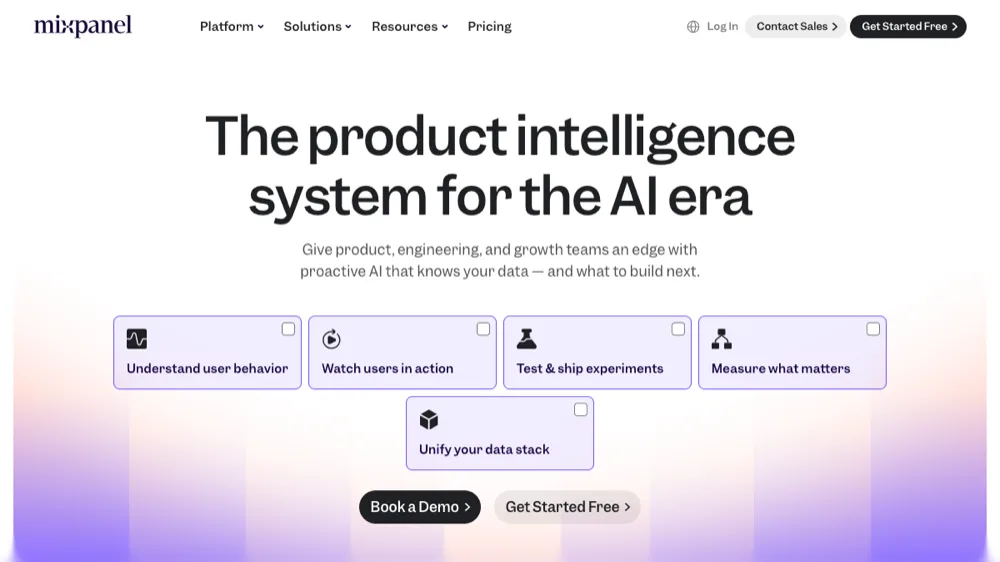
Mixpanel is the strongest pick when your question is “what do users do inside the product” rather than “how do they get to it”. It is event-driven, supports cohort analysis, funnels, retention curves and A/B test analysis, and integrates deeply with product management workflows. The free plan covers up to 1 million events per month with unlimited seats — one of the most generous in SaaS. Paid plans start at $24 / month. Use it alongside (not instead of) a web analytics tool.
8. Umami — open-source Plausible alternative
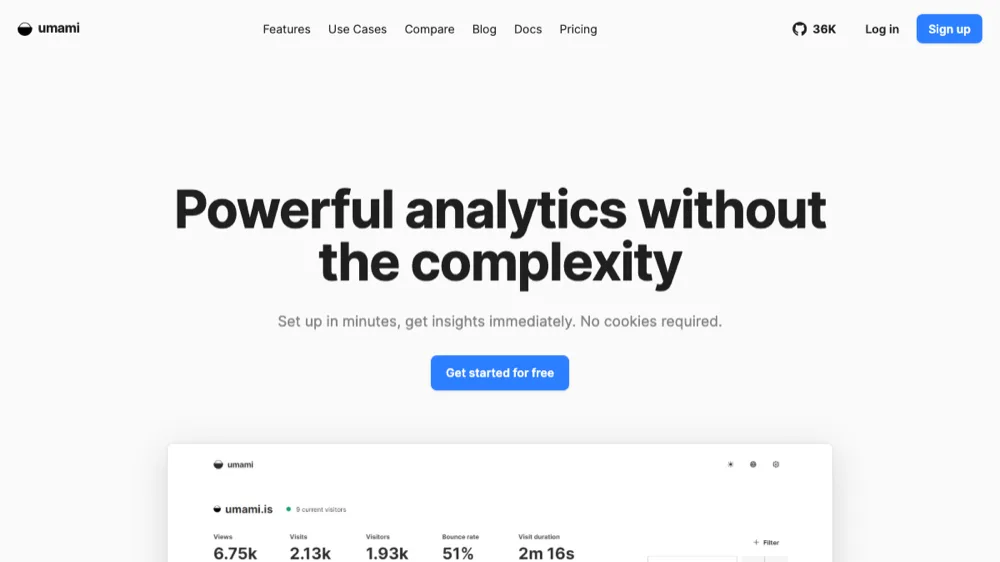
Umami is the open-source self-hosted alternative to Plausible. The script is <2 KB, no cookies, no consent banner required, and you run it on your own infrastructure (Docker, Vercel, Railway, Render — any Node host with Postgres / MySQL). The hosted cloud version starts at $20 / month. Pick it over Plausible when you want a free, self-hosted option without paying anyone; pick Plausible when you want the same product without running it yourself.
9. PostHog — open-source, all-in-one product analytics
PostHog bundles product analytics, session replay, feature flags, A/B testing and surveys into a single open-source platform — increasingly the default stack for product-led startups in 2026. The generous free tier covers roughly 1M events and thousands of session recordings a month, and you can use PostHog Cloud or self-host the whole thing. Choose it when you want analytics plus replay and experimentation in one tool instead of stitching together Mixpanel and Clarity.
Tools to drop from your shortlist
Several long-running analytics tools have been retired or fallen out of usable territory; you’ll still see them on older comparison lists, but skip them in 2026:
- Universal Analytics (the original GA) — shut down 1 July 2023; data was retained until 1 July 2024 and then deleted.
- Yahoo Web Analytics — discontinued in 2012.
- Piwik — rebranded as Matomo years ago.
- Site Meter, Jawstats, Goingup, Reinvigorate, Whos.amung.us — all defunct or unmaintained.
- StatCounter, Awstats — technically still alive but show their age; use Matomo or Plausible instead.
- Clicky — still operating but feature-frozen for years; not a strong 2026 pick.
How to pick
- Default for most teams: GA4 (free, deepest integrations) + Microsoft Clarity (free, free heatmaps and session replay).
- Privacy-first / EU / no cookie banner: Plausible or Fathom; Umami if you want to self-host.
- Self-hosted with full data control: Matomo or Umami.
- Product / SaaS focus (events, funnels, retention): Mixpanel or PostHog as your second tool alongside a web tool.
- Lightweight, server-side, you’re on Cloudflare: Cloudflare Web Analytics, costs nothing.
Frequently asked questions
Is Google Analytics still free in 2026?
Yes — GA4 is free for the vast majority of sites with no usage cap on data collection. Google Analytics 360 (the enterprise tier) starts in the high five figures per year and is intended for sites with very high traffic volumes or strict SLA needs. For everyone else, the free version remains fully functional.
Do I need a cookie consent banner for these tools?
For GA4 and Mixpanel: yes — both use cookies and identifiers that fall under EU GDPR and UK ePrivacy rules, so a consent banner is required. For Plausible, Fathom, Cloudflare Web Analytics and Umami: no — these tools deliberately do not use cookies or personally identifiable data and are designed to operate without a consent prompt. Matomo can be configured either way.
What replaced Universal Analytics?
Google Analytics 4. UA stopped processing data on 1 July 2023 and historical data was deleted on 1 July 2024. GA4 uses a completely different data model (events instead of sessions / pageviews), so old UA dashboards and custom reports do not migrate cleanly and must be rebuilt.
Which web analytics tool is best for GDPR compliance?
Plausible, Fathom and Cloudflare Web Analytics are all designed to be GDPR-compliant out of the box without a cookie consent banner. Matomo can be configured to be fully GDPR-compliant when self-hosted in the EU. GA4 can be made GDPR-compliant with consent mode and IP anonymisation, but the legal status of Google’s EU-US data transfers has been challenged repeatedly in court.
Can I use more than one analytics tool on the same site?
Yes, and it’s a common setup. Many teams run GA4 for traffic and acquisition reports, Microsoft Clarity for behaviour insights (heatmaps, session replay), and Mixpanel for in-product event tracking, all on the same site. Each script is small enough that the combined page-load cost is minimal.
For more growth and SEO guides, see our 12 free keyword research tools, Google Search Console tips for new bloggers, and how to create high-quality SEO content that drives traffic.