Best Free Website Traffic & Statistics Tools (2026)
Want to know how much traffic a website gets, where its visitors come from, or how authoritative it is? In 2026 you no longer need Alexa (Amazon retired it on May 1, 2022) — a handful of free and freemium tools now do the job far better, and several even reveal how much traffic a site gets from AI chatbots like ChatGPT and Perplexity. This roundup covers nine current tools: some estimate any competitor's traffic from the outside, while others (Google Search Console and GA4) give you exact first-party numbers for sites you own. Use the external estimators for competitor research and the first-party tools for your own analytics. Every tool's free limits below were checked on its own site on 17 November 2026.
The Best Free Website Statistics Tools in 2026
SimilarWeb (Website Traffic Checker)
Free + paid plans
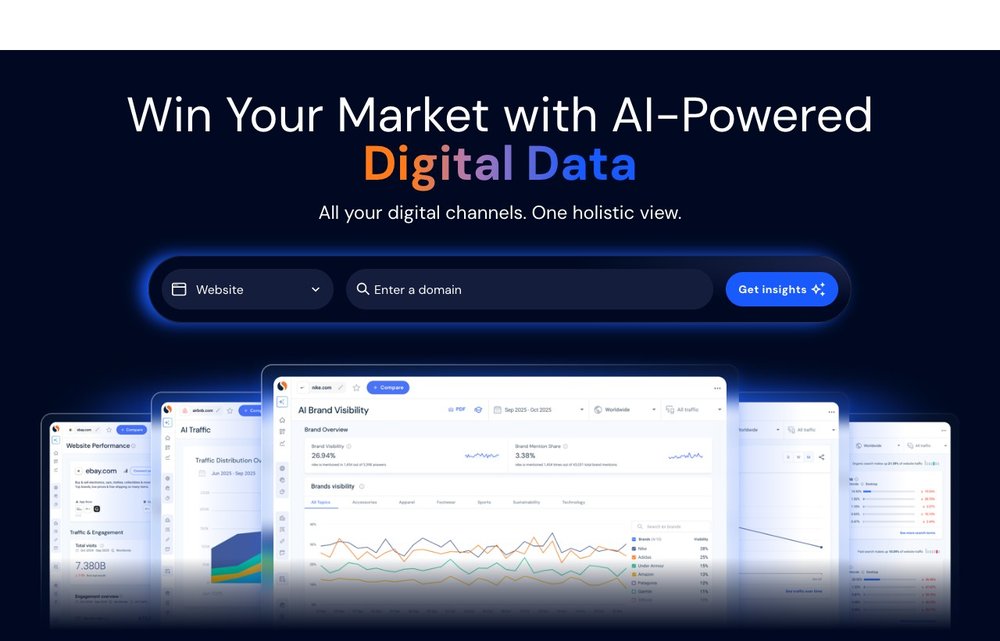
The go-to free tool for estimating any website's traffic without owning it. Enter a domain and Similarweb shows its global, country and category rank, total visits over the last three months, engagement metrics like bounce rate, pages per visit and visit duration, its top countries and its top three traffic channels (measured on desktop visits). You don't need an account, though visitors who aren't signed in get three searches a day, and comparing competitors needs a free account or trial. For AI referrals, Similarweb's separate free AI Traffic Checker shows how much traffic a site gets from ChatGPT, Perplexity, Gemini, Copilot and Claude.
Semrush (Free Account)
Freemium (10 reports/day)
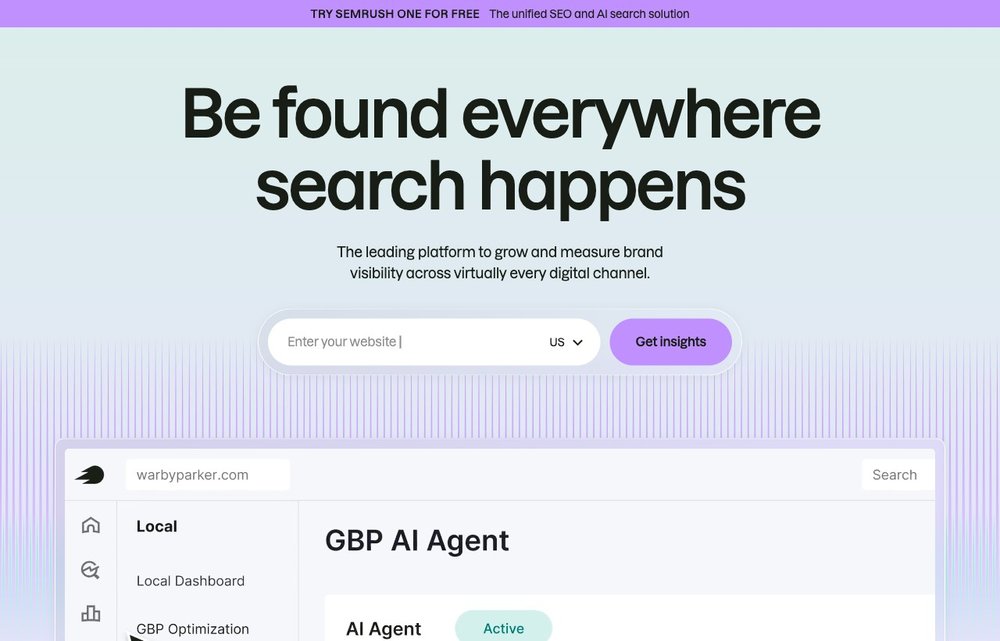
Semrush's free plan, which needs no credit card, includes Domain Overview: a report that estimates any site's organic and paid search traffic, backlinks and AI visibility. Its Keyword Magic Tool surfaces related long-tail keywords with volume, intent and difficulty. The catch: the free plan allows 10 reports a day across all tools, and the full-site Traffic Analytics report only shows sample domains on the free plan, so competitor traffic analysis needs a paid plan.
Ahrefs Free Tools (Website Authority Checker)
Free tools (no login)
Ahrefs' free Website Authority Checker returns a domain's Domain Rating (DR) — a 0–100 score based on the quantity and quality of external backlinks — with no account required. Its free Backlink Checker shows the top 20 backlinks to any site, and its free Website Traffic Checker gives traffic estimates for any website, though full traffic reports for domains you don't own need the paid Traffic Analytics add-on.
Ubersuggest
Freemium ($29+/mo)
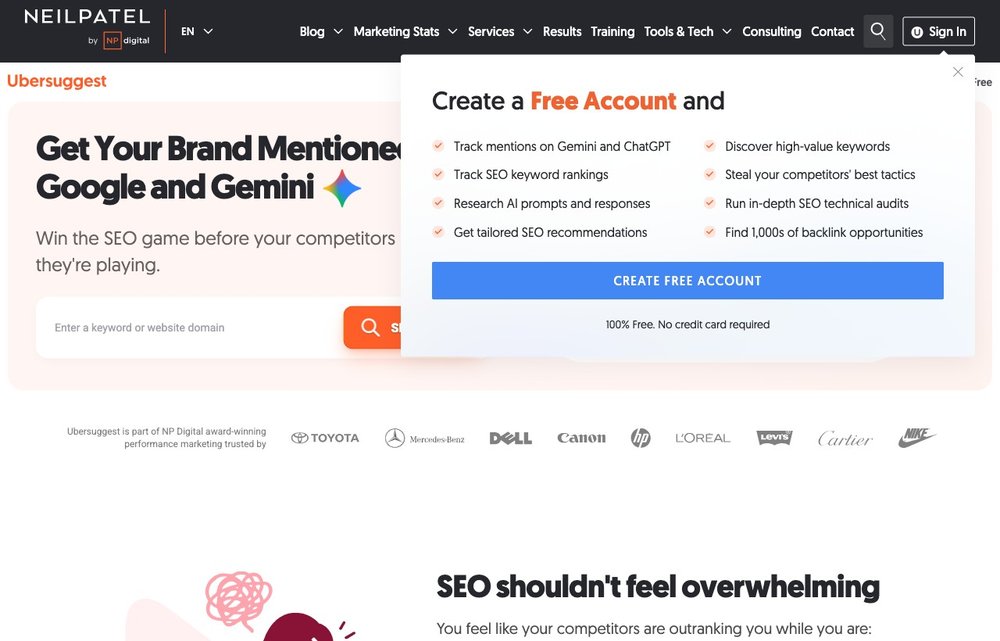
Neil Patel's beginner-friendly platform covers keyword research, traffic estimates, competitive analysis, site audits, rank tracking and backlink data, drawing on a database of more than 2.2 billion keywords. There's a free plan for light research, and the free Chrome extension shows search volume, CPC and competition data as you search, with daily limits. Ubersuggest lists its paid plans at US$29 to US$99, and it also sells a lifetime option.
Google Search Console
Free (own sites only)
Free first-party data for any site you own and verify. The Performance report shows exactly how your pages perform in Google Search — total clicks, impressions, click-through rate and average position — broken down by query, page, country, device and search appearance. Unlike external estimators these are real Google numbers, making GSC essential for understanding your own organic visibility (default view covers the last three months).
Google Analytics 4 (GA4)
Free (own sites only)
The free, current standard for measuring your own website's traffic and behaviour. GA4's event-based model tracks real visitors — sessions, users, traffic sources, engagement, conversions and the channels (organic, direct, referral, social, paid) driving them. It's exact rather than estimated, but only works on sites where you've installed the tag. Note compliance/consent tooling may add cost; GA4 itself is free, and Google doesn't publish a price for the enterprise Analytics 360 tier.
Cloudflare Radar
Free
A genuinely free, sign-up-free successor to Alexa's old Top Sites rankings. Cloudflare Radar ranks the most popular domains globally and by country using DNS queries to its 1.1.1.1 resolver; its popularity metric is the estimated number of unique users who look up a domain. The top-100 lists (global and per country) refresh daily, and beyond the top 100 it groups domains into buckets — top 200, 500, 1,000 and so on up to 1,000,000 — that update weekly, all downloadable as CSV. Great for gauging a site's relative popularity, though it gives rankings rather than visit estimates.
SimilarWeb Chrome Extension
Free (Chrome, Edge, Firefox, Opera)
The fastest way to check a site's stats while browsing. This free browser add-on, which needs no Similarweb account, shows Similarweb's key metrics — global, country and category rank, visits over time, traffic sources and AI chatbot traffic distribution — for the site you're on. The trade-off: before you can use it, you have to approve the collection of anonymized clickstream data on the sites you browse.
Moz Link Explorer
Freemium
Moz popularized Domain Authority (DA) and Page Authority (PA), the 1–100 scores still widely cited as ranking-potential indicators. Link Explorer lets you check any site's DA/PA, backlink profile, anchor text, and newly gained or lost links from a 40-trillion-plus link index, with a Link Intersect feature for finding competitor link gaps. A free Moz account gets 10 queries a month — enough for occasional checks before an upgrade is needed.
The Most Visited Websites in the World
If you want to know which websites are the most popular, Similarweb publishes a monthly ranking. For October 2026 (updated November 1, 2026), the ten most visited websites worldwide were:
- google.com
- youtube.com
- facebook.com
- instagram.com
- chatgpt.com
- x.com
- tiktok.com
- whatsapp.com
- reddit.com
- bing.com
Cloudflare's 2025 Year in Review, which ranks whole Internet services rather than single domains, also put Google first and Facebook second.
Why Am I Not Getting Traffic to My Website?
Start with Google Search Console. Its Page indexing report shows which of your pages Google can find and index and why others aren't indexed; for a single page, use the URL Inspection tool. You can also search Google for site:yourdomain.com — if results point to your site, you're in the index. If your traffic has dropped, Google's own guide to debugging traffic drops lists six main causes to investigate:
- Algorithm updates — core updates and smaller updates can change how some pages perform.
- Technical issues — errors that stop Google crawling, indexing or serving your pages.
- Security issues — malware or phishing can trigger warnings before people reach your site.
- Spam issues — content that breaks Google's spam policies can rank lower or disappear.
- Seasonality and changing interests — demand for some searches rises and falls with trends and the time of year.
- Site moves and migrations — changing page URLs can cause ranking fluctuations while Google recrawls.
How to Make Your Website More Popular
There's no shortcut, but Google's free SEO Starter Guide sets out the basics, and you can do them yourself:
- Write for people first. Google says content people find compelling and useful will likely influence your presence in search more than anything else in its guide, and its ranking systems are designed to prioritize helpful, reliable, people-first content.
- Make sure you're indexed. Check Search Console's Page indexing report or a
site:search before anything else. - Write clear, unique titles. Google describes a good title as unique to the page, clear and concise, and an accurate description of its contents.
- Watch what's working. Use Search Console's Performance report to see which searches bring clicks, and GA4 to see where visitors come from.
- Benchmark against rivals. Use Similarweb, Semrush or Ahrefs to see where similar sites get their traffic and which keywords they rank for.
Getting Accurate Numbers
For a quick traffic estimate of any site, start with SimilarWeb; for keywords and backlinks, use the free tiers of Semrush, Ahrefs and Ubersuggest. Remember that third-party tools only estimate traffic — the only exact numbers come from a site’s own Google Analytics and Search Console. (Note: Alexa was retired in 2022, so ignore any tool still citing an “Alexa rank.”) See our guides to the best SEO tools and Ahrefs alternatives.
Frequently Asked Questions
How can I check a website's traffic for free?
Use Similarweb's free Website Traffic Checker — enter any domain to see estimated visits, top traffic channels and top countries, with no account needed (three searches a day if you're not signed in). For sites you own, Google Search Console and GA4 give exact first-party numbers. Cloudflare Radar shows free popularity rankings, while Semrush, Ahrefs and Ubersuggest offer limited free traffic and keyword estimates.
Which website traffic checker is the most accurate?
None of them is exact. Similarweb builds its estimates from direct measurement, a contributory network of consumer products, partnerships and public data, while Semrush and Ahrefs estimate search traffic. No external tool is perfect, so compare two or three and treat the numbers as directional. For your own site, GA4 and Search Console show real data, not estimates.
Can you see a competitor's website traffic?
Yes — that's exactly what external estimators like SimilarWeb, Semrush, Ahrefs and Ubersuggest are built for. They model a competitor's traffic, keywords and backlinks from outside without any access to that site. The numbers are estimates, not exact figures, and accuracy improves for larger sites with more data. You can never see a competitor's true Google Analytics data.
What is SimilarWeb and how does it work?
Similarweb is a digital intelligence platform that estimates any website's traffic and engagement from four sources: direct measurement, a contributory network of consumer products, partnerships and public data extraction. Its free checker shows total visits, rank, top traffic channels and top countries, and its free AI Traffic Checker and browser extension show traffic from AI chatbots. It's the most popular free alternative to the retired Alexa traffic rank, which Amazon shut down on May 1, 2022.
What's the difference between free and paid traffic tools?
Free tiers are great for quick checks but capped — Semrush gives you 10 reports a day, Similarweb three searches a day if you're not signed in, and Moz 10 queries a month, often with sample-only data. Paid plans unlock historical data, unlimited lookups, full backlink indexes, channel breakdowns and competitor comparisons. Google Search Console and GA4 are notable exceptions: fully free for your own verified sites.
What is the most famous website in the world?
By traffic, Google. Similarweb's ranking of the most visited websites for October 2026 puts google.com first, followed by youtube.com, facebook.com, instagram.com and chatgpt.com, and Cloudflare's 2025 Year in Review also ranked Google as the most popular Internet service.
Are websites still relevant?
Yes. Even AI chatbots are websites — chatgpt.com was the fifth most visited site in the world in October 2026, according to Similarweb — and AI tools send visitors to other sites too, which is why Similarweb now offers an AI Traffic Checker that measures how much traffic a website gets from ChatGPT, Perplexity, Gemini, Copilot and Claude.
Why am I not getting traffic to my website?
First check that Google has indexed your pages, using Search Console's Page indexing report or a site: search. If traffic has dropped, Google's own guide points to six main causes: algorithm updates, technical issues, security issues, spam issues, seasonality and changing interests, and site moves or migrations.
How do I make my website more popular?
Publish content people find genuinely useful, make sure Google can index it, give every page a clear and unique title, and use Search Console and GA4 to see which pages and searches are working so you can do more of what does.
Can I do SEO myself?
Yes. Google's SEO Starter Guide is free, and the core tools — Search Console, GA4 and the free tiers of Similarweb, Semrush and Ahrefs — cost nothing to start with. Paid tools help most once you're analyzing competitors in depth.
Third-party traffic figures are estimates and can vary widely between tools. For exact data, use a site’s own analytics. Verify current features and free-tier limits on each provider’s site.