Rotten Window Sill Repair: Addressing Wood Decay Before It Spreads
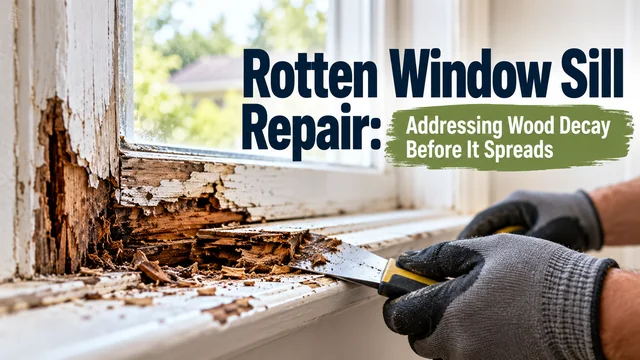
Wood window sills are particularly vulnerable to moisture because they are constantly exposed to rain, temperature changes, and outdoor humidity. Over time, deteriorating paint, failed caulking, and poor drainage can allow water to penetrate the wood. What begins as a small patch of discoloration can eventually develop into decay that affects the surrounding window frame.
For homeowners in New York, recognizing these warning signs early can help prevent localized wood damage from turning into a more extensive repair project.
How a Small Window Sill Problem Can Become a Bigger Repair
In a residential home in Queens, a homeowner noticed that the paint along the bottom of a wooden window had started peeling. One corner of the sill had become noticeably darker, and the surface felt softer than the surrounding wood. The initial assumption was that the window simply needed repainting.
A closer inspection revealed a more significant problem. Moisture had penetrated the protective finish, and the wood near the corner had begun to deteriorate. The caulking along part of the exterior joint had also separated, creating a potential path for rainwater to enter.
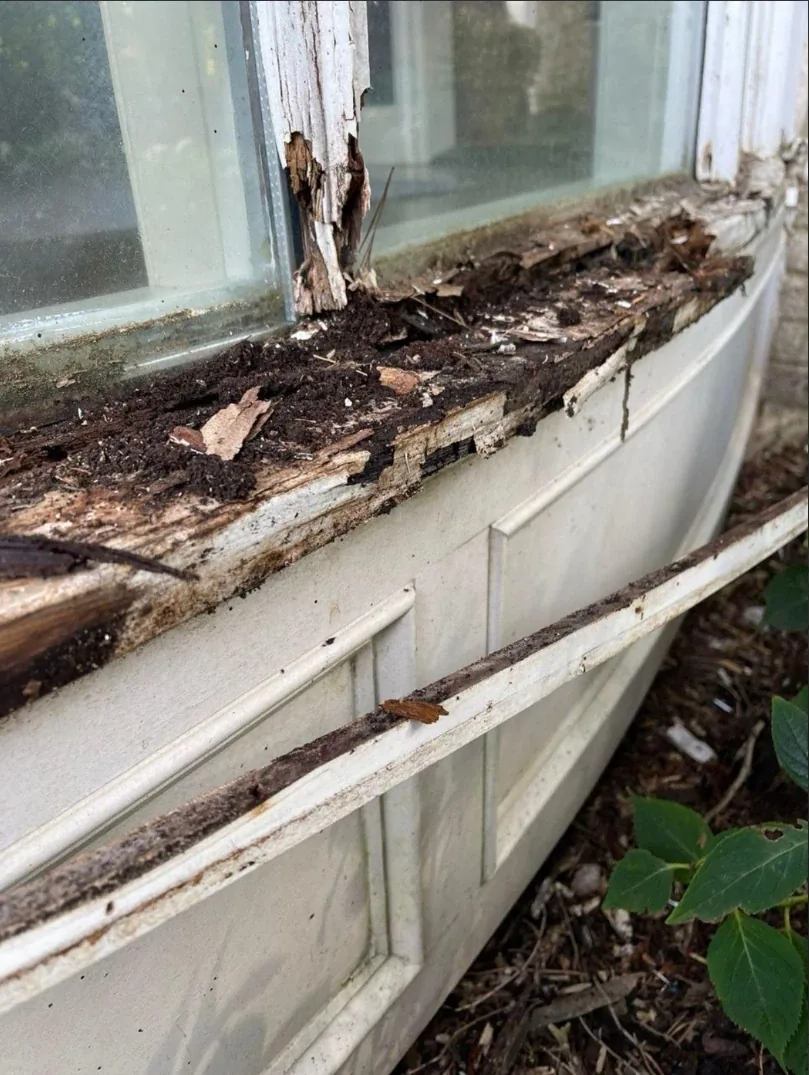
This type of damage illustrates why repainting a rotten window sill is rarely a sufficient solution. Before applying a new finish, it is important to determine how much wood has deteriorated and identify the source of the moisture.
Identifying the Extent of Wood Rot
Not every damaged window sill requires complete window replacement. The appropriate repair depends on the depth of the decay, the condition of the surrounding frame, and whether the affected wood can still provide a sound base for restoration.
During an inspection, several areas deserve particular attention:
- Lower corners of the sill: These areas can retain moisture and develop decay around joints.
- Exterior edges: Cracked paint and deteriorated finishes can expose the wood to repeated wetting.
- Connections between the sill and frame: Water entering through these joints may affect concealed sections.
- Nearby trim and frame components: Damage extending beyond the sill may indicate a more extensive problem.
A professional assessment helps distinguish between superficial finish damage and wood that has lost its integrity. That distinction determines whether localized repair, partial wood replacement, or more extensive restoration is appropriate.
Choosing the Right Repair Method
When deterioration is limited to a small section, repairing the affected area may be a practical alternative to replacing the entire window. The damaged material must first be assessed, and wood that can no longer support a durable repair may need to be removed.
Depending on the condition of the sill, the work may involve rebuilding a localized section or replacing part of the damaged wood. The repaired area must then be integrated with the surrounding components and finished to protect it from future moisture exposure.
For more extensive deterioration, replacing the affected sill or additional frame sections may be necessary. Homeowners dealing with this type of damage can explore wood rot repair and replacement services to understand the available options for deteriorated wooden window components.
The key is to address the actual condition of the wood rather than choosing a repair method based only on how the surface looks.
Why the Source of Moisture Must Be Addressed
Even a carefully repaired window sill can deteriorate again if water continues entering the same area. Failed caulking, open joints, damaged paint, and drainage problems should therefore be considered as part of the repair.
Once the source of moisture has been identified, the surrounding joints and protective finishes can be addressed as needed. Proper preparation and sealing help reduce the likelihood of recurring damage, although no coating can compensate for wood that has already deteriorated beyond repair.
Homeowners should also pay attention to recurring signs of moisture around the interior trim. Staining, peeling paint, or damp areas near the window may indicate that water is entering somewhere in the assembly and requires further investigation.
Repairing the Sill or Replacing the Entire Window?
A rotten sill does not automatically mean that the complete window must be removed. If the damage is localized and the remaining frame and sash are in serviceable condition, targeted wood repair may preserve much of the existing assembly.
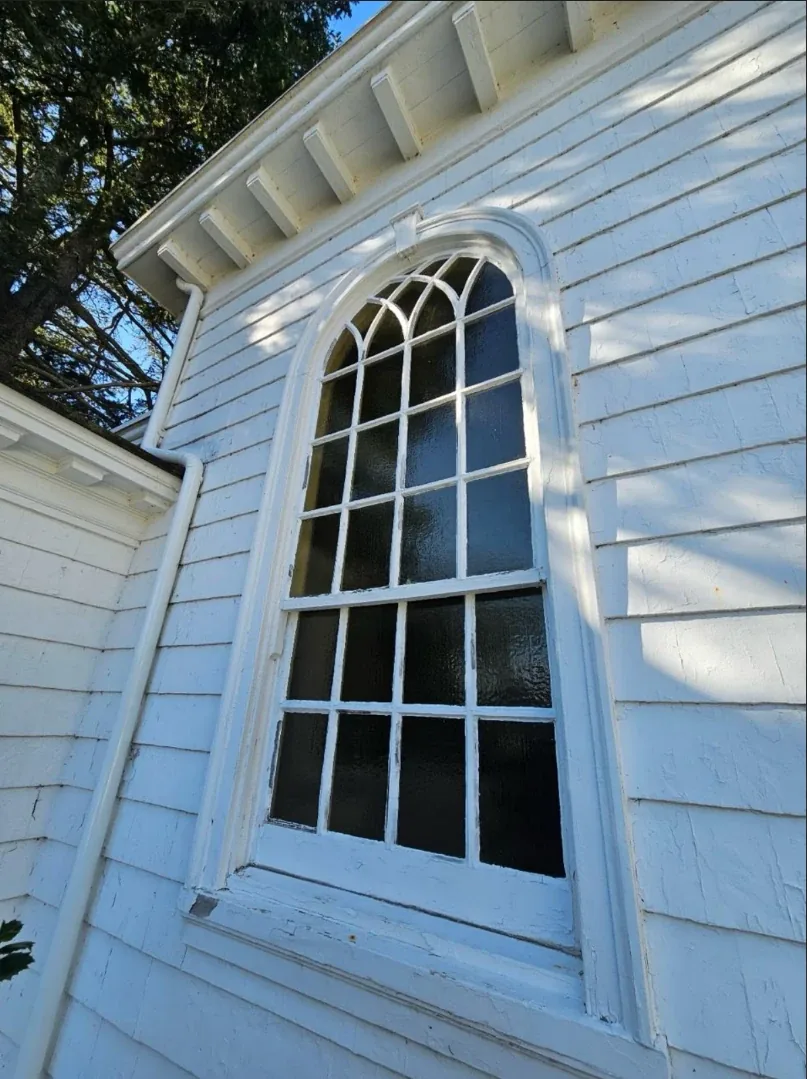
Broader replacement may be more appropriate when decay affects multiple structural components, important joints have weakened, or the window can no longer be restored reliably.
This assessment is especially relevant in older homes, where existing wood windows may still have useful service life despite localized deterioration. Evaluating the entire assembly helps homeowners make an informed decision instead of assuming that every damaged sill requires a new window.
Preventing Future Window Sill Damage
Routine inspection can help homeowners catch wood deterioration before it spreads. After periods of heavy rain, check the exterior sill and lower frame corners for peeling paint, open caulking joints, darkened wood, or areas that remain damp.
Maintaining exterior finishes, correcting failed seals, and investigating recurring water intrusion can reduce the risk of further damage. If the same area repeatedly shows signs of rot, repainting alone is unlikely to resolve the underlying issue.
Final Thoughts
Rotten wooden window sills should be evaluated before the damage reaches surrounding frame components. The right solution depends on how much wood has deteriorated, whether the remaining structure is sound, and what allowed moisture to enter in the first place.
With a careful assessment and an appropriate repair strategy, localized wood damage may be addressed without replacing the entire window. Recognizing the early warning signs gives homeowners a better opportunity to protect their existing windows and avoid more extensive repairs.