Power to the Players Act: What Owning Your Digital Games Means
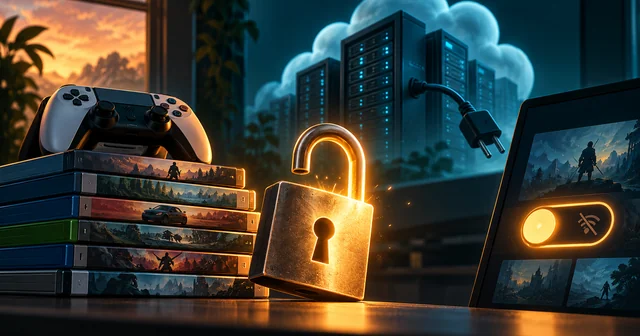
The Power to the Players Act, announced by Rep. Ritchie Torres on October 15, 2026, would have the Federal Trade Commission write rules so that buying a video game gives you ownership of it, not a revocable license. Games that depend on servers would also need an offline mode before those servers shut down. No bill text is public yet.
What Happened
On October 15, 2026, Rep. Ritchie Torres, who represents New York's 15th district in the Bronx, announced the Power to the Players Act. His office's release says he "will introduce" the bill. It would direct the Federal Trade Commission to set regulations protecting people's ability to own and keep playing the games they buy.
The release makes two concrete promises. First, buying a video game would give the buyer ownership of the game "rather than a license to play it." Second, games with online features would have to provide an offline mode before the servers behind them are switched off. Torres also talks about a right to own, a right to play and a right to transfer, and the release says the bill would preserve players' ability to "own and resell their games."
The example Torres chose is NBA 2K25. According to his office, the game sold for $69.99 for the standard edition and $99.99 for the All-Star Edition, will be delisted from digital storefronts on October 30, and will have its online servers shut down on December 31, about two years after it launched. In the release, Torres calls a game that can be taken away when a company pulls the plug "a rental disguised as a sale."
The announcement drew coverage from The Verge, Polygon and Tom's Hardware. The Verge linked it to Sony's announced plan to phase out physical game discs in 2028. It also pointed to a similar state bill, the Protect Our Games Act from Pennsylvania State Sen. John Kane. That bill would make publishers that retire a game provide an offline mode, an online mode that doesn't depend on their servers, or a refund of at least 25 percent. Tom's Hardware noted that the federal bill's definitions and details have not been released yet.
Why It Matters
Most games are now bought as downloads, and the store's "Buy" button sits on top of a license agreement. Under those terms the publisher or the store can remove a game, change it or stop it working. That has already happened. Ubisoft shut down the servers for The Crew in 2024. The game needed a connection even for its single-player campaign, so it became unplayable for everyone who had bought it. Its shutdown gave rise to the Stop Killing Games campaign, whose European Citizens' Initiative passed one million signatures in 2025 and pushed the issue onto the European Commission's agenda.
Until now, US law has mostly asked for honesty rather than changing what a purchase is. California's AB 2426, in force since January 2025, makes digital storefronts tell buyers when they are getting a license that can be revoked. It does not stop the revocation. A federal bill that redefines a purchase as ownership, and makes an offline mode a condition of shutting down servers, would go much further. It would be the first serious attempt in Congress to make a game's playable life outlast the publisher's interest in running it.
For players, the practical stakes are libraries worth hundreds or thousands of dollars that currently last only as long as a company keeps its servers and licensing deals running. For publishers, it raises the cost of ending support for a game, and it could change how live-service games are designed from day one.
How It Works
Several separate questions get blurred together in arguments about digital ownership. The bill touches on each of them.
License versus ownership
When you buy a physical disc in the US, the first-sale doctrine in copyright law lets you resell, lend or give away that copy without the publisher's permission. Digital purchases have never fit that rule well. In the ReDigi case in 2018, a federal appeals court held that reselling a digital file means making a new copy, so first sale does not cover it. Stores also sell access under terms of service rather than handing over a copy. When Torres says a purchase should be "ownership," that has to be turned into specific FTC rules. Those rules might cover whether a store can remove a bought game from your library, whether the license can be ended without cause, and whether a transfer or resale must be allowed.
Server dependency
Many modern games check in with a publisher's servers to verify the license, load content, run matchmaking, or even run single-player logic. When those servers go dark, a game may refuse to start even though every file you need is on your drive. Usually it is a design choice, not a technical requirement: the game is built to depend on a service the publisher can end.
What an offline mode means in practice
An offline mode before shutdown is the most concrete part of the proposal, and it can take several forms. The simplest is an end-of-life patch that removes online license checks and lets single-player content run locally. For multiplayer games, the options are LAN play, peer-to-peer connections, or releasing the server software so the community can host its own servers. There is precedent. When Velan Studios closed Knockout City in 2023, it released a version that supported private servers, so players could keep running matches. Pennsylvania's bill offers a refund as an alternative. As announced, the federal proposal mentions only the offline requirement.
Why the FTC
The bill does not set the rules itself. It tells the FTC to write them. That is common in consumer protection, because an agency can define terms such as "online functionality" or "shutdown," set notice periods and handle edge cases. It also means the rules would only appear after a rulemaking process, with public comment and probably legal challenges, which could take years after any bill passes.
What's Still Unknown
The biggest unknown is the text. As of October 19, 2026, the announcement describes goals, not legal language. No bill number or cosponsors have been made public, and nothing has been assigned to a committee. Several details will decide how much the bill actually changes:
- Scope. Does it cover only games bought outright, or also subscription libraries such as Game Pass, free-to-play games and in-game purchases? Subscriptions are rentals by design, so the bill will probably have to treat them differently.
- Resale. Torres mentions a right to transfer and resell, but a working digital resale market raises questions of copyright law, which the FTC cannot simply rewrite.
- Retroactivity. Would the rules apply to games already sold, such as NBA 2K25, or only to future releases?
- What counts as "offline." A game with every online feature removed may still be a fraction of what people paid for. The rules would need a standard for what has to keep working.
- Licensed content. Sports games often lose rights to leagues, players or music. Whether those deals become a valid reason to delist a game is an open question.
Its political chances are also uncertain. Most individual bills in Congress never get a committee vote, and the games industry has argued for years that licenses are what keep online services and anti-piracy measures workable. Tom's Hardware reported that Sony's lawyers, defending a class action, argued that clicking "purchase" would not lead a buyer to expect a lasting right to the game. That is the opposite of the expectation the bill wants to make law.
Frequently Asked Questions
Is the Power to the Players Act a law yet?
No. Rep. Ritchie Torres announced on October 15, 2026 that he will introduce it, and as of October 19 no bill text or bill number had been published. To become law it would need to pass both the House and the Senate and be signed by the president. The FTC would then have to write the detailed rules, which adds more time.
Would the bill let me resell digital games?
That is the stated aim. Torres speaks of the right to own, play and transfer games, and his release mentions preserving the ability to resell. How it would work is unclear, because a US appeals court ruled in 2018 that reselling a digital file is not protected by the first-sale doctrine. The final text will decide whether resale is actually required.
Would it stop games like NBA 2K25 from shutting down?
Not exactly. The proposal does not stop servers from closing. It would require games with online features to get an offline mode before shutdown, so you could keep playing what still works locally. It is unclear whether that would apply to games already sold, since no text has been published.
What is the difference between this and California's AB 2426?
California's law, in force since January 2025, is a disclosure rule. Digital stores must tell buyers when a purchase is a revocable license rather than ownership. The Power to the Players Act aims to change the purchase itself, so that buying a game means owning it, and to add an offline-mode requirement before servers are shut down.
Does this cover Game Pass or PlayStation Plus?
The announcement does not say. It talks about games you buy, and subscription services are rentals by design, so they would probably be treated separately. Whether games bought at a discount through a subscription, or downloadable content bought on top of a game, would count as owned purchases is one of the questions the bill text needs to answer.
How is this related to Stop Killing Games?
Stop Killing Games is a player campaign that began after Ubisoft shut down The Crew in 2024. It asks that games stay playable after publishers end support, and it ran a European Citizens' Initiative that passed one million signatures. Torres's offline-mode requirement covers one of its central demands. The campaign is not named as a sponsor of the bill.
Why would the FTC write the rules instead of Congress?
Consumer protection laws often set a goal and leave the details to an expert agency. The FTC could define terms such as online functionality and shutdown, set notice periods and handle edge cases like licensed music. The drawback is time: rulemaking involves public comment and is often challenged in court.
Related Reading
Shutdowns like this are not limited to consoles. When Amazon dropped support for third-party game stores, paid games became unavailable to their buyers for weeks. If you buy keys or accounts outside the official stores, our explainer on how online game marketplaces work covers what you are actually getting. Hardware is moving in the same direction: Microsoft's Project Helix plans for the next Xbox raise the same questions about digital libraries. And Epic's Linux anti-cheat requirements for Fortnite show how server-side checks decide where, and whether, a game you own will run.