OpenAI Launches ChatGPT Images 2.0 with Thinking Mode and Web Search for Image Generation
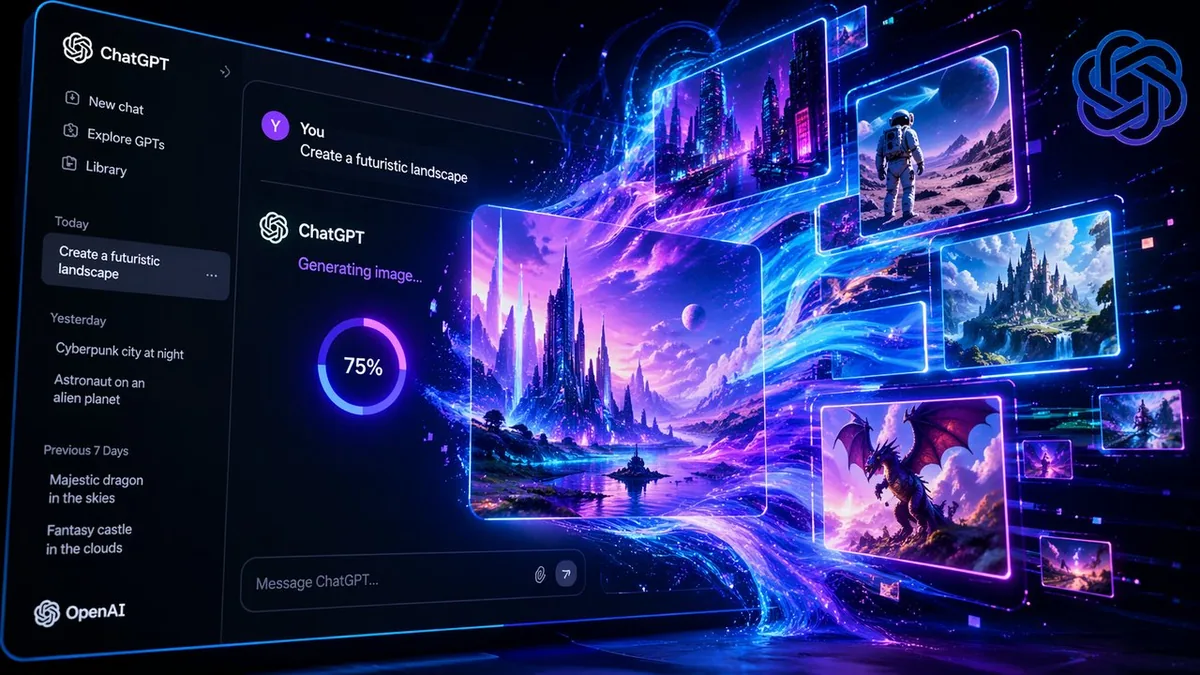
OpenAI has released ChatGPT Images 2.0, a major upgrade to its image generation system that introduces "thinking capabilities" — allowing the model to reason about a prompt before generating, search the web for reference images, and create multiple distinct images from a single input. The update positions ChatGPT as a serious competitor to standalone image tools like Midjourney and Adobe Firefly.
What's New in ChatGPT Images 2.0
The core feature of Images 2.0 is a thinking layer that runs before image generation begins. Rather than immediately rendering a prompt, the model pauses to analyze what is being asked, searches the web for relevant visual references, and constructs an internal plan for how to interpret the prompt across multiple image outputs. Users can generate a grid of conceptually distinct images from a single prompt — for example, asking for "a futuristic city at night" might produce four variations with different architectural styles, color palettes, and perspectives.
OpenAI says the web search integration is particularly powerful for prompts that reference current events, real products, or specific visual styles that require up-to-date reference material. The system can pull context from live search results to improve accuracy on prompts that would otherwise produce generic or outdated outputs.
How It Compares to Competitors
ChatGPT Images 2.0 arrives at a moment when Claude Design and other AI visual tools are raising the bar for image generation quality. Midjourney remains the benchmark for photorealistic and artistic outputs, but OpenAI's advantage is integration — users can now generate, iterate on, and discuss images within the same ChatGPT conversation, removing the need to switch between tools.
Adobe Firefly, which targets professional creative workflows, faces a different challenge: ChatGPT Images 2.0 is accessible to the broad ChatGPT user base of over 600 million monthly users, many of whom had no prior experience with AI image tools. OpenAI's distribution advantage is enormous, and Images 2.0 may pull casual users away from learning dedicated image tools entirely.
Availability and Access
ChatGPT Images 2.0 is rolling out first to ChatGPT Plus and Pro subscribers, with free tier access expected within weeks. The feature is available on both desktop and mobile. OpenAI has not announced API access for Images 2.0 yet, though developers using the existing DALL-E 3 API are expected to be migrated to the new model once stability is confirmed.
The update also brings improvements to text rendering within images — historically a weakness of AI image generators — and better handling of multi-subject compositions. OpenAI says the model has been trained on a broader and more recent dataset, with improved alignment to user intent on complex, multi-clause prompts.
Frequently Asked Questions
What is ChatGPT Images 2.0?
ChatGPT Images 2.0 is OpenAI's upgraded image generation system that adds thinking capabilities, web search integration, and multi-image generation from a single prompt. It is available to ChatGPT Plus and Pro subscribers.
How does the thinking mode in ChatGPT Images 2.0 work?
Before generating an image, the model reasons about the prompt, searches the web for visual references, and plans how to produce multiple distinct variations. This improves accuracy and relevance, especially for prompts about current events or specific products.
Does ChatGPT Images 2.0 replace DALL-E?
ChatGPT Images 2.0 is built on an evolved version of OpenAI's image generation technology. It supersedes the previous DALL-E 3 integration within ChatGPT, though the DALL-E 3 API remains available for developers until a migration is announced.
The Bottom Line
ChatGPT Images 2.0 is the most significant upgrade to OpenAI's image generation stack since DALL-E 3. By adding reasoning and web search to the image pipeline, OpenAI is making a clear statement: the future of AI creativity tools is not a standalone generator, but a thinking assistant that understands context, searches for inspiration, and produces multiple options in one shot. For the 600 million ChatGPT users, this feature is now the default way to generate images — and for competing tools, that's a serious challenge.