Nothing Phone (3a) & (3a) Pro Review (2026 Update): Mid-Range Standout in a Post-Phone-3 Lineup
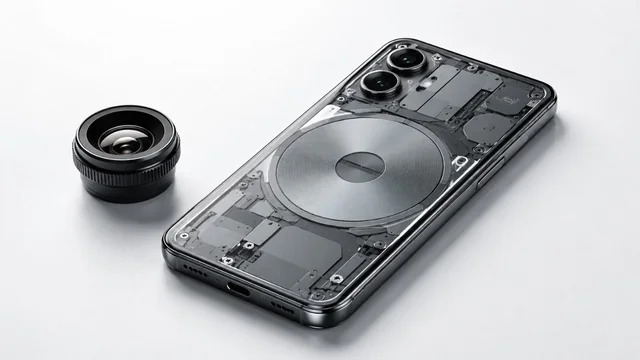
When Nothing launched the Phone (3a) and (3a) Pro in March 2025, they were the brand's most ambitious mid-rangers yet, headlined by a 50MP periscope camera on the Pro. Fifteen months later, the picture has shifted: Nothing released the proper Phone (3) flagship in July 2025, and the 3a series has been pulled clearly into the mid-range slot it always belonged in. This 2026 refresh re-frames both phones in light of that new lineup, their Nothing OS 4 / Android 16 update, and current pricing.
Key takeaways:
- Nothing's lineup reshuffled in 2025: Phone (3) is now the flagship, leaving the (3a) and (3a) Pro as the mid-range option.
- Both 3a phones now run Nothing OS 4 on Android 16, with 3 OS updates and 6 years of security patches committed.
- Display, battery and software are flagship-grade; the Snapdragon 7s Gen 3 and 8MP ultrawide are the clearest mid-range compromises.
- The (3a) Pro's 50MP 3x periscope and 50MP selfie are the main reasons to pay the ~$80 premium over the standard (3a).
- US buyers should confirm T-Mobile band support via IMEI before purchasing through Nothing's Beta programme.
Where the 3a sits in Nothing's 2026 lineup
Nothing's smartphone roster looks very different than it did at the 3a's launch. At the top is the Nothing Phone (3), released July 1, 2025 at around $799–$999, with a Snapdragon 8s Gen 4, a new dot-matrix Glyph Matrix display on the back, and four 50MP cameras. Below that sit the Phone (3a) and (3a) Pro, now firmly positioned as Nothing's mid-range offering rather than its newest hero device. The older Phone (1) and Phone (2) are end-of-life for major OS updates, and the budget tier is handled by the CMF by Nothing sub-brand. A Phone (3a) Lite has also entered the picture as a cheaper alternative below the 3a.
Design & Glyph Interface
The 3a series keeps Nothing's signature transparent rear and the classic Glyph Interface light-strip system — not the new dot-matrix Glyph Matrix that debuted on the Phone (3). The Pro is differentiated by a more prominent, almost retro-camera-like circular camera island that houses the periscope module. Both phones are aluminium-framed with Gorilla Glass 5 front and back, and both carry an IP64 rating — splash- and dust-resistant, but not submersion-rated like the Phone (3)'s IP68.
Display
Both phones share a generous 6.77-inch flexible AMOLED panel at 1080 × 2392, a 120Hz refresh rate, and a peak brightness of around 3,000 nits in HDR highlights. HDR10+ is supported, bezels are slim and symmetrical, and there's an under-display optical fingerprint sensor. For a mid-range phone in 2026 the display is genuinely flagship-grade.
Performance: Phone (3a) vs (3a) Pro
Both phones use the Qualcomm Snapdragon 7s Gen 3, a 4nm chip with an octa-core CPU peaking at 2.5 GHz and an Adreno 710 GPU. The Phone (3a) ships in 8GB/128GB and 12GB/256GB configurations; the (3a) Pro is 12GB/256GB only in most markets. Geekbench 6 lands around ~1,150 single-core / ~3,200 multi-core. Day-to-day performance is fluid; sustained gaming throttles after 15–20 minutes.
Cameras
The cameras are where the two diverge most clearly. The Phone (3a) has a triple rear array: a 50MP f/1.88 main with OIS, a 50MP f/1.9 2x telephoto, and an 8MP f/2.2 ultrawide, plus a 32MP selfie camera. The Phone (3a) Pro upgrades the tele to a 50MP f/2.55 periscope at 3x optical (up to 6x in-sensor crop and 60x digital), keeps the same 8MP ultrawide, uses a larger 1/1.57" main sensor, and bumps the selfie shooter to 50MP. The Pro's periscope is the standout — it punches well above its price for distant subjects and portrait work — while the ultrawide on both phones is the weakest link.
Battery & charging
Both phones carry a 5,000 mAh battery with 50W wired charging (no wireless charging on either model). Real-world endurance is genuinely strong: 7–8 hours of screen-on time is achievable with mixed use. From empty, a 50W charger refills the phone to roughly 50% in 20 minutes and to 100% in about 55–60 minutes. No charger is included in the box.
Software & updates
Both phones shipped with Nothing OS 3.1 on Android 15, were updated to Nothing OS 3.2 over the summer, and received Nothing OS 4.0 based on Android 16 in December 2025 — faster than many bigger brands managed for their mid-rangers. Nothing has committed to 3 major Android updates and 6 years of security patches, which puts these phones in support until roughly 2031. Software highlights include Essential Space (an AI hub for capturing notes, screenshots and ideas via the dedicated Essential Key on the Pro) and Essential Search for AI-assisted on-device search.
Pros and cons
Pros: distinctive Glyph design, excellent 6.77" 120Hz AMOLED with 3,000-nit peak, strong battery life, very clean Nothing OS, prompt Android 16 update, periscope camera on the Pro punches above its price, long 6-year security commitment.
Cons: Snapdragon 7s Gen 3 throttles under sustained load, ultrawide is mediocre, IP64 only (no submersion), no wireless charging, 50W wired is no longer remarkable, US availability is still via Nothing's developer/beta programme with partial T-Mobile band support.
Pricing & availability in 2026
Official MSRPs are unchanged from launch: Phone (3a) at $379 / £329 / EUR 379 for 8GB+128GB, and Phone (3a) Pro at $459 / £449 / EUR 459 for 12GB+256GB. Street pricing in 2026 is consistently lower — sales on Amazon and at Nothing directly regularly land the 3a around $329–349 and the 3a Pro around $399–429. India and Europe remain the strongest markets. In the US the phones are still sold through Nothing's Beta/Developer programme rather than carriers, with partial T-Mobile band support and no AT&T VoLTE — check IMEI compatibility on T-Mobile before buying.
Should You Buy the Nothing Phone (3a) or (3a) Pro in 2026?
In 2026 the 3a series is a confident recommendation — but with sharper framing than it had at launch. Buy the Phone (3a) if you want Nothing's design language and software polish at the lowest reasonable price; at $329–379 street it's one of the better-value Android phones in its bracket. Buy the Phone (3a) Pro if the 3x periscope, larger main sensor, 50MP selfie and Essential Key matter to you — it's still the most camera-capable Nothing phone under $500. Skip both and step up to the Phone (3) if you're a heavy gamer, want IP68 and wireless charging, or want a proper flagship chipset.
Sources & Further Reading
Frequently Asked Questions
Is the Nothing Phone (3a) still worth buying in 2026?
Yes, for most non-US buyers. The 6.77" 120Hz AMOLED, 5,000 mAh battery, clean Nothing OS 4 on Android 16, and the brand's 6-year security commitment hold up well in 2026. The main caveats are the Snapdragon 7s Gen 3's throttling under heavy gaming and a so-so ultrawide camera. At street prices around $329–349 it's a strong value.
What's the difference between the Phone (3a) and Phone (3a) Pro?
Both share the same display, chip, battery, charging speed and software. The Pro adds a 50MP 3x periscope telephoto, a larger main sensor, a 50MP selfie camera (vs 32MP), and a dedicated Essential Key for AI features. Pay the extra ~$80 only if the periscope and selfie upgrades matter to you.
How does the Phone (3a) Pro compare to the Phone (3) flagship?
The Phone (3), launched July 2025, is a true flagship: Snapdragon 8s Gen 4, the new Glyph Matrix dot display, four 50MP cameras with a better periscope, IP68, and wireless charging — at roughly twice the price ($799–999). The 3a Pro is the mid-range sibling.
Will the Phone (3a) get Android 17 and beyond?
Yes. Nothing has committed to 3 major Android version updates and 6 years of security patches from launch. The 3a series shipped with Android 15, received Android 16 (Nothing OS 4) in December 2025, and is in line for Android 17 and Android 18, with security patches running until roughly early 2031.
Can I use the Nothing Phone (3a) Pro on US carriers?
Officially Nothing sells the 3a Pro in the US only through its Beta / Developer programme. Band support is best on T-Mobile — and partial even there — with limited compatibility on AT&T and effectively none on Verizon. Check the IMEI on your carrier's compatibility tool before buying.
Is the camera on the Phone (3a) Pro really that good for the price?
The 3x periscope is the standout — genuinely useful 3x optical reach and credible 6x in-sensor results, which is rare under $500. The main sensor is solid in daylight and decent in low light. The 8MP ultrawide is the weak link.
Phone availability, regional pricing and OS update commitments change; check Nothing's official site before buying. Information is based on public sources and vendor pages current as of June 2026. Details, prices and plans change frequently — verify on the official site before relying on them.