How to Streamline Your Harvest Logistics Before the Peak Season Begins
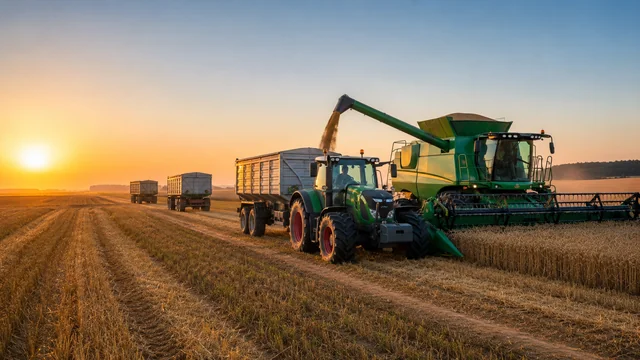
Most planning discussions about harvesting revolve around the combine: its horsepower, the width of the header, the acreage it can cover in an hour.
Transport is often identified as the 'easy' part of the equation. But it's not. Your high-capacity combine can fill the grain cart faster than the trucks can keep up. When that happens, you're losing valuable time waiting for the next truck to arrive and get back to the combine - stuck behind a line of truck traffic that's stalled on the road waiting to get into the next elevator.
This is not the time to realize your trucks and drivers are the bottleneck in getting the crop out. A couple of thousand bushels of grain sitting in the field because you can't transport it is a breakdown as catastrophic as a blown engine or a snapped driveshaft. Fixing that choke point before the season starts is one of the highest-leverage moves you can make.
Run a full equipment audit across every link
Pre-season maintenance doesn't just apply to the combine. All systems in the transport chain - trucks, trailers, grain carts, augers, tires, hydraulic hoses - need a scheduled inspection in advance of peak demand. A trailer with a bad bearing or an auger with a worn belt doesn't present itself as a problem until the day you absolutely can't afford one.
Go through the chain in an orderly fashion. Begin with the combine and work from the grain cart to the truck to the elevator. Any piece that fails becomes the weak link for everyone behind it. Document what gets serviced, what gets replaced, and what's still marginal. Anything marginal should be fixed now, not the first week of harvest when those parts you ordered are now three weeks out.
Tires are often the most overlooked. Agricultural equipment skips from road surfaces to field conditions several times a day. A blowout on a loaded grain hauler is not just a mechanical delay, it's a compliance issue based on road location and actual load weight.
Decide early: in-house fleet or outsourced hauling
Once you know your actual hauling capacity requirement, you can make a real decision about how to meet it. Waiting until harvest begins to figure out whether you need additional trucks guarantees one of two outcomes: premium spot rates for custom haulers, or zero availability.
The decision framework is simpler than it sounds. If your in-house agricultural equipment and truck fleet can cover average daily load requirements with reasonable buffer, you may only need surge capacity for the highest-volume days. That's a case for a standing arrangement with a third-party hauler - agreed-upon rates, confirmed availability, and routes pre-communicated before the first load moves.
For operations with longer farm-to-elevator distances or limited on-farm storage, outsourcing a portion of peak hauling may be the right baseline, not a fallback. A good starting point is the farm transport guide covering valley transport solutions, which breaks down how to think through hauling logistics across different operational scales. Getting that decision made in the weeks before harvest, rather than the morning of, changes both cost and reliability.
Calculate hauling capacity from cycle time, not truck count
This is where most farms do the bad math. Four trucks is probably enough. Maybe. Maybe not. It all comes down to how long that round trip takes: how long it takes to load at the grain cart, drive to the elevator, sit in line at the elevator, and return. If that full loop is an hour and a half and your combine is going for a half-hour between fills, four trucks is probably just barely getting it done. If the round trip is 90 minutes, four trucks will deliver at best just half of what you need!
Start at the combine and work backwards. How many bushels per hour is the combine producing? How many bushels per truck (for legal loading) is typical - not max, but typical - including travel and wait time at the elevator? Dividing one by the other gives you how many bushels per hour a truck can haul. Divide that number into combine output, and you know how many observable hours it will take four trucks to catch the combine.
The elevator wait and sit time is the number most farms underestimate. Waiting at the scale during peak season isn't a 10-minute inconvenience - it can stretch to 45 minutes or longer when every grower in the region is running at the same time. That queue time eats directly into your load-per-day count, and there's no way to recover it once the day is done.
Build buffers for weather, moisture, and field conditions
The time period when grain can be harvested is limited. Late soybean harvest may result in a loss of 1 to 3 bushels per acre for each week after reaching maturity due to shattering and stand loss - numbers reported by virtually every extension educator and agronomist at land-grant universities. There is a real number associated with every single grain-hauling hour that occurs during that window.
So, you're going to need cushion in your calendar for the unknowns. Grain moisture directly determines whether a trip is made straight to town or whether on-farm drying hours are needed first. Wet fields - whether it's the actual harvest field, the road leading to the field, or the field where your cart and truck are forced to pass through - can add unneeded compaction, limit the routes you can use, and decrease carting speed. This assumes your storage doesn't allow you to store a day's worth of harvest until better conditions prevail and you must wait in line at the elevator. If you can store out, by all means, keep the combine moving.
Verify compliance before the first truck moves
Make sure that the axle weight limits, gross vehicle weight permits, and route restrictions are correct before the peak season arrives, not during that time. A citation for a single scale-house can immobilize a truck at the worst possible time and the documentation to resolve the situation will not be processed any faster because it is harvest season.
Make sure that the driver's records and hours of service are up to date. Make sure that you have any seasonal permits for oversized or overweight loads. Check that the scale-house procedure of your main elevators has not changed since last year. These are things that require little effort when done in advance and can be very expensive problems if they appear during the operation.
Labor availability is a seasonal problem also worth solving early. The shortage of drivers reaches its peak during harvest time. Because demand rises in each agricultural operation at the same time, if you depend on hired or temporary contracted drivers you will have to secure them before the season.
Get the logistics plan documented, not just discussed
A logistics plan that only one person knows isn't worth the paper it's printed on. But if it's trapped in your head? Forget it. We know because we've seen it a hundred times. There are a thousand variables, warnings, and conditions. Write where you can find them.
Write down the math from the round-trip cycle for grain transfer. Multiply the number of trucks you have by 6. That's the math.
Write down the hauling capacity number you figured for your operation. This year, either that's your limiter or you got lucky. Doesn't matter; write it down.
Write the names and numbers of the custom haulers you had to pre-arrange with. They'll expect your call.
Write the elevator names and contacts, local procedures, weight limits, hours and grain prices. Call them if you're not sure.
Write where you keep your compliance documents (mock me if you will, but the field inspectors have nothing but time this season). Add the hours and locations of your crop inspector.
Harvest is fast, loud, and exhausting. The decisions that get made well are the ones you made before it starts.