Canva CEO on What Happens When AI Does the Design
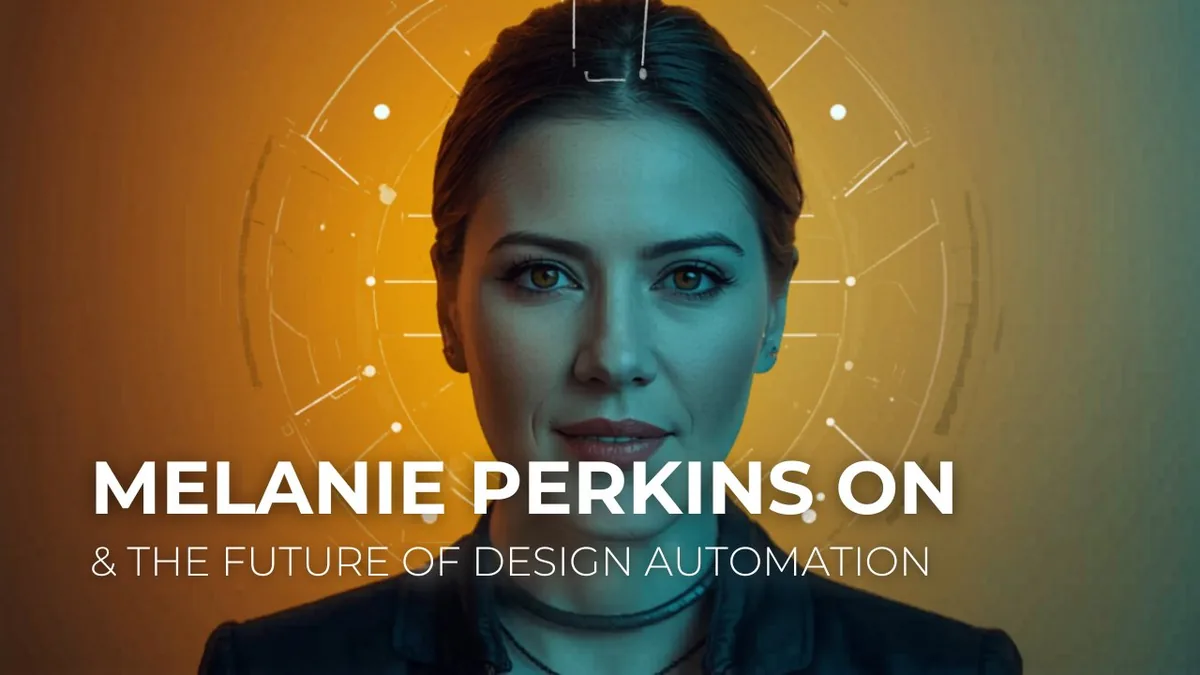
As Anthropic launches Claude Design and Adobe accelerates its AI-powered Firefly suite, Canva CEO Melanie Perkins is navigating a rapidly shifting landscape where the tool she built her company on — easy drag-and-drop design — is increasingly being automated by AI. In a wide-ranging interview, Perkins shared her perspective on how Canva is adapting to AI, what it means for professional designers, and where she sees design heading as generative AI matures.
Canva's AI-First Pivot
Canva has been integrating AI across its platform aggressively, adding features like Magic Design (AI-generated templates), Magic Edit (image editing via text prompts), Magic Write (AI copywriting), and most recently, deeper integration with image generation models. Perkins framed this not as a threat to Canva's core business but as an amplification of it — AI makes the design process faster and more accessible, which expands the total addressable market rather than shrinking it. "The best AI-powered design tool will still be the one that gives people the most creative control," she argued.
The Question of Designer Jobs
The interview addressed the elephant in the room: does AI-powered design threaten professional designers? Perkins' answer was nuanced. She acknowledged that AI is changing the demand for certain low-complexity design tasks — logo creation, social media templates, presentation slides — that previously required professional assistance. However, she argued that AI raises the bar for what counts as "design," pushing the value of human designers toward strategy, brand identity, and creative direction rather than execution. This mirrors arguments made in other creative fields about AI augmenting rather than replacing human judgment.
Competing with Anthropic's Claude Design
The timing of the interview is notable: Anthropic just launched Claude Design, a dedicated app that generates visuals, prototypes, and slides using Claude's AI capabilities — a direct encroachment on Canva's territory. Perkins did not address Claude Design directly, but her broader message was that Canva's advantage lies in its distribution (over 170 million monthly active users), its brand library features, its collaboration infrastructure, and its deep integration with business workflows — areas where a new AI app from a model company would take years to match.
The Future of Design Tools
Perkins articulated a vision where design tools become more conversational and intent-driven. Rather than clicking through menus and adjusting parameters, users will describe what they want and AI will generate options — with human refinement happening at a higher level of abstraction. This shift requires design platforms to build rich context awareness: understanding brand guidelines, past designs, audience, and purpose, not just executing a one-shot generation from a text prompt.
FAQ
How many users does Canva have?
Canva has over 170 million monthly active users across 190 countries, making it one of the most widely used design platforms in the world.
What AI features has Canva launched?
Canva's AI suite includes Magic Design (template generation), Magic Edit (AI image editing), Magic Write (copywriting), Magic Resize, and Background Remover — all accessible within its existing design interface.
Is Canva profitable?
Canva has been reported to be profitable on an adjusted basis, though it has not gone public. The company was valued at $26 billion in its most recent funding round in 2021, though that valuation has been marked down by some secondary market participants since then.
The Bottom Line
Melanie Perkins is making a confident bet that Canva's platform advantages — distribution, collaboration, brand tools, and workflow integration — will outlast the initial wave of AI design disruption. Whether that bet pays off depends on how quickly AI model companies like Anthropic can build the product depth that has taken Canva a decade to accumulate.
Related Articles
- Anthropic Launches Claude Design App
- 5 New AI Tools You Should Try This Week
- Cohere CEO on Taking AI Models to the World