Best AI Dash Cams in 2026: Top Picks for Safer Driving

A dash cam used to be a simple loop-recording camera. In 2026, the best ones are far smarter: AI dash cams can warn you about an impending collision, alert you if you drift out of your lane, notice when you’re getting drowsy, read traffic signs, and even guard your parked car and stream live video to your phone. This guide covers the best AI dash cams you can buy today, how the technology works, and exactly what to look for.
We’ve focused on consumer AI dash cams — the ones you can buy and install yourself — and every model below is a real, current product with a link to check the latest US price. (If you manage a commercial fleet, we cover the very different world of fleet AI dash cams further down.)
AI Dash Cams vs. Regular Car Cameras
A standard dash cam records the road and saves clips when it detects a bump. An AI dash cam adds a layer of on-device intelligence — computer vision and, on some models, cloud processing — that actually understands what it sees. Instead of just recording an incident, it can help you avoid one.
That intelligence usually shows up as ADAS (Advanced Driver-Assistance System) features: real-time alerts powered by object recognition and machine-learning models running on the camera. The best cams pair this with high-quality sensors (Sony’s STARVIS 2 is the current gold standard) so the footage is sharp enough for the AI — and for an insurer or court — to make sense of.
The AI Features That Matter Most
Not every “AI” label means the same thing. These are the features worth caring about:
- Forward-collision warning (FCW) — alerts you when you’re closing on the car ahead too quickly.
- Lane-departure warning (LDW) — warns you if you drift out of your lane without signaling.
- Driver-fatigue / distraction detection — uses an interior camera to spot drowsiness or phone use (more common on interior-facing and fleet cams).
- Traffic-sign recognition (TSR) — reads speed-limit and other signs and displays them to you.
- AI-enhanced parking mode — monitors your parked car and records (or streams) only when it detects real motion or an impact, saving storage and battery.
The 7 Best AI Dash Cams in 2026
Here are our top picks, from the best all-rounder to the best budget buy. Prices are approximate US retail and change often.
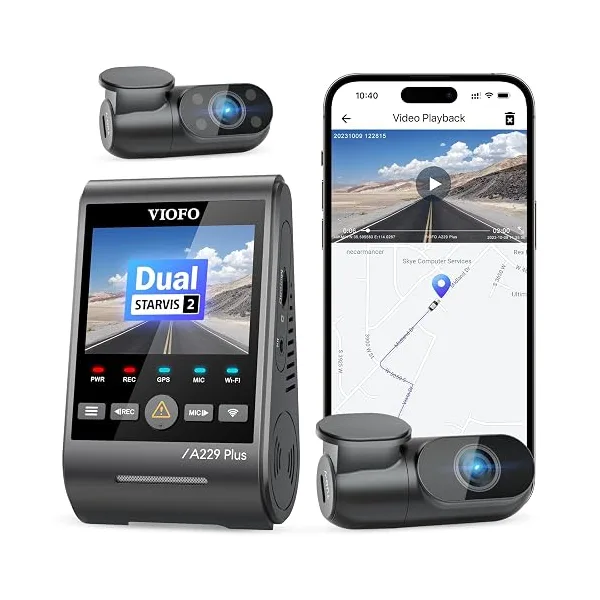
VIOFO A229 Plus — Best Overall
The A229 Plus is the best all-round AI dash cam for most drivers. Its Sony STARVIS 2 sensors capture crisp, low-noise footage day and night, and it packs ADAS driver-assist alerts, a buffered parking mode, voice control, 5GHz Wi-Fi and GPS. As a 3-channel system, it can cover the front, interior and rear at once.
- Sony STARVIS 2 sensors (excellent night video)
- ADAS collision & lane-departure alerts
- Up to 3 channels (front / interior / rear)
- Buffered parking mode + voice control
- 5GHz Wi-Fi and GPS
~$260 · Amazon US Check Price on Amazon →
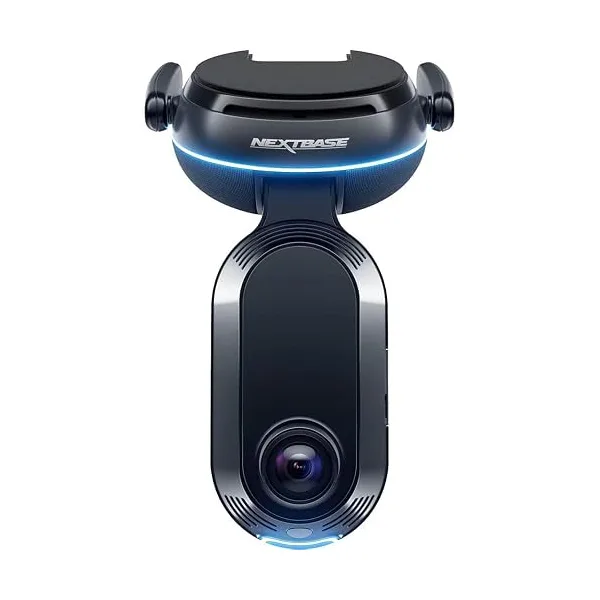
Nextbase iQ — Best Smart / Connected
The Nextbase iQ is the most genuinely “AI” cam here — a connected smart dash cam with built-in 4G LTE, live view from anywhere, an AI-powered virtual “Witness” assistant, Smart Sense parking protection and Emergency SOS. It’s the pick if you want cloud connectivity and remote monitoring of your vehicle.
- Built-in 4G LTE + live view from anywhere
- AI “Witness” assistant & Emergency SOS
- Smart Sense parking guard
- Radar-based motion detection
- 1K / 2K / 4K models available
~$400 · Amazon US Check Price on Amazon →
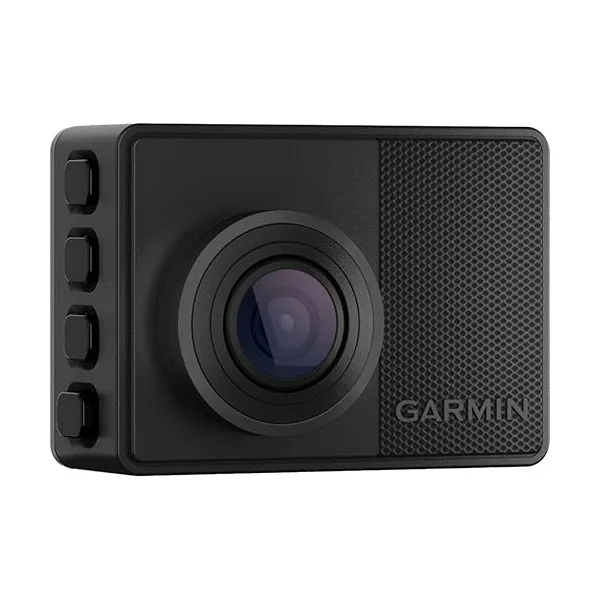
Garmin Dash Cam 67W — Best Value
Tiny yet mighty, the 67W shoots sharp 1440p across a wide 180° field of view and adds Garmin’s excellent voice control, forward-collision and lane-departure warnings, plus Vault cloud clip storage. It’s a polished, reliable pick that hides neatly behind your rear-view mirror.
- 1440p HD, extra-wide 180° view
- Voice control (“OK Garmin”)
- Forward-collision & lane-departure warnings
- Compact, discreet design
- Vault cloud clip storage
~$260 · Amazon US Check Price on Amazon →
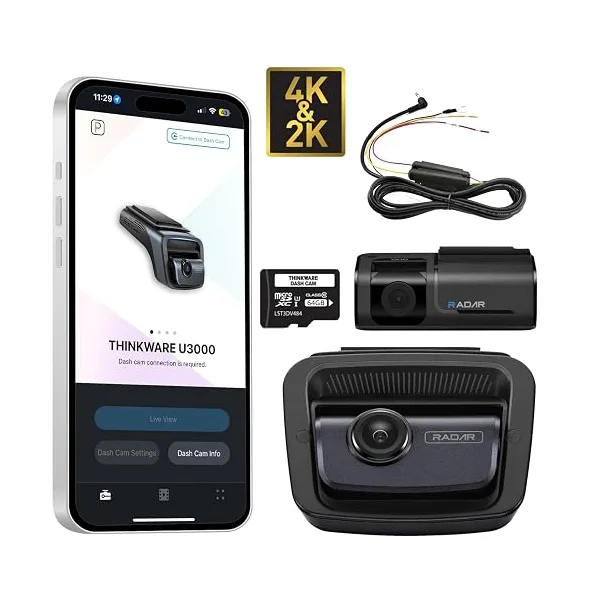
Thinkware U3000 — Best 4K Image Quality
The U3000 is the choice for outright image quality — 4K UHD front recording with a Sony STARVIS 2 sensor, radar-based parking mode, ADAS safety alerts and optional LTE for cloud connectivity. It’s a premium, professional-grade system for drivers who want the sharpest possible footage.
- 4K UHD front, Sony STARVIS 2 sensor
- Radar-based parking surveillance
- ADAS safety alerts
- Optional LTE + cloud connectivity
- Superb plate & detail capture
~$400 · Amazon US Check Price on Amazon →
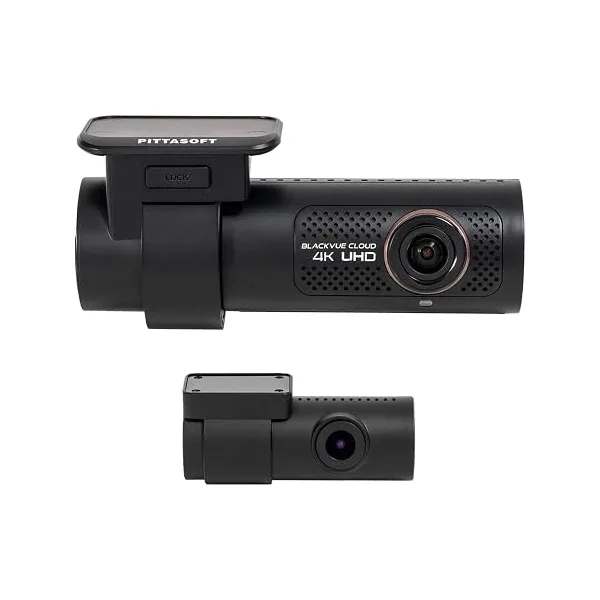
BlackVue DR970X-2CH — Best Cloud System
BlackVue’s DR970X pairs 4K front and Full HD rear recording with the best cloud platform in the business — live GPS tracking, remote live view and instant event notifications. It’s sleek, low-profile and a long-time favorite among connected-car enthusiasts.
- 4K front + Full HD rear
- Class-leading BlackVue Cloud
- Live GPS tracking & remote view
- Buffered parking mode
- Slim, premium build
~$400 · Amazon US Check Price on Amazon →
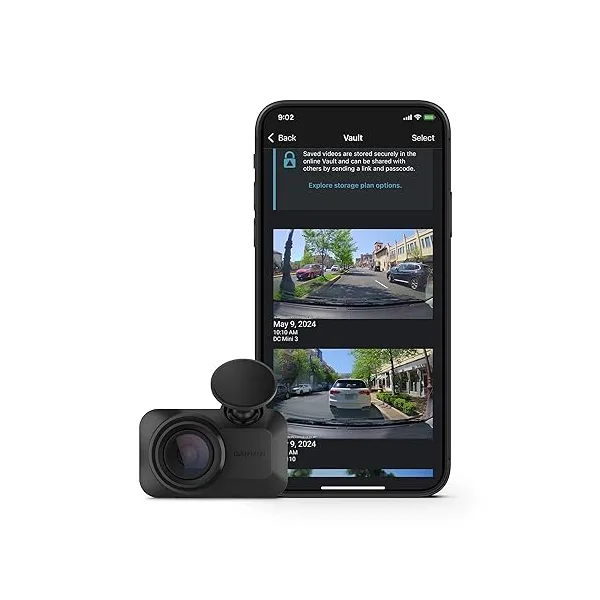
Garmin Dash Cam Mini 3 — Best Discreet Pick
About the size of a car key, the Mini 3 is the most discreet dash cam here. It records sharp 1080p HDR video, supports voice control and automatic incident detection, and all but disappears behind your mirror — ideal if you don’t want a visible gadget on the windshield.
- Ultra-compact (key-sized)
- 1080p HDR video
- Voice control + incident detection
- Very discreet mounting
- Works with Garmin Vault
~$150 · Amazon US Check Price on Amazon →
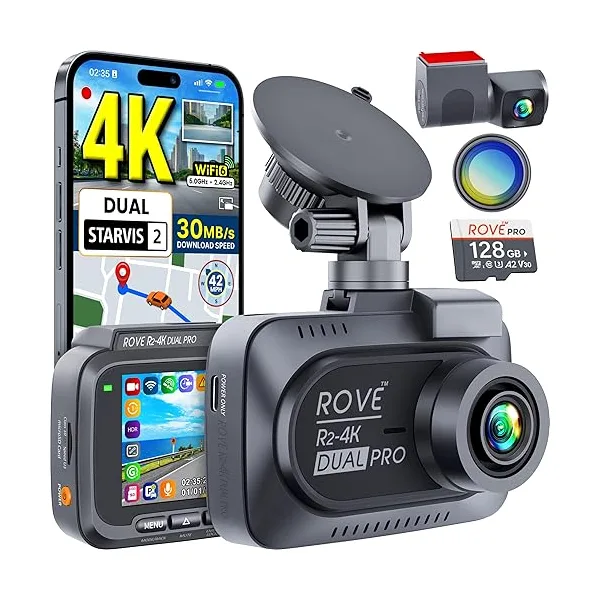
Rove R2-4K Dual PRO — Best Budget
The Rove R2-4K is the best budget pick — a hugely popular front-and-rear system with 4K+2K recording, built-in GPS, Wi-Fi and Wide Dynamic Range for well under $150. It lacks the advanced ADAS of pricier models, but it nails the fundamentals for the money.
- 4K front + 2K rear recording
- Built-in GPS & Wi-Fi
- Wide Dynamic Range for glare
- Great value under $150
- Simple, reliable everyday cam
~$140 · Amazon US Check Price on Amazon →
AI Dash Cam Comparison
| Dash Cam | Best For | Price (US) |
|---|---|---|
| VIOFO A229 Plus | Best Overall | ~$260 |
| Nextbase iQ | Best Smart / Connected | ~$400 |
| Garmin Dash Cam 67W | Best Value | ~$260 |
| Thinkware U3000 | Best 4K Image Quality | ~$400 |
| BlackVue DR970X-2CH | Best Cloud System | ~$400 |
| Garmin Dash Cam Mini 3 | Best Discreet Pick | ~$150 |
| Rove R2-4K Dual PRO | Best Budget | ~$140 |
Choosing the Right AI Dash Cam
Once you’ve decided you want AI features, weigh these factors:
- Resolution. 1440p (2K) is the sweet spot — sharp enough to read license plates without huge files. 4K (Thinkware U3000, BlackVue DR970X) is nicer but fills memory cards faster.
- Channels. A front-only cam is fine for basics; front-and-rear covers rear-end collisions; add an interior channel if you drive for rideshare.
- Sensor. Look for a Sony STARVIS 2 sensor for the best low-light and nighttime footage.
- Parking mode. If you park on the street, a buffered or radar-based parking mode (ideally hardwired) protects your car while you’re away.
- Connectivity. Built-in LTE and cloud (Nextbase iQ, BlackVue) let you view live footage and get alerts remotely — great for peace of mind, but usually a subscription.
- Storage. Use a high-endurance microSD card rated for dash cams (64–256GB); ordinary cards wear out fast under constant recording.
A Note on Fleet and Commercial AI Dash Cams
“AI dash cam” also refers to a completely different category: fleet safety systems for trucks, vans and commercial vehicles. These are subscription platforms — not off-the-shelf gadgets — that combine dual-facing cameras with driver-monitoring AI, real-time in-cab coaching and manager dashboards. The leaders include Samsara, Motive, Netradyne (Driveri), Lytx and Verizon Connect.
If you run a fleet, those systems (sold direct through the vendors, not on Amazon) are what you want. If you’re an individual driver, rideshare driver or small business owner, the consumer cams above give you most of the same safety benefits without the enterprise contract.
Installation and Legal Basics
Most consumer dash cams are easy to fit: mount the camera behind your rear-view mirror, run the cable along the headliner and down the A-pillar, and power it from the 12V/USB socket. For always-on parking mode, a hardwire kit (drawing from the fuse box) is worth the small extra cost or a quick shop install.
Dash cams are legal to own and use in all 50 US states, but two rules vary locally: some states restrict windshield mounting (many drivers mount behind the mirror or on the dash to stay clear of the driver’s view), and audio recording is subject to consent laws in some states. Check your state’s specifics before recording passengers. Dash-cam footage is widely accepted as evidence for insurance claims and disputes.
Frequently Asked Questions
What is an AI dash cam?
An AI dash cam is a dashboard camera that adds on-device intelligence — computer vision and machine learning — on top of normal video recording. Instead of just capturing footage, it can recognize hazards in real time and warn you, with features like forward-collision and lane-departure alerts, driver-fatigue detection and smart parking protection.
Do AI dash cams really improve safety?
Yes, for two reasons. The real-time alerts (collision and lane-departure warnings, fatigue detection) can prevent accidents by catching mistakes a split second before you do. And the recorded footage protects you afterward — it provides clear evidence for insurance claims and disputes, and studies of fleet programs show measurable drops in risky driving once cameras are in place.
Are dash cams legal in the US?
Dash cams are legal to own and use in every US state. The main caveats are windshield-mounting rules — some states limit what you can attach to the windshield, so many drivers mount behind the mirror or on the dash — and audio-recording consent laws, which vary by state. Always check your local rules before recording passengers.
What’s the difference between a consumer and a fleet AI dash cam?
Consumer AI dash cams (like the ones in this guide) are one-time purchases you install yourself, with alerts and recording aimed at the individual driver. Fleet AI dash cams (Samsara, Motive, Netradyne, Lytx) are subscription platforms for businesses, with driver-monitoring AI, live coaching and manager dashboards. They’re sold through the vendors, not on Amazon.
Do I need 4K, or is 1080p enough?
For most drivers, 1440p (2K) is the sweet spot — sharp enough to read license plates while keeping file sizes manageable. 4K (as on the Thinkware U3000 and BlackVue DR970X) captures more detail, useful for larger scenes or professional use, but it fills memory cards faster. Plain 1080p is fine for a basic front-only cam or a budget build.
What is parking mode, and do I need it?
Parking mode keeps the camera watching over your car while it’s parked and off, recording (or streaming) when it detects motion or an impact. It’s genuinely useful if you park on the street or in public lots, since it can capture hit-and-runs and vandalism. For the best results it should be hardwired to your car’s fuse box so it doesn’t drain the main battery.
Can a dash cam lower my car insurance?
Sometimes. A few insurers offer small discounts for having a dash cam, and more importantly, footage can protect your premium by proving you weren’t at fault in a claim. Discounts vary by carrier and state, so check with your insurer — but even without one, the evidence a dash cam provides can save you money after an incident.
How much storage do I need?
A 128GB high-endurance microSD card is a good default, holding many hours of looped 1440p footage; go 256GB for 4K or multi-channel setups. Crucially, use a card specifically rated for dash cams or surveillance — ordinary microSD cards wear out quickly under constant recording and can fail silently.
The Bottom Line
An AI dash cam is one of the smartest, cheapest upgrades you can make to any car in 2026 — it watches the road, warns you of danger, and has your back if something goes wrong. For most people, the VIOFO A229 Plus is the best all-round choice; the Nextbase iQ is the pick if you want connected, cloud-based smarts; the Garmin 67W is the reliable value option; and the Rove R2-4K delivers the essentials on a budget. Match the resolution, channels and parking features to how you drive, use a proper high-endurance memory card, and you’ll have a co-pilot that never blinks.