Upward Curved Penis: Causes, When to Worry & Best Positions
Health information, not medical advice. This article is for general information only. If you have pain, a sudden change in your penis’s shape, a lump, or any concerns about your sexual health, please see a doctor or urologist.
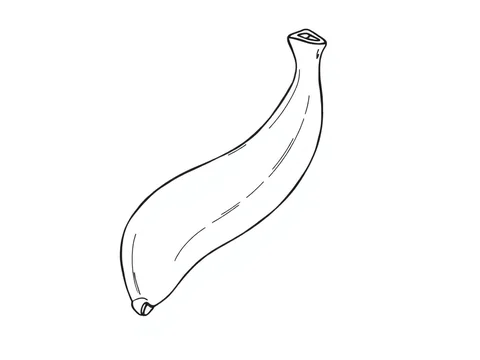
If your penis curves upward when erect, you’re in good company — a slight curve is completely normal and very common. Studies suggest that up to half of men have some degree of penile curvature, and an upward bend is the most common direction. For most men it causes no problems at all. This guide explains what causes a curved penis, how to tell a normal curve from Peyronie’s disease, when to see a doctor, the real treatment options, and tips for comfort during sex.
Is an Upward Curved Penis Normal?
Yes. Like noses, ears and feet, penises vary in shape, and a gentle curve — up, down or to one side — is part of normal anatomy. As a general rule, a curve of less than about 30 degrees that isn’t painful is nothing to worry about and doesn’t interfere with sex or urination. Many people find an upward curve has no downside at all; some couples even find certain positions more pleasurable because of the angle.
What Causes a Curved Penis?
An erection happens when blood fills two spongy chambers (the corpora cavernosa) that run along the shaft. If those chambers expand slightly unevenly, the erect penis bends towards the shorter side. Common reasons for a curve include:
- Natural anatomical variation — a lifelong, painless curve you’ve always had is simply how you’re built.
- Congenital curvature — a curve present from birth, caused by minor differences in how the tissues developed.
- Peyronie’s disease — scar tissue (plaque) that forms inside the shaft, usually after a minor injury, causing a more pronounced and sometimes painful bend (more on this below).
- Injury — a knock or bend to an erect penis (including during sex) can occasionally lead to scarring and curvature.
One myth worth clearing up: masturbation does not cause a curved penis. Normal sexual activity won’t bend your penis — though any sudden, painful injury during sex is worth getting checked.
Normal Curvature vs. Peyronie’s Disease
The key question is whether your curve is simply normal anatomy or a sign of Peyronie’s disease. Peyronie’s is a treatable condition in which fibrous scar tissue forms inside the penis, and it differs from a normal curve in important ways:
- It often appears or worsens in adulthood, rather than being lifelong.
- There may be a hard lump or thickened area you can feel in the shaft.
- It can cause pain during erections, a significant bend, an “hourglass” shape, or loss of length or girth.
- In some men it’s linked with erectile dysfunction.
Encouragingly, Peyronie’s often stabilises — and sometimes improves — over 12 to 18 months, and there are effective treatments, especially when started early.
When Should You See a Doctor?
See a GP or urologist if you notice any of the following, as they can point to Peyronie’s disease or another issue that benefits from treatment:
- A curve greater than about 30 degrees, or one that is getting worse
- Pain during erections
- A lump or hard, thickened area in the shaft
- A bend that makes sex or urination difficult
- Curvature that came on suddenly in adulthood
A doctor can examine you, confirm whether it’s normal curvature or Peyronie’s, and explain your options. There’s no need to feel embarrassed — this is a common reason men visit a urologist.
Treatment Options
If your curve is mild, painless and doesn’t interfere with sex, no treatment is needed. When treatment is warranted (usually for Peyronie’s disease or a curve that affects function), it should always be guided by a healthcare professional. Options can include:
- Medication — collagenase (Xiaflex) injections can break down the scar tissue of Peyronie’s disease in suitable cases.
- Penile traction therapy — a medically prescribed device worn to gradually reduce curvature; only use this under a doctor’s guidance.
- Shockwave therapy — sometimes used to ease pain associated with Peyronie’s.
- Surgery — for severe or stable curves, procedures such as plication, grafting or a penile implant can straighten the penis.
Important: don’t try to “straighten” your penis yourself by forcing, squeezing or aggressively stretching it, and never push on a lump. DIY manipulation can cause injury and make things worse. Proven treatments are all doctor-supervised.
Best Sex Positions for an Upward Curve
A curve usually means small adjustments rather than any real limitation. With an upward curve, the bend tends to align well with the front wall of the vagina, which some partners find pleasurable. Positions that tend to work well include:
- Missionary (and its variations) — the upward angle lines up naturally; a pillow under your partner’s hips can fine-tune the angle.
- Partner on top — lets your partner control the angle and depth for the most comfortable fit.
The two things that help most are simple: communicate with your partner about what feels good, and use a quality lubricant to reduce friction. If a particular position is ever painful, stop and try another — sex should never hurt. For more on confidence and wellbeing, see our guide on improving sexual health.
Living With a Curved Penis
A curved penis is a normal variation, not a flaw. It’s easy to let worry dent your confidence, but a slight bend rarely matters to a partner nearly as much as it might to you — and confidence and communication count for far more in the bedroom than shape. If a curve is causing you genuine distress, pain or difficulty, that’s exactly what a urologist is there for, so reach out rather than worrying alone.
Frequently Asked Questions
Is an upward curved penis normal?
Yes, a slight upward curve is completely normal and very common — studies suggest up to 50% of men have some degree of penile curvature, and upward is the most common direction. A curve under about 30 degrees with no pain typically doesn’t affect sexual function or pleasure.
When should I see a doctor about penile curvature?
See a doctor if the curve is greater than about 30 degrees, causes pain during erections, makes intercourse or urination difficult, includes a lump in the shaft, or developed suddenly in adulthood. A sudden or worsening curve can indicate Peyronie’s disease, which is treatable.
What are the best positions for an upward curved penis?
Missionary and its variations often work best because the upward curve aligns with the front vaginal wall. Partner-on-top positions also work well, as they let your partner control the angle and depth. Communication and a good lubricant help most of all.
Can Peyronie’s disease be treated?
Yes. Options include medication (such as Xiaflex injections), medically guided penile traction therapy, shockwave therapy and, in severe cases, surgery. Many cases stabilise on their own within 12 to 18 months, and early treatment during the active phase tends to give better results.
Can a curved penis be straightened without surgery?
Sometimes. For Peyronie’s disease, non-surgical options like collagenase injections and doctor-supervised traction therapy can reduce curvature. A lifelong, painless natural curve usually doesn’t need treatment at all. Avoid DIY straightening attempts, which can cause injury.