How to Use NLP and Chatgpt Prompt to Rank Higher for SEO
Using natural language processing (NLP) and customized ChatGPT prompts can be helpful for ranking higher on Google. NLP enables Google to understand and interpret content based on user intent.
Secondly, well-crafted ChatGPT prompts can help better craft your content to meet Google's standards for relevance.
Understand the Role of NLP in Google's Algorithm
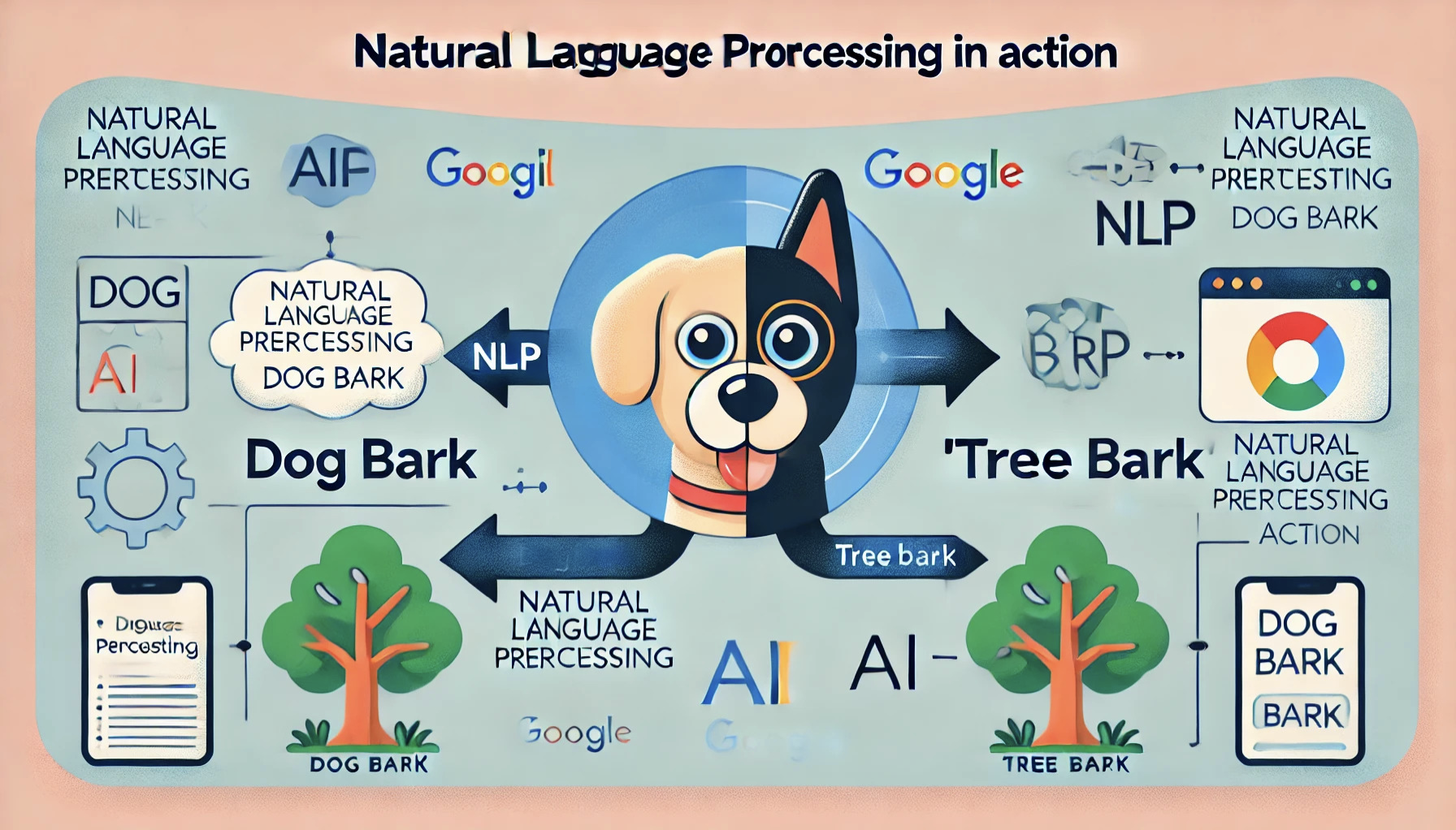
Natural language processing (NLP) is a branch of AI that enables computers to interpret text in a human-like way.
For Google, NLP is crucial in analyzing user intent, understanding context, and identifying patterns within search queries.
For instance, Google can differentiate between the word "bark" in "dog bark" and "tree bark" by interpreting the surrounding context. This allows Google to accurately interpret search queries and return relevant content.
How to Create NLP-Friendly Content Structures
To make content NLP-friendly, keep sentence structures clear and straightforward. Secondly, avoid complex wording and convoluted sentences that may confuse both readers and Google's algorithm.
Here is how:
- Use straightforward sentence structures: Aim for a subject-verb-object (SVO) format.
- NLP-Friendly: "Humidifiers add moisture to the air."
- NLP-Unfriendly: "Adding moisture to the air can be done using humidifiers."
- Minimize ambiguity: Use clear, positive statements. Avoid vague phrases like "might help with dryness" or "could work well for skin."
- Answer common search queries explicitly: If answering "What's the ideal temperature for growing tomatoes?" use a structure like, "The ideal temperature for growing tomatoes is 70 to 85 degrees Fahrenheit." This mimics the query and improves the likelihood of ranking well.
Optimize for Search Intent and Query Matching
To help content resonate with Google's algorithms, it is essential to align it with common search query patterns.
Google prioritizes content that closely matches user intent, so structuring your content to reflect search queries can improve your chances of ranking.
Here's how:
- Reflect Search Queries in Headings: Use headings and subheadings that echo common queries. This approach helps Google quickly identify the main topics of your content and understand its relevance to user searches.
- Provide Direct, Concise Answers Early: In the introduction or shortly after each heading, provide a clear, direct answer to the question. This helps both Google and readers find the information they're looking for quickly, signals that your content is relevant to the search query.
Examples:
Example 1: "What Are the Benefits of Meditation?"
- Direct Answer: "Meditation helps reduce stress, improves concentration, and promotes emotional health."
- By mirroring the query with "Meditation helps"¦" and listing the benefits right away, you're aligning your content with search intent.
Example 2: "How to Start a Vegetable Garden?"
- Direct Answer: "To start a vegetable garden, choose a sunny spot, prepare the soil, and select beginner-friendly vegetables like tomatoes and lettuce."
- By responding with "To start a vegetable garden"¦" and providing immediate, actionable steps, you're matching the searcher's intent.
Example 3: "Why Is SEO Important for Small Businesses?"
- Direct Answer: "SEO is important for small businesses because it improves online visibility, attracts more potential customers, and drives growth."
- By starting with "SEO is important for small businesses because"¦" the sentence directly mirrors the search query.
Use ChatGPT Prompts to Help You with NLP
Can't write like a computer? Not to worry, not all of us at our Singaporean digital marketing agency can do so too.
You can use a structured prompt in ChatGPT, specifically crafted for clarity.
Here's an example of an effective NLP-friendly prompt:
Prompt:
"Create content in an NLP-friendly format, emphasizing clarity and simplicity. Use a straightforward subject-verb-object order, choose precise words, and avoid any ambiguous language. Exclude filler content and complex terms. This approach aims to streamline content for improved NLP comprehension by Google's algorithm."
This NLP Prompt ensures the generated content avoids complex structures or unnecessary filler, making it both clear to Google and useful to readers. The result is highly optimized, readable content that meets Google's NLP requirements.
Key: Balance SEO Optimization with Reader Engagement
While NLP-friendly content enhances algorithmic readability, it may sometimes feel too technical. To make articles engaging without sacrificing SEO, use a balanced prompt:
Prompt: "While focusing on NLP-friendly content creation (60%), also make the content engaging and enjoyable for readers (40%), balancing technical NLP optimization with reader satisfaction."
This prompt ensures that the content ranks well but also resonates with readers, reducing bounce rates and boosting engagement signals.
Some times if the output by GPT is too technical, I'll re prompt it:
Prompt: "Now rewrite this that is understandable to a 21 year old".
This prompt can help with readability.
NLP Optimization vs. NLP Friendliness
It's essential to distinguish between NLP optimization and NLP friendliness:
- NLP Optimization: Involves using relevant keywords, entities, and phrases found in high-ranking articles. This includes terms and phrases related to the topic and frequently used by top-ranking competitors.
- NLP Friendliness: Focuses on clarity and ease of understanding, making it simple for Google to interpret your content's main intent and structure without any ambiguity.
Balancing these strategies ensures that your content ranks for specific keywords while remaining easy for Google's algorithm to interpret.
Conclusion
In my experience, there are limitations to using purely GPT prompts to help with your content. You'll still need some human inputs. Our SEO agency in Singapore relies on a mix of artificial intelligence and human editing.
However, by understanding NLP principles and strategic ChatGPT prompts, you can create content that's optimized for both search engines and readers.
This involves writing with clarity, using direct answers to match search intent, and readable content. A well-structured, NLP-friendly approach ensures your content is easy for Google to interpret, while a balanced prompt keeps it engaging for readers.
To get started, try using these prompts in ChatGPT and do not forget your human edits!