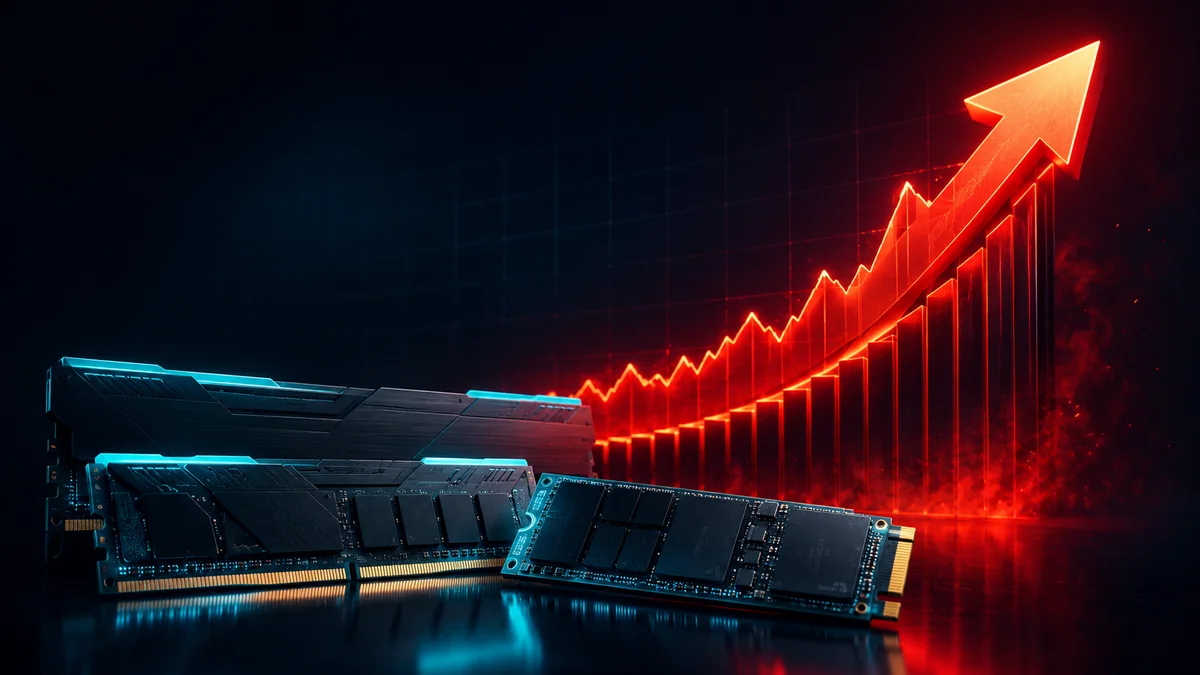
There's a price shock heading for your next gadget, and it's coming from an unexpected place. Investment bank Jefferies — backed by supply-chain analyst Ming-Chi Kuo and a chorus of others — warns that memory prices are about to surge, and keep surging, well into 2027. We're talking double-digit jumps every quarter, with no meaningful relief until 2028.
Memory is the unglamorous stuff inside every device: the RAM that lets your computer multitask and the NAND flash in every SSD and phone. When it gets pricier, everything gets pricier. Here's exactly what's coming, and how to stay ahead of it.
The Warning
This isn't a vague "prices might rise" forecast. Analysts have put hard numbers on it, and the trajectory is steep and sustained. The shortage is being driven by a single, unstoppable force — AI data centres — that is outbidding consumer-electronics makers for the exact same chips.
The Numbers
Here's the forecast laid out:
| Period | Expected memory price change |
|---|---|
| Q3 2026 | +40-50% vs. prior quarter |
| Q4 2026 | +30-40% more |
| 2027 (full year) | ~40-45% higher year-on-year |
| 2028 | Modest relief (~15-20% new supply) |
Stack those increases and the math is brutal. A component that costs $100 today could approach double that by the end of 2027. And because this hits both DRAM (system RAM) and NAND (SSD storage) at once, there's nowhere for device makers to hide.
Why It's Happening
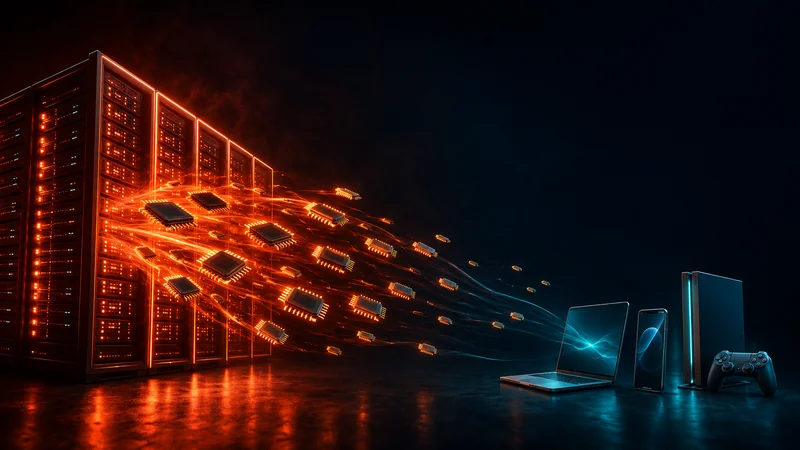
The root cause is the AI build-out. Cloud providers are constructing data centres at a furious pace, and those facilities devour high-bandwidth memory and storage. To guarantee supply, the big cloud players are reportedly locking down around half of all memory output through two-year contracts that require hefty upfront prepayments.
That leaves a much smaller pool for the companies that build laptops, phones and consoles — and basic economics does the rest. It's the same demand wave we covered when Apple and Microsoft raised prices, now spreading across the entire device industry.
What Gets More Expensive
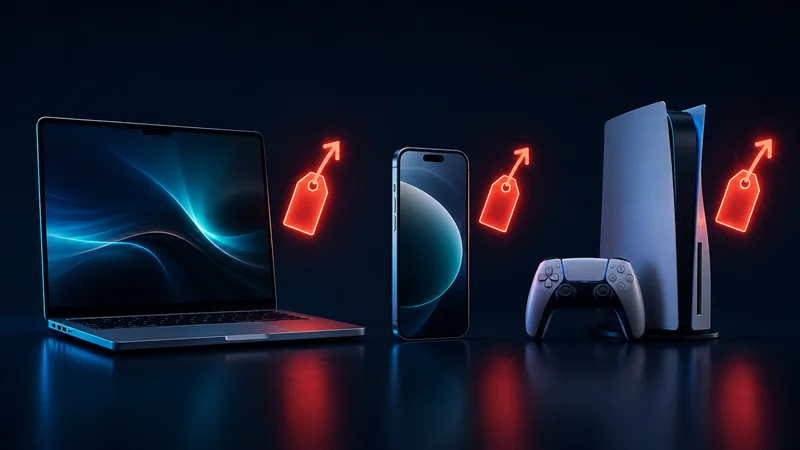
The short answer: almost everything with a chip in it. Specifically watch for higher prices on:
- RAM and SSD upgrades — the most direct hit; standalone modules and drives rise first.
- Laptops and desktops — memory is now roughly 35% of a laptop's component cost, up from 15-18% a year ago.
- Phones and tablets — especially higher-storage configurations.
- Graphics cards — GPUs lean heavily on fast memory.
- Game consoles — several already saw one price hike in 2026, with more expected.
Because memory has ballooned into such a large share of a device's bill of materials, even modest chip increases now show up as noticeably higher sticker prices on the shelf.
Why There's No Quick Fix
You might assume chipmakers will simply build more factories. They are — but fabs take years. That's why companies like Samsung are pouring fortunes into new plants, as we covered in Samsung's $648 billion investment. The catch is that none of that capacity helps you in 2026 or 2027.
Hopes that Chinese producers might flood the market with cheap memory are also fading — even China's output is increasingly being snapped up for servers. The result: analysts see only limited relief arriving in 2028, and elevated prices as the new normal until then.
What You Should Do
- Need an upgrade in the next few months? Buying sooner is reasonable — prices are forecast to climb, not fall, through 2027.
- Buy enough headroom. If you're getting a new laptop or phone, configure extra RAM and storage now; topping up later will cost more.
- Don't panic-buy. Purchase what you'll actually use — hoarding RAM you don't need just ties up cash.
- Can you wait years, not months? The modest 2028 relief might reward genuine patience, but that's a long time to hold out.
The Bigger Picture
This is what the AI boom looks like when it reaches your wallet. For two years, AI's costs were an abstract story about data centres and capital spending. Now it's showing up as a simple, tangible fact: the laptop or phone you want costs more because a data centre wanted its memory first.
It's also a reminder of how concentrated and fragile the memory market is. A handful of manufacturers supply the world, and when demand from one sector — AI — spikes this hard, the shockwaves reach every shelf in every electronics store on the planet.
Frequently Asked Questions
Why are memory prices going up?
The AI boom. Cloud providers are buying enormous quantities of memory for AI data centres, soaking up supply faster than chipmakers can add capacity. Analysts say cloud giants are locking down roughly half of total memory output through two-year contracts with large prepayments, leaving far less for laptops, phones and everything else — which pushes prices up sharply.
How much will RAM and SSD prices rise?
A lot, and fast. Jefferies estimates memory prices will jump 40-50% in Q3 2026 versus the prior quarter, followed by another 30-40% in Q4, and roughly 40-45% more across 2027. Both DRAM (system RAM) and NAND (SSD storage) are affected, so the components inside almost every device are getting more expensive at once.
When will memory prices come down?
Not soon. Analysts expect only modest relief in 2028, when about 15-20% of new supply finally comes online. New fabs take years to build, and Chinese producers aren't expected to add enough capacity to break the shortage in the near term — so elevated prices are likely to persist through 2026 and 2027.
What products will get more expensive?
Almost anything with memory in it: laptops, desktops, phones, tablets, graphics cards, game consoles, and standalone RAM and SSD upgrades. Memory now makes up around 35% of a laptop's component cost — up from 15-18% a year earlier — so even small price moves in chips translate into noticeably higher sticker prices on finished gadgets.
Why is AI causing the memory shortage?
AI data centres are voracious consumers of high-bandwidth memory and high-capacity storage. As companies race to build out AI infrastructure, they're outbidding consumer-electronics makers for the same chips. One analyst estimates that 15-20% of 2026 consumer-electronics memory capacity will be redirected to data centres in 2027 — directly at the expense of the devices ordinary buyers want.
Should I buy RAM, an SSD, or a laptop now?
If you genuinely need an upgrade or a new machine in the next several months, buying sooner rather than later is reasonable, since prices are forecast to keep climbing into 2027. But don't panic-buy more than you need — and if a purchase can wait years rather than months, you may catch the modest relief expected around 2028. For most people, the practical move is to buy what you actually need now and configure with enough RAM and storage to last.
Will game consoles and phones cost more too?
Very likely. Consoles run on the same DRAM and NAND that's surging in price, and several makers have already raised prices once in 2026; analysts expect further increases. Phones face the same pressure, especially higher-storage models. When the core components get pricier across the board, very few finished devices stay immune for long.
Final Thoughts
The memory crunch is one of those rare tech stories that touches everyone, because it touches every device. You don't have to care about data centres or AI capex to feel it — you'll feel it the next time you price a laptop, spec a phone, or eye an SSD upgrade.
The honest summary: prices are heading up for the next 18-24 months, and waiting probably won't help unless you can hold out until 2028. Buy what you genuinely need, configure it generously, and don't expect a bargain in the meantime. The AI era is rewriting a lot of things — and now it's rewriting the price tag on your next gadget too. We'll keep tracking it.