Character.AI Bankruptcy: What Happens to Your Chats and Bots
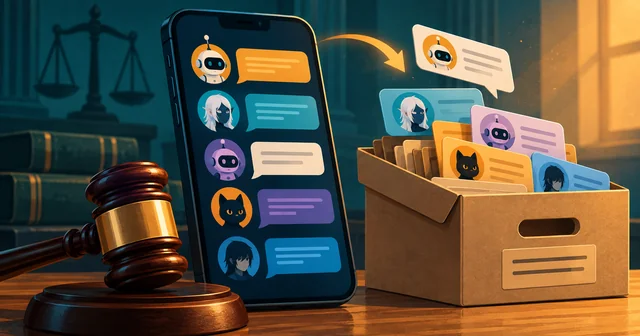
Character.AI filed for Chapter 11 bankruptcy on 12 October 2026 to sell itself under court supervision. The app, your chats and paid subscriptions keep working for now, and Disney has offered $20 million for some assets. But if no buyer wants the whole platform by early December, the company says it will be wound down.
What Happened
Character Technologies, Inc., the company behind Character.AI, filed a voluntary Chapter 11 petition in the US Bankruptcy Court for the District of Delaware on 12 October 2026, under case number 26-11603. The petition filed with the court lists estimated liabilities of between $50 million and $100 million, according to coverage by The Verge and TechCrunch of the same document.
The company explained the move in a blog post titled "An Update on Character.ai", saying its board chose a "court-supervised sale process" after a review of alternatives, citing "significant legal, regulatory, and operational headwinds" over the past year. Chief executive Colin Adams repeated that language in a statement quoted by TechCrunch.
Disney is lined up as the first bidder. Under the proposed deal reported by The Verge, TechCrunch and Engadget, Disney would pay $20 million for certain undisclosed assets, receive a non-exclusive licence to Character.AI's intellectual property, and provide transition support using former Character.AI employees it has already hired. Disney recently appointed Karandeep Anand, Character.AI's previous chief executive, as its chief technology officer.
Character.AI expects the sale to be completed by the end of November or early December 2026. In the meantime it says the platform "remains up and running", paid subscriptions remain active and billing is unchanged. The blog post is blunt about the downside: if no bid emerges that allows continued operation, "the platform will be wound down."
The filing also lists the company's 20 largest unsecured creditors. Google LLC tops the list with a trade claim of $4,148,944, followed by law firm Hogan Lovells at about $2.1 million, DigitalOcean at about $1.95 million, AI inference provider Fireworks.ai at $813,900 (marked as disputed) and Apple Distribution International at $384,683. Three entries are lawsuits with no amount stated: the Commonwealth of Pennsylvania, the Commonwealth of Kentucky and a minor plaintiff whose name is redacted.
Why It Matters
Character.AI was one of the first consumer hits of the generative AI boom. Founded in 2021 by former Google engineers Noam Shazeer and Daniel De Freitas, it let anyone build a chatbot persona with a name, voice and personality and publish it for others to talk to. TechCrunch reports the platform had 20 million monthly active users by October 2024 and raised more than $193 million, citing PitchBook data.
Its collapse matters for three groups. The first is its users, many of whom have spent months building characters and long-running conversations that exist nowhere else. The second is the people and states suing it: Pennsylvania sued over chatbots that allegedly posed as licensed medical professionals, and families have brought cases over harm to teenagers. The third is the wider AI industry, because the case shows how hard it is to make a free, heavily used chatbot pay for itself.
That last point is the economic core of the story. Unlike a social network, where an extra hour of scrolling costs the company almost nothing, every message to an AI character runs a model on rented GPUs. TechCrunch notes Character.AI ranked among the top apps for time spent, according to Sensor Tower. High engagement drives costs up as fast as it drives growth, and the creditor list, topped by cloud and compute suppliers, reflects that.
How It Works
Chapter 11 is usually described as reorganisation, but here it is being used as a sales process. A company in Chapter 11 keeps running its business as a "debtor in possession" while a bankruptcy judge supervises any major decision. Selling assets outside the ordinary course of business requires court approval under Section 363 of the US Bankruptcy Code, which is why these deals are called "363 sales".
The stalking horse bid
Disney's $20 million offer is a "stalking horse" bid. It sets a floor price and terms that other bidders must beat. The company typically asks the court to approve bidding procedures: a deadline for rival offers, rules for how much higher a competing bid must be, and, if more than one qualified bid arrives, an auction. The judge then holds a sale hearing to approve the winning bid. If nobody tops the stalking horse, it wins by default.
Crucially, Disney's offer is for "certain" assets plus a non-exclusive licence, not the whole platform. A non-exclusive licence means Character.AI can license the same technology to others, so the stalking horse bid does not by itself decide who would run the app. That is why the company's own wording hinges on whether a bid arrives that "will allow continued operations".
The automatic stay on lawsuits
Filing for bankruptcy triggers an automatic stay, which pauses most lawsuits and collection actions against the company. Plaintiffs, including the two states and the minor listed in the petition, become creditors with contingent, unliquidated and disputed claims. Their cases generally cannot proceed against Character Technologies while the stay is in place unless the court lifts it. Any eventual recovery would come from the bankruptcy estate, competing with trade creditors such as Google and DigitalOcean.
What the law says about your data
User data is often one of a failed app's most valuable assets, and bankruptcy law has a specific rule for it. Section 363(b)(1) says that if a company told users, in a policy in effect when the case began, that it would not transfer their personally identifiable information to unaffiliated parties, it cannot sell that data unless the sale is consistent with the policy, or a consumer privacy ombudsman is appointed and the court approves the sale after a hearing.
The ombudsman is an independent person who reports to the judge on the privacy effects of a proposed sale and what protections a buyer should accept. This process played out publicly in the 2025 bankruptcy sale of genetic testing company 23andMe. Whether it applies here depends on what Character.AI's privacy policy promised and on whether user data is part of what any buyer acquires, neither of which the company has spelled out. For now, the blog post says data is protected under its existing privacy policy and that users can export their data or delete their account through the app or website.
What's Still Unknown
The most important question is which assets Disney's $20 million would actually buy. The filings and statements describe them only as "certain" assets, and none of the coverage so far says whether user accounts, conversation logs or user-created characters are included.
It is also unclear whether any bidder wants to keep the service running. A platform with a large audience and active lawsuits is a difficult purchase, and the company has said plainly that there is not yet a buyer for the business as a whole. Bid deadlines and auction dates will appear in later court filings.
The lawsuits are another open question. Bankruptcy can resolve claims through a plan or a settlement, but how the state actions and family cases will be treated, and whether any buyer takes on liability, will be decided in court. Finally, there is no detail yet on what happens to paid subscribers if the platform shuts down, beyond the promise of advance notice.
Frequently Asked Questions
Is Character.AI shutting down?
Not yet. Character.AI says the platform remains up and all services are available while a court-supervised sale runs through late November or early December 2026. The company has warned that if no bid allowing continued operations emerges, the platform will be wound down. So a shutdown is possible but has not been decided, and it depends on who bids for the business.
Can I still use my Character.AI subscription?
Yes. Character.AI says paid subscriptions remain active and billing is unchanged for now. It also says that if the service changes in a way that affects paid features, it intends to notify subscribers in advance. If you pay annually, it is worth weighing how much prepaid time you have, since refunds after a wind-down are not guaranteed.
What happens to my chats and characters?
For now, nothing changes. The company says your information stays protected under its current privacy policy and its security practices are unchanged. What happens after the sale depends on which assets a buyer acquires. If your conversations or characters matter to you, use the export option in the app or on the website now, while the service is fully running.
Is Disney buying Character.AI?
Not the whole company, at least under the current offer. Disney is the stalking horse bidder, offering $20 million for certain undisclosed assets plus a non-exclusive licence to Character.AI's intellectual property, along with transition support from former Character.AI staff it has hired. Other bidders can still make higher offers before the court approves a final sale.
Why did Character.AI go bankrupt?
The company cited legal, regulatory and operational headwinds. It faced lawsuits from states and families, investigations over child safety and health claims, and lost its founders and much of its research team to Google in 2024. Running large language models for millions of daily chatters is also expensive, and the creditor list is led by cloud and compute providers.
Can Character.AI sell my personal data in bankruptcy?
Only within limits. Under Section 363(b)(1) of the Bankruptcy Code, if the company's privacy policy promised not to transfer personal information to unaffiliated parties, any sale of that data must either fit the policy or be approved by the court after a consumer privacy ombudsman reviews it. You can also export your data or delete your account yourself.
What happens to the lawsuits against Character.AI?
The bankruptcy filing triggers an automatic stay that pauses most lawsuits against the company. The plaintiffs, including Pennsylvania, Kentucky and a minor whose name is redacted, are now listed as creditors with disputed claims. Their cases can resume only if the court lifts the stay, or they may be resolved through the bankruptcy process itself.
Related Reading
For the legal background, read our report on Pennsylvania's lawsuit over Character.AI chatbots posing as doctors and our look at how teenagers use AI roleplay chatbots and the safety concerns around them. If you are looking for somewhere else to take your conversations, our comparison of ChatGPT, Claude and Gemini covers the major assistants, and our piece on Janitor AI's growth in romantic roleplay shows where character chat users are moving. For another example of what a bankruptcy sale means for customers, see what Rad Power Bikes' bankruptcy meant for e-bike owners.