How Cricket Analytics Changed the Way Fans See the Game
Cricket has always been a game of numbers. Fans have argued about averages, strike rates, and records for as long as the sport has been played. But in recent years, something deeper has changed. A new wave of analytics has transformed how the game is understood, played, and watched, giving fans access to insights that were once available only to coaches and analysts. The result is a richer way of seeing cricket, where every ball tells a story that goes beyond the scoreboard.
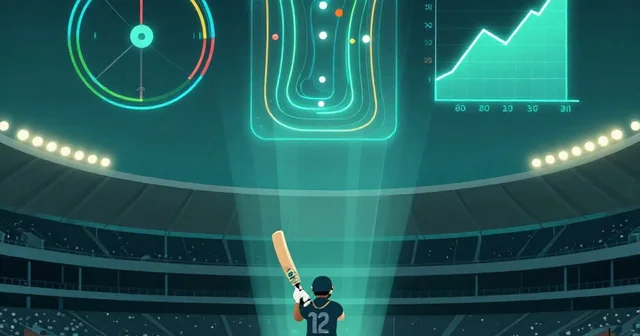
The most visible change is in how matches are broadcast. Where once the screen showed the score and little else, it now shows wagon wheels, pitch maps, speed guns, and win probability graphs that update ball by ball. A viewer can see exactly where a batter scores, where a bowler pitches the ball, and how the balance of the match is shifting. This information does not replace watching the cricket, it deepens it. A boundary means more when you can see it was the third ball in a row in the same area. A wicket means more when you can see the bowler had been setting it up for three overs.
Expected runs and win probability have become part of the everyday language of cricket fans. These numbers estimate how a match is likely to unfold, based on thousands of previous matches in similar situations. They help fans understand the state of a game at a glance. A team chasing 250 with five wickets in hand might look comfortable, but the win probability tells you whether history agrees. These figures are not predictions set in stone, they are guides, and part of the fun is watching a team defy them. When an underdog wins against the odds, the numbers make the achievement even more impressive.
Analytics has also changed how players are judged. Traditional averages still matter, but they no longer tell the whole story. A batter's average hides whether they score against the best attacks or pile up runs against weaker ones. A bowler's economy rate hides whether they take wickets at crucial moments or only when the match is already decided. New measures look at performance in specific situations, against specific opponents, and under specific pressures. This gives fans a fairer way to compare players, and it rewards those who deliver when it matters most, not just those with the prettiest overall numbers.
Match-ups have become a central part of modern cricket thinking. Analysts study how individual batters perform against individual bowlers, which lines and lengths trouble them, and which shots they favour. Captains use this information to set fields, choose bowlers, and plan dismissals ball by ball. Fans who understand match-ups watch the game differently. They notice when a captain brings on a particular bowler for a particular batter, and they understand why. The contest becomes a chess match played at high speed, and the analytics make the strategy visible to everyone watching.
Fielding analytics has revealed just how much difference good fielding makes. Runs saved, catches taken, and run-outs effected are now measured and valued in ways they never were before. A brilliant fielder who saves fifteen runs in a match can be worth as much as a useful innings, and teams now select and train with that in mind. Fans have learned to appreciate fielding as a skill in its own right, not just as something that happens between balls. A diving stop or a direct hit is now recognised as a match-changing moment, with the numbers to prove it.
The data revolution has reached every level of the game. Young players grow up with their performances measured, analysed, and compared. Coaches use video and data to identify strengths and weaknesses that would have been invisible a generation ago. Selectors use analytics alongside their own judgement to pick teams. This does not mean the human element has disappeared. Instinct, character, and temperament still matter enormously, and no spreadsheet can measure courage. But the data gives everyone a better starting point, and it means fewer decisions are made on guesswork alone.
For fans, the biggest gift of analytics is a deeper understanding of what they are watching. A fan who understands why a captain set a particular field, why a bowler keeps bowling the same line, or why a batter is targeting one area will enjoy the match more. Analytics turns passive watching into active understanding. It gives fans the tools to form their own opinions, to debate with friends, and to appreciate the subtleties of a game that rewards close attention. The best analysis does not tell fans what to think, it gives them the information to think for themselves.
There are limits to what numbers can tell us, and it is worth remembering them. Cricket is played by human beings, in changing conditions, under pressure, and no model can capture all of that. A player can have a bad day, a pitch can behave unexpectedly, and a single moment of brilliance can overturn every prediction. The numbers describe probabilities, not certainties, and part of the joy of the game is watching the unexpected happen. The fans who enjoy analytics most are those who use it as a guide, not as a gospel, and who still leave room for surprise.
The way fans consume analytics is still evolving. Interactive graphics, personalised stats, and deeper analysis are becoming part of every broadcast and every cricket website. Fans can now explore the numbers themselves, comparing players, studying trends, and building their own understanding of the game. This democratisation of data is one of the most exciting changes in modern cricket. Knowledge that was once locked away in team meetings is now available to anyone with a phone, and the conversation around the game is smarter because of it. You can explore match data, player stats, and expert analysis on Cricbuzz, where the numbers behind the game are always close at hand.
Looking ahead, analytics will keep growing, but the heart of cricket will stay the same. The game is still decided by bat meeting ball, by courage under pressure, and by moments of skill that no model can predict. The numbers help us understand those moments better, and they help us appreciate the players who produce them. They have made the game richer, smarter, and more enjoyable to follow, without taking away any of its drama. For fans, that is the best of both worlds, a sport that honours its traditions while embracing new ways of seeing it. To follow the game with all the insight modern analytics can offer, visit Cricbuzz and see cricket in a whole new light.