The 12-3-30 Treadmill Workout in 2026: Does It Actually Work?
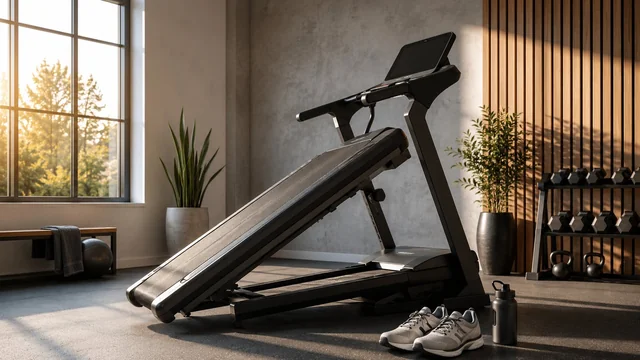
The 12-3-30 treadmill workout — 12% incline, 3 mph, 30 minutes — refuses to fade. Six years after it went viral, it's still one of the most-Googled fitness routines on the internet, and in 2026 it's quietly become a staple of low-impact cardio programming. The honest question isn't whether it's trendy; it's whether it actually does what people claim. Here's a clear-eyed look at the evidence, the real risks, and how to do it without hurting yourself.
Note: The 12% incline used in 12-3-30 places significant load on the knees, Achilles tendons, and lower back. Talk to your doctor before starting, ramp up gradually, and stop if you feel sharp joint pain.
Key takeaways:
- 12-3-30 is legitimate moderate-intensity cardio that hits the CDC and AHA activity guidelines when done five times a week.
- Calorie burn is real but not magical — roughly 250–400 calories per session depending on body weight.
- The 12% incline is steep and places significant load on the Achilles, knees, and lower back; ramp up over weeks, not days.
- Skip it if you have uncontrolled hypertension, recent lower-limb injury, or are pregnant without medical clearance.
- It's a cardio workout, not a strength workout — pair with resistance training and sensible nutrition for actual body composition change.
What the 12-3-30 method is
The recipe is deliberately simple. Set a treadmill to 12% incline, 3 miles per hour (about 4.8 km/h), and walk for 30 minutes. No intervals, no sprints, no adjustments — just hold the settings steady. That simplicity is most of the appeal: there's nothing to remember, no app to follow, and the numbers themselves become the brand.
Mechanically, it's a steep uphill walk at a moderate pace. The incline is what does the work — at 12% gradient, your heart rate climbs into a true moderate-intensity zone even though your feet are moving slowly enough that the impact on joints stays lower than running.
Where it came from
Influencer Lauren Giraldo posted the routine to YouTube in 2019 and then to TikTok, where it exploded in 2020 during pandemic lockdowns when home and hotel-gym treadmills were one of the few accessible workout options. Giraldo credited the routine with helping her lose about 30 pounds and keep it off, and the format — three numbers, anyone can do it — was tailor-made for short-form video.
What started as a personal routine became a genuine cultural moment, with millions of TikTok and Instagram posts logging 12-3-30 sessions. Six years on, it's outlasted most viral fitness trends and earned cautious endorsements from trainers and physiotherapists as a legitimate moderate-cardio option.
Does it actually work? What the science says
Honest answer: yes, with caveats. Walking on a 12% incline at 3 mph generally puts the workout in the 6–8 MET range, which the American College of Sports Medicine classifies as moderate to vigorous intensity. That's squarely in the zone the CDC and AHA recommend for cardiovascular health — 150 minutes a week of moderate activity, which 12-3-30 hits in five sessions.
Calorie burn depends heavily on body weight. A 150-pound person burns roughly 250–300 calories per 30-minute session; a 200-pound person closer to 350–400. That's meaningful but not magical — it's roughly equivalent to a steady jog without the joint impact. Combined with a modest calorie deficit, it can absolutely drive fat loss over months. Without dietary changes, it won't.
What the routine is not: a strength workout, a high-intensity interval session, or a substitute for resistance training. It builds aerobic base and burns calories. It will not, on its own, build significant muscle or dramatically transform body composition. Anyone promising otherwise is selling something.
Benefits beyond weight loss
The cardiovascular case is the strongest. Regular moderate-intensity walking lowers resting heart rate, improves VO2 max modestly, and is associated with reduced risk of heart disease, type 2 diabetes, and all-cause mortality in large epidemiological studies. The incline component recruits the glutes, hamstrings, and calves more than flat walking, so there's a mild lower-body strength benefit too.
It's also low-impact compared to running, which makes it accessible to people who can't tolerate jogging — heavier individuals, older adults, those returning from injury. The mental health benefits of steady-state cardio are well-documented: improved sleep, lower anxiety, better mood regulation. And the routine's simplicity makes it stickier than complex programs; you're more likely to actually do something you don't have to think about.
Risks and who should skip it
A 12% incline is steep — steeper than almost any natural hill most people walk regularly. That load goes through the Achilles tendon, calves, knees, and lower back with every step. For people with existing Achilles tendinopathy, plantar fasciitis, patellofemoral pain, or chronic low-back issues, jumping straight to 12-3-30 is a reliable way to flare those conditions.
Skip or modify the routine if you have uncontrolled high blood pressure (steep incline spikes systolic pressure), are pregnant without medical clearance (balance and joint laxity change the risk profile), have a recent lower-limb injury, or are a complete beginner to exercise. Holding the treadmill handrails to stay upright is a common compensation that reduces both the cardiovascular benefit and the calorie burn — if you can't walk it without holding on, the settings are too aggressive for you right now.
How to do it safely
Start lower and shorter. A reasonable on-ramp is 6% incline at 3 mph for 15–20 minutes, three times a week, building incline by one or two percentage points every week or two as your calves and Achilles adapt. Most people need three to six weeks of progressive loading before the full 12-3-30 feels sustainable without soreness.
Warm up with five minutes of flat walking before raising the incline. Avoid death-gripping the handrails — light fingertip contact for balance only. Stop if you feel sharp pain in the Achilles, knee, or lower back; muscle burn is fine, joint pain is not. Hydrate, and if you're doing it daily, alternate with at least one or two rest or low-impact cross-training days per week to let connective tissue recover.
Variations and progressions
Once 12-3-30 feels easy, progression options include adding light dumbbells or a weighted vest (start at 5–10 pounds), bumping incline to 13–15% for shorter sessions, or extending duration to 40–45 minutes. Some people alternate 12-3-30 days with flat-walk recovery days or HIIT sessions for a more rounded program.
For variety with similar benefits, compare it honestly to its peers: steady jogging at 5–6 mph burns more calories per minute but is harder on knees and ankles; HIIT delivers more cardiovascular adaptation in less time but is far more demanding to recover from; outdoor hill walking gives most of the same benefits with the bonus of sunlight and uneven terrain. The best workout is the one you'll actually do — and 12-3-30's staying power suggests, for a lot of people, this is it.
Should You Try 12-3-30?
If you're medically cleared to exercise, have no acute knee, Achilles, or lower-back issues, and you want a simple, repeatable, low-impact cardio routine — yes, 12-3-30 is a perfectly reasonable choice. It hits the moderate-intensity zone health authorities recommend, the calorie burn is real, and the simplicity makes it one of the few routines people actually stick with for months.
It is not a magic fat-loss formula, and it will not replace strength training or a sensible diet. Treat it as one tool in a broader routine that includes resistance work two or three times a week and reasonable nutrition, and the results compound. Treat it as a substitute for those, and you'll plateau quickly.
The biggest mistake is starting at full 12-3-30 settings on day one. Ramp the incline up over a few weeks, listen to your Achilles and knees, and skip a day when something hurts in a joint way rather than a muscle way. Done patiently, it's a genuinely useful workout. Done impatiently, it's a recipe for tendinopathy.
Sources & Further Reading
Frequently Asked Questions
How many calories does 12-3-30 actually burn?
It depends on body weight. A 150-pound person burns roughly 250–300 calories in a 30-minute session; a 200-pound person closer to 350–400. Holding the handrails reduces the burn significantly, so let go if you can do so safely.
Is 12-3-30 better than running for weight loss?
Not necessarily better, just different. Running burns more calories per minute but is harder on joints. 12-3-30 burns fewer calories per minute but is lower impact and easier to sustain consistently. For most people, the workout you'll actually do five times a week beats the one you'll do twice.
How often should I do 12-3-30?
Three to five times a week is reasonable for most people once they've ramped up. Daily is possible if you're well-conditioned and rotating in lower-incline recovery days, but most people benefit from at least one or two rest or cross-training days per week to let the Achilles and calves recover.
Can beginners do 12-3-30?
Not at full settings on day one. Beginners should start at 4–6% incline and 15–20 minutes, building gradually over three to six weeks. Jumping straight to 12% incline is a reliable way to develop Achilles or calf strain.
Who should not do 12-3-30?
Anyone with uncontrolled high blood pressure, recent lower-limb injury, Achilles tendinopathy, severe knee or low-back issues, or who is pregnant without medical clearance. The 12% incline is steep enough to aggravate any of these. Talk to a doctor first if you're unsure.
Will 12-3-30 build muscle?
Only modestly, in the glutes, hamstrings, and calves from the incline. It's primarily a cardiovascular workout, not a strength program. For meaningful muscle development, pair it with resistance training two or three times a week.
Fitness routines are individual; consult a doctor before starting any new exercise program. Information is based on public sources and vendor pages current as of June 2026. Details, prices and plans change frequently — verify on the official site before relying on them.