Best Discreet Voice Recorders in 2026 (Voice-Activated Spy Recorders, Used Lawfully)
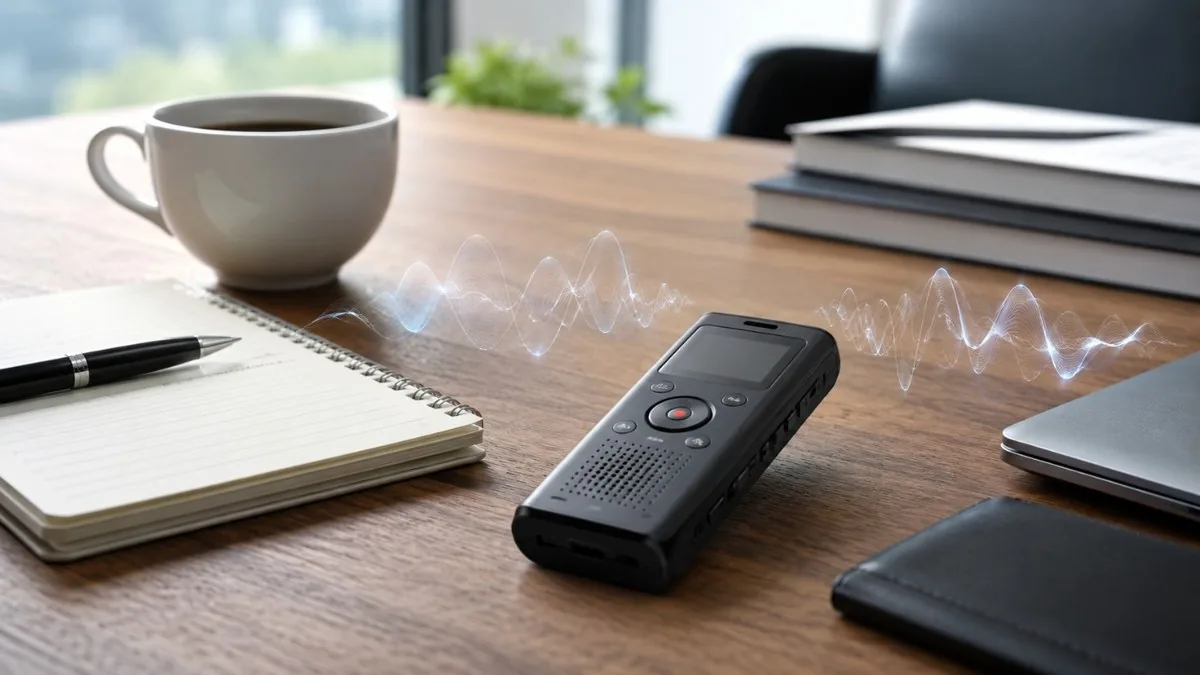
Compact, voice-activated recorders — the kind of devices often searched for as “spy microphones” or “spy voice recorders” — are genuinely useful, legal tools when used the right way: capturing your own lectures, recording meetings and interviews with everyone's consent, dictating memos, and taking hands-free notes. This 2026 guide rounds up the best discreet voice recorders on Amazon US, focuses strictly on lawful personal recording, and deliberately excludes covert surveillance of other people, which is illegal in many places. Read the consent-law section at the end before you buy or record — nothing here is legal advice.
Important — record lawfully: this guide covers recording your own lectures, meetings and interviews with consent. Recording other people without the consent the law requires can be illegal wiretapping or eavesdropping, with civil and criminal penalties. Laws vary by country and by US state — read the consent-law section below first. Never use any device here to secretly surveil, bug, stalk or harass anyone. This is general information, not legal advice.
Best Discreet Voice Recorders at a Glance
| Voice Recorder | Best For | Storage | Price (US) |
|---|---|---|---|
| Sony ICD-UX570 Digital Voice Recorder | Best Overall | 4GB + microSD | ~$130 |
| EVISTR 64GB Digital Voice Recorder | Best Value | 64GB | ~$40 |
| 64GB AI Digital Voice Recorder (Transcribe & Summarize) | Best for AI Transcription | 64GB | ~$60 |
| AOTAOREC 64GB Magnetic Voice Recorder | Best Magnetic / Discreet | 64GB | ~$40 |
| 128GB Keychain Voice Recorder | Best Keychain Design | 128GB | ~$40 |
| 64GB USB Voice Recorder (Flash-Drive Style) | Best USB-Stick Style | 64GB | ~$30 |
| TensaOne Voice-Activated Recorder | Best for Long Sessions | 128GB | ~$40 |
| 4-in-1 Digital Voice Recorder (32GB) | Best Budget | 32GB | ~$30 |
The Best Discreet Voice Recorders for Lawful Recording (2026)
1. Sony ICD-UX570 Digital Voice Recorder — Best Overall
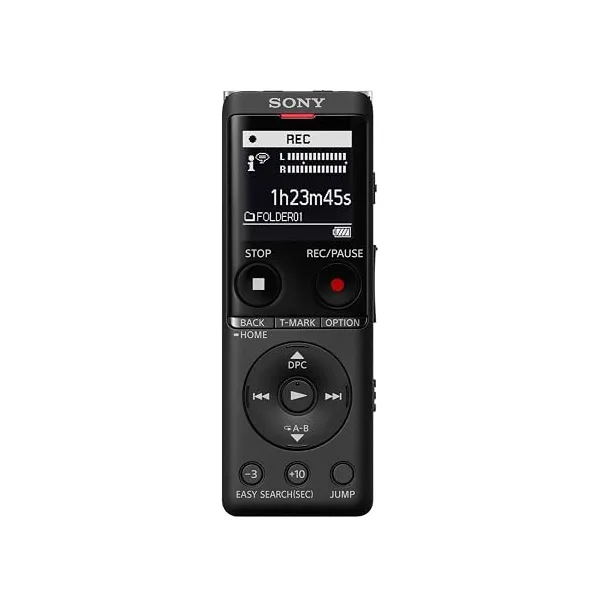
~$130 · Amazon US
Sony's flagship compact recorder pairs a wide-stereo S-Microphone system with a slim, pocketable body and a flip-out USB plug for instant transfers. 4GB of built-in storage expands via microSD, the battery runs for tens of hours, and scene presets tune it for lectures, meetings and dictation. It's the most trusted name on this list and the one to buy if audio quality matters.
Check the current price on Amazon →
2. EVISTR 64GB Digital Voice Recorder — Best Value
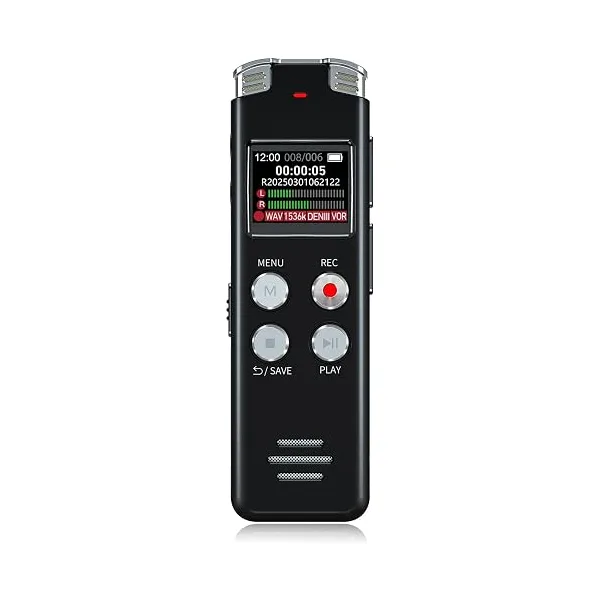
~$40 · Amazon US
One of Amazon US's most-reviewed budget dictaphones, with a generous 64GB of storage, voice-activated recording and simple one-touch operation. It's a favourite of students recording their own lectures and anyone who wants dependable voice memos without spending much. Build quality is basic, but the value is hard to beat.
Check the current price on Amazon →
3. 64GB AI Digital Voice Recorder (Transcribe & Summarize) — Best for AI Transcription
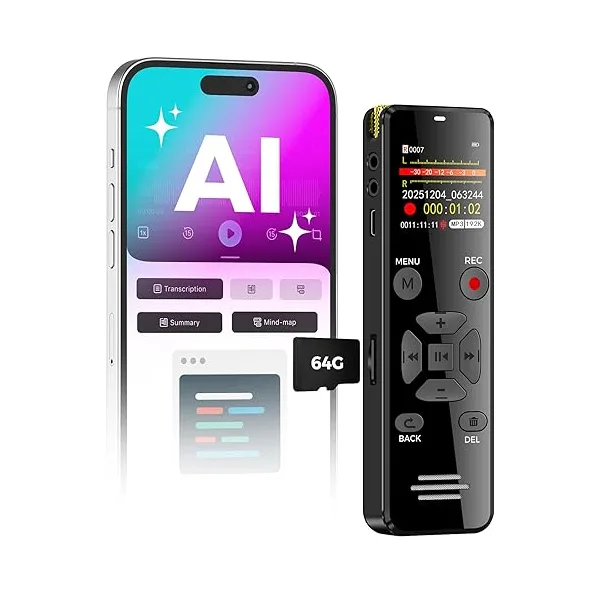
~$60 · Amazon US
This 2026 AI recorder doesn't just capture audio — it transcribes and summarises it automatically, turning a two-hour meeting or lecture into searchable text and bullet-point notes. Voice activation and 64GB handle long sessions, and the AI features run on your own consented recordings. A big time-saver for students and professionals.
Check the current price on Amazon →
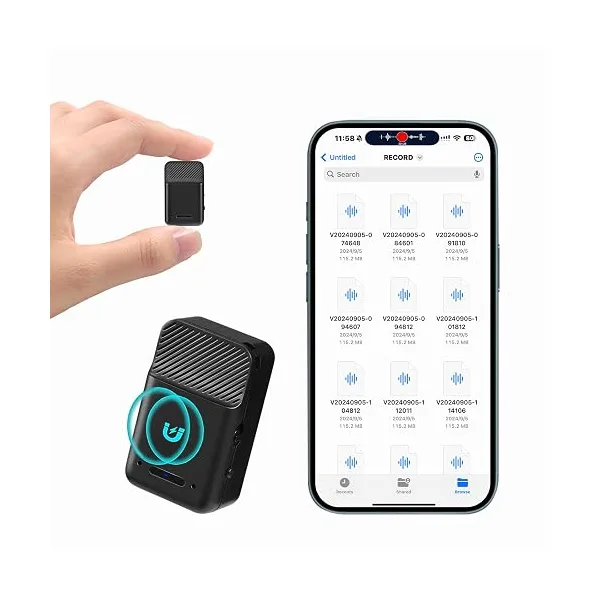
4. AOTAOREC 64GB Magnetic Voice Recorder — Best Magnetic / Discreet
~$40 · Amazon US
A tiny magnetic recorder that sticks to metal surfaces and starts recording automatically when it detects sound. With 64GB of storage and a low-profile body, it's the archetypal “spy” voice recorder — but, like every device here, it's only for recording your own lawful, consented conversations, never for secretly surveilling others.
Check the current price on Amazon →
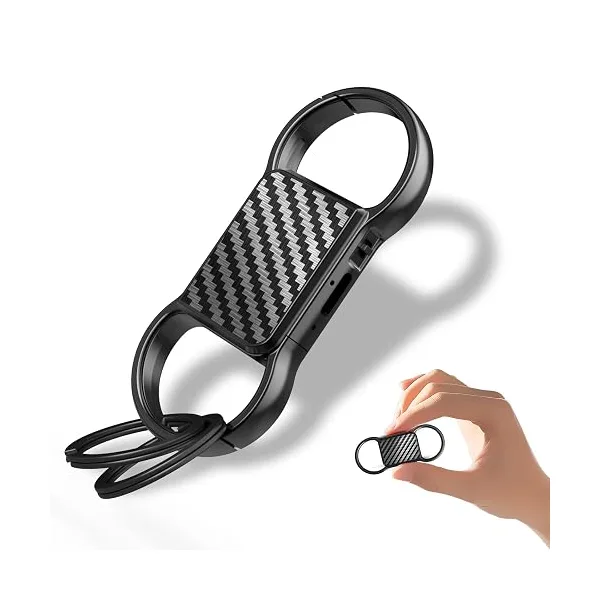
5. 128GB Keychain Voice Recorder — Best Keychain Design
~$40 · Amazon US
Built into an ordinary-looking keychain fob, this recorder packs a huge 128GB (thousands of hours) and voice-activated capture into something you carry on your keys. It's popular for hands-free note-taking and journaling on the go. Use it only to record conversations you're part of, with the consent your state requires.
Check the current price on Amazon →
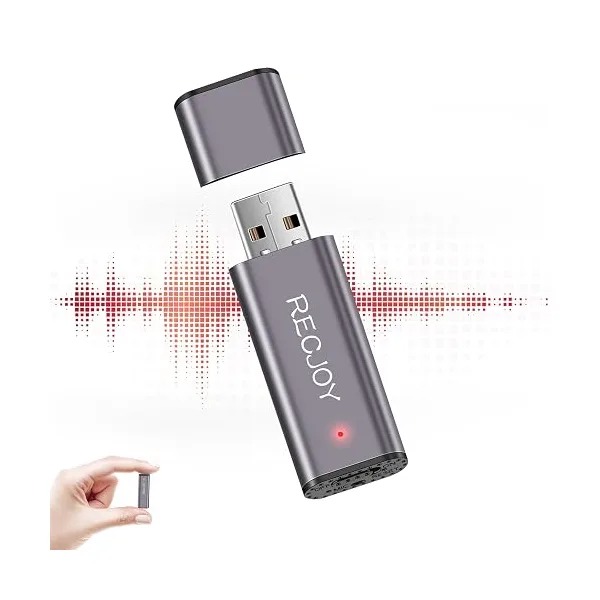
6. 64GB USB Voice Recorder (Flash-Drive Style) — Best USB-Stick Style
~$30 · Amazon US
Shaped like a normal USB flash drive, this recorder doubles as storage and plugs straight into a computer to offload files — no cables or card readers. 64GB holds hundreds of hours, voice activation saves space, and the familiar form factor makes it an easy, low-cost everyday recorder for memos and consented meetings.
Check the current price on Amazon →
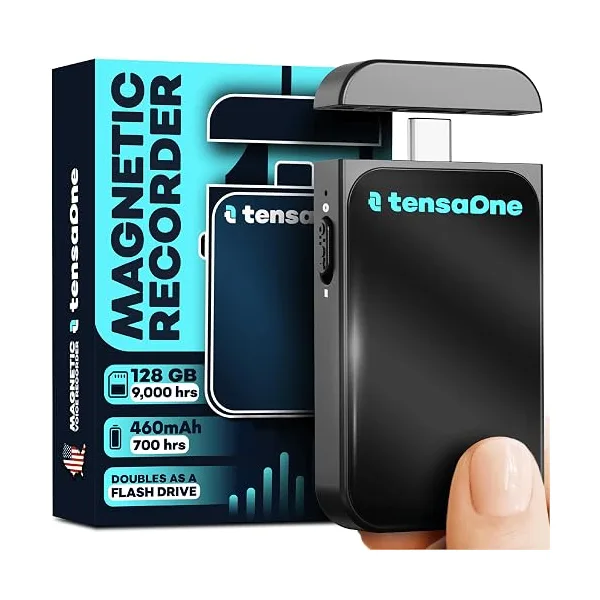
7. TensaOne Voice-Activated Recorder — Best for Long Sessions
~$40 · Amazon US
Built for marathon recording, the TensaOne combines 128GB of storage (thousands of hours), a large 460mAh battery and a magnetic body that doubles as a USB flash drive. AI noise reduction keeps speech clear across a room, making it ideal for all-day lawful recording of your own lectures, meetings or interviews.
Check the current price on Amazon →
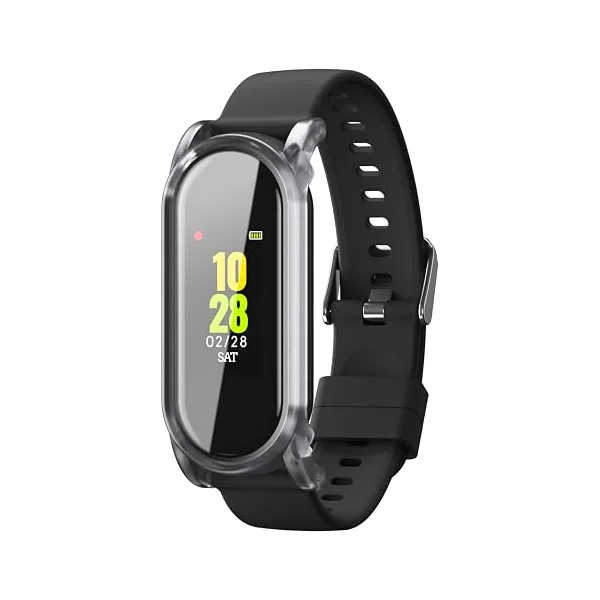
8. 4-in-1 Digital Voice Recorder (32GB) — Best Budget
~$30 · Amazon US
A do-everything budget pick that records, plays back, and works as an MP3 player and USB drive, with upgraded noise reduction for clearer voices. 32GB and voice activation are plenty for students and casual note-takers — a flexible, affordable entry point into discreet voice recording.
Check the current price on Amazon →
Recording Your Own Meetings and Lectures
For open meetings, the most respectful approach is a visible recorder placed on the table and a clear announcement that recording is happening — that alone satisfies consent in most situations. AI meeting tools like Otter.ai can record and transcribe calls automatically, but they don't remove your responsibility to notify and get agreement from participants; at least one such service has faced litigation over recording without adequate consent. If you also capture your screen during online classes or calls, see our guide to the best screen recording software, and for higher-fidelity spoken-word audio our roundup of the best podcast microphones. Students recording their own lectures may also like our list of the best apps for students.
Before You Record: Consent Laws You Must Follow
In the United States, federal law and most states follow one-party consent: you may record a conversation you are part of if at least one participant (which can be you) agrees. But roughly a dozen states — including California, Florida, Illinois, Massachusetts, Pennsylvania and Washington — require all-party consent, meaning everyone must agree first. For calls or meetings spanning different states or countries, follow the strictest rule that applies and get clear consent from everyone at the start. Only record conversations you are part of, and never record a conversation you are not participating in. The resources below explain the rules in detail.
Recording-Law Resources
- Reporters Committee reporter’s recording guide
- Justia 50-state survey of phone recording laws
- Federal Wiretap Act (18 U.S.C. § 2511)
Frequently Asked Questions
Is it legal to record a conversation?
It depends entirely on where you are and who is in the conversation. Under US federal law and in most US states (one-party consent), you may record a conversation you are part of as long as at least one participant — which can be you — consents. But around a dozen states require all-party (often called two-party) consent, meaning everyone must agree before you record. Many other countries have their own rules. Recording a conversation you are not part of, or secretly recording others where the law forbids it, can be a serious crime. Always confirm the rules for your specific location and, when in doubt, get everyone's clear consent. This is general information, not legal advice.
What is a voice recorder used for?
A voice recorder is used for lawful, practical tasks such as capturing your own lectures and classes, recording meetings and interviews where participants consent, dictating notes and memos, drafting podcasts, and documenting journalistic interviews where permitted. It is a productivity and note-taking tool. It should never be used to covertly surveil, bug, harass, or eavesdrop on other people, which is both unethical and frequently illegal.
What is the difference between one-party and two-party consent?
One-party consent means only one person in the conversation needs to know about and agree to the recording — and that person can be you, the recorder. Most US states and federal law follow this rule. Two-party consent (more accurately, all-party consent) means every participant must be informed and must agree before recording is lawful; if three people are present, all three must consent. As of 2026, roughly a dozen US states use all-party consent, including California, Florida, Illinois, Massachusetts, Pennsylvania, and Washington. Because rules differ, the safest practice is to get consent from everyone.
Which voice recorder is best for lectures and meetings?
For recording your own lectures, a trusted stereo recorder like the Sony ICD-UX570 offers wide-stereo mics, long battery life and expandable storage. If you want automatic notes, an AI recorder such as the 64GB AI Digital Voice Recorder transcribes and summarises your audio for you. For the most discreet, hands-free capture of your own consented conversations, a compact magnetic or keychain voice-activated recorder works well. Match the device to how you record — and always follow your state's consent law.
Can you record phone calls legally?
Sometimes, but it depends on the consent law that applies to the call. Under US federal law and in one-party consent states, you can generally record a call you are participating in. In all-party consent states, you must get permission from everyone on the line first. When callers are in different states, it is unclear which state's law governs, so the safest approach is to follow the strictest applicable rule and ask for consent at the start of the call — the reason companies announce that calls 'may be recorded.' Outside the US, separate national laws apply. This is general information, not legal advice.
This article is general information only and is not legal advice. Recording laws vary by jurisdiction and change over time — consult a qualified attorney for your situation. SaveDelete is reader-supported and may earn a commission from some links at no extra cost to you.