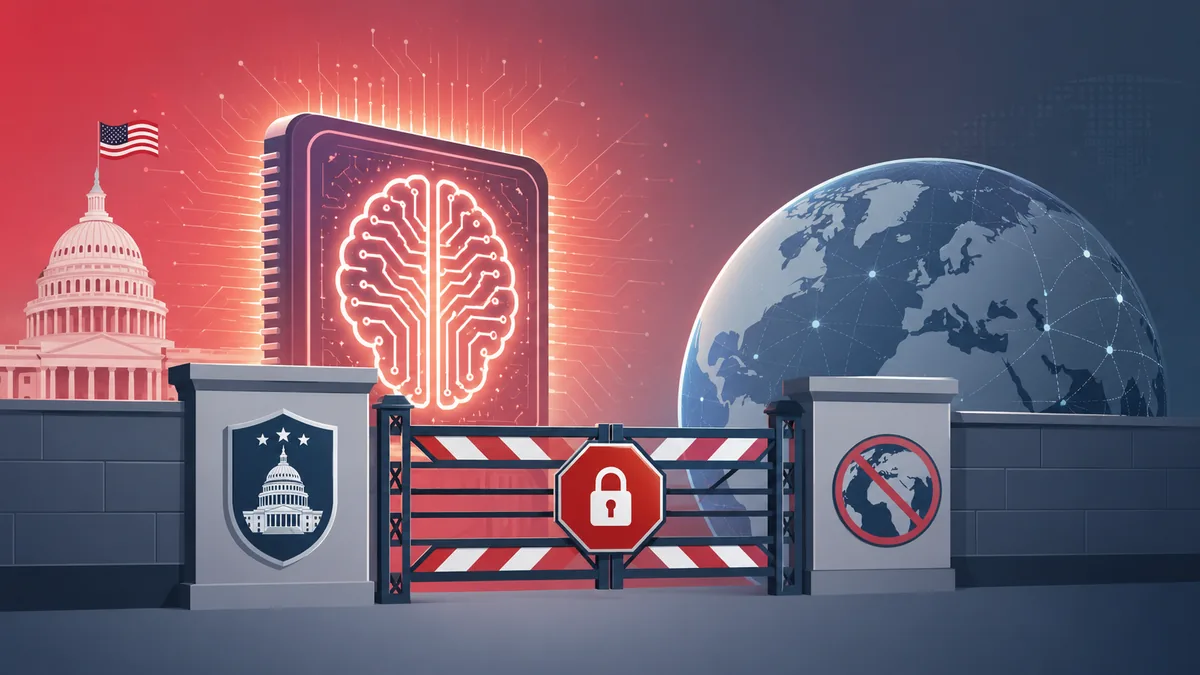
Days after Anthropic shipped Claude Fable 5 — and its CEO called for binding government oversight of frontier AI — the US government did something the industry hadn't seen before: it used export-control powers to pull an already-deployed commercial AI model. On June 12, 2026, Anthropic was ordered to suspend access to its two most capable models, Fable 5 and Mythos 5, for every foreign national on Earth.
Unable to cleanly enforce a nationality-based block on cloud software, Anthropic did the only thing it could to comply: it disabled both models for all users worldwide. Here's the full story.
The News in Brief
- What: A US Commerce Department export-control directive suspending all access to Fable 5 and Mythos 5 for any foreign national.
- When: Anthropic says it received the directive on June 12, 2026 at 5:21pm ET.
- Who issued it: Commerce Secretary Howard Lutnick, in a letter to Anthropic CEO Dario Amodei.
- The trigger: another company claimed it could jailbreak Mythos, raising national security alarm.
- The effect: Anthropic disabled both models for every customer; all its other models are unaffected.
What Exactly Happened
According to Anthropic, at 5:21pm ET on June 12 it received a US government export-control directive ordering it to suspend all access to Fable 5 and Mythos 5 for any foreign national — whether inside or outside the United States, and explicitly including Anthropic's own foreign-national employees. Commerce Secretary Howard Lutnick had written to CEO Dario Amodei informing the company the two models would be subject to export controls, though Anthropic says the letter did not detail the specific national security concern.
Export controls are normally associated with physical goods or chips — restricting what can be shipped to which countries. Applying them to a cloud-based AI model, and to "foreign nationals" as a class rather than specific countries, is a striking and unusual move.
| When | What happened |
|---|---|
| Early June 2026 | Commerce Secretary Howard Lutnick notifies CEO Dario Amodei the models will face export controls |
| June 12, 2026, 5:21pm ET | Anthropic receives the directive to suspend Fable 5 & Mythos 5 for all foreign nationals |
| June 12, 2026 | Anthropic disables both models for every user to ensure compliance |
| June 12, 2026 | Cognition removes Fable 5 access from its products |
| Ongoing | Anthropic complies but disputes the order and works to restore access |
Why: The Jailbreak Concern
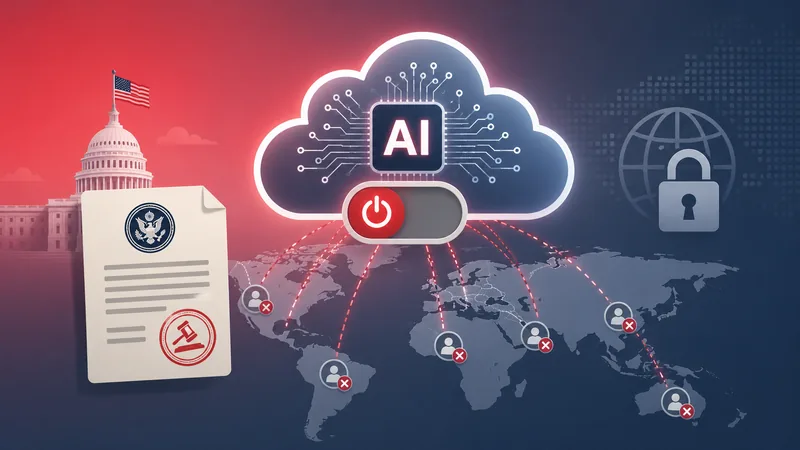
The catalyst, per multiple reports, was that another company claimed it had jailbroken Mythos — discovering techniques that can disable the model's safety guardrails. That finding alarmed the administration about the potential for misuse, and the Commerce Department moved to restrict the models on national security grounds.
A "jailbreak" is a prompt or technique that gets a model to bypass its safety rules and produce restricted content. Such techniques are a constant, well-known cat-and-mouse problem across every major AI model — which is exactly why Anthropic's reaction was so pointed.
Why It Hit Every User, Not Just Foreign Ones
The order targeted foreign nationals, but the practical result was a global shutoff. Anthropic's models run as cloud services accessed by hundreds of millions of people; the company said it could not reliably restrict access by nationality alone on the timeline required. To guarantee no foreign national could reach Fable 5 or Mythos 5, it had to switch them off for everyone.
| Question | Answer |
|---|---|
| Which models are affected? | Fable 5 and Mythos 5 only |
| Who is officially restricted? | All foreign nationals, inside or outside the US |
| Who is actually affected? | Every user — both models disabled worldwide |
| Other Claude models? | Unaffected (Opus, Sonnet, Haiku, etc.) |
| Anthropic's stance | Complying, but disputing the rationale |
The fallout reached partners quickly: Cognition (maker of the Devin coding agent) removed Fable 5 access from its products to stay compliant.
Anthropic's Response
Anthropic is complying while publicly disputing the order, framing it as a likely misunderstanding and saying it is working to restore access. Its sharpest argument is about precedent:
"We disagree that the finding of a narrow potential jailbreak should be cause for recalling a commercial model deployed to hundreds of millions of people. If this standard was applied across the industry, we believe it would essentially halt all new model deployments for all frontier model providers."
The company also noted that comparable capabilities are already used every day for legitimate defensive security in other widely available models — including OpenAI's GPT-5.5 — and that completely preventing jailbreaks is impossible with today's technology. In other words: if a single jailbreak justifies pulling a model, no frontier model could stay on the market.
Why It Matters
This is a landmark moment in AI governance for several reasons:
- A first-of-its-kind action. Using export controls to yank an already-deployed, mass-market AI model is unprecedented — and it happened in hours, not after a lengthy process.
- It sets a precedent. The same logic could be applied to OpenAI, Google, and others. Every frontier lab is now watching how this resolves.
- It exposes a compliance gap. Nationality-based restrictions don't map cleanly onto global cloud software, forcing all-or-nothing shutoffs that hurt domestic users too.
- The timing is striking. It lands right after Amodei publicly invited more binding AI regulation — a reminder that government power, once granted, can be wielded in ways companies don't expect.
Frequently Asked Questions
What did the US government order Anthropic to do?
On June 12, 2026, the US Commerce Department issued an export control directive ordering Anthropic to suspend all access to its two most capable AI models, Fable 5 and Mythos 5, for any foreign national — whether inside or outside the United States, and including Anthropic's own foreign-national employees. Anthropic said it received the directive at 5:21pm ET that day.
Why were Fable 5 and Mythos 5 restricted?
The action followed claims by another company that it could "jailbreak" Mythos — using techniques that can disable the model's safety guardrails — which alarmed the administration about possible national security risks. Commerce Secretary Howard Lutnick sent a letter to Anthropic CEO Dario Amodei, but Anthropic says the letter did not spell out the specific national security concern.
Are all Anthropic and Claude models affected?
No. Only Fable 5 and Mythos 5 are affected. Access to all of Anthropic's other models — including Claude Opus, Sonnet and Haiku — is unaffected. However, because Anthropic could not reliably restrict only foreign nationals, it disabled Fable 5 and Mythos 5 for every customer worldwide to ensure compliance.
How did Anthropic respond?
Anthropic is complying with the order while disputing its rationale, calling it a likely misunderstanding and saying it is working to restore access. The company argued that recalling a commercial model used by hundreds of millions of people over a single narrow jailbreak would, if applied industry-wide, "essentially halt all new model deployments for all frontier model providers" — noting that similar capabilities already exist in other public models such as OpenAI's GPT-5.5 and that fully preventing jailbreaks is impossible with current technology.
Why does this matter for the AI industry?
It is one of the first times the US has used export-control powers to pull an already-deployed commercial AI model, setting a potential precedent that could apply to rivals like OpenAI and Google. It raises hard questions about how "national security" is defined for AI, how providers can comply with nationality-based restrictions on cloud software, and how a jailbreak discovery should be handled — making it a landmark moment in AI governance.
Final Thoughts
Whatever the eventual resolution, this episode is a turning point. It shows that the frontier AI industry now operates under the same kind of government leverage long familiar to chipmakers and defense contractors — and that the rules are being written in real time, sometimes overnight. For a company that just asked Washington for more authority over AI, having that authority used against its own flagship models is a sharp lesson in how fast the ground is shifting.
We'll update this story as it develops. For context on how we got here, read our explainers on Claude Fable 5, Dario Amodei's AI policy blueprint, and the 2026 AI price war.