8 Proven Ways to Boost Your Credit Score (2026)

Your credit score quietly shapes your financial life – from whether you qualify for a loan to the interest rate you pay on it, and even renting an apartment or getting a phone contract. The good news: no matter how low your score is right now, it can be improved with the right habits.
This guide breaks down what actually makes up your credit score, what counts as a good number, and 8 proven, free ways to boost it – all focused on the US FICO and VantageScore system that runs from 300 to 850.
What Determines Your Credit Score?
Most people know a good score matters, but fewer know what drives it. Credit bureaus weigh five factors that make up your FICO score, each worth a set share:
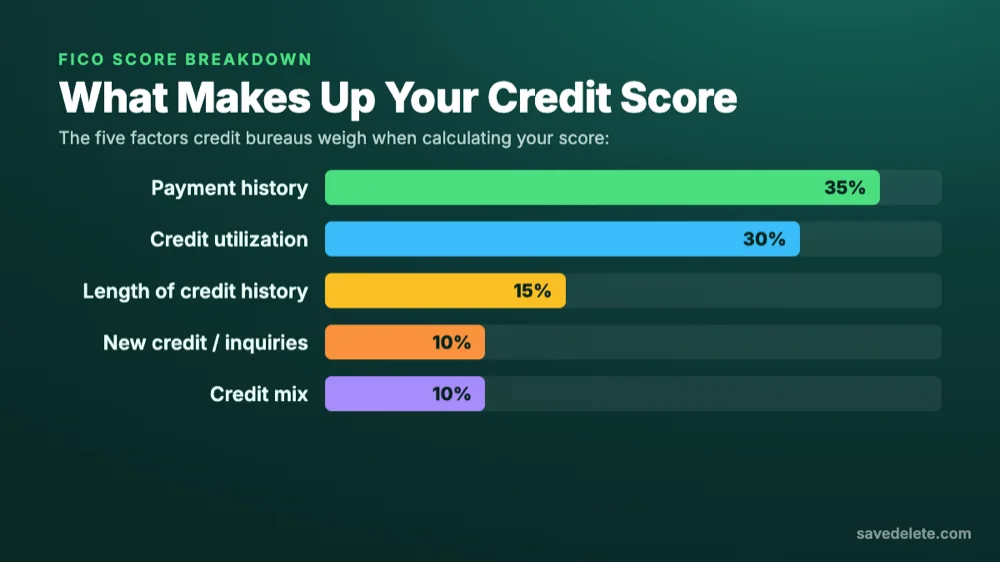
| Factor | Weight | What it means |
|---|---|---|
| Payment history | 35% | Whether you pay your bills on time |
| Credit utilization | 30% | How much of your available credit you are using |
| Length of credit history | 15% | How long your accounts have been open |
| New credit / inquiries | 10% | How often you apply for new credit |
| Credit mix | 10% | The variety of credit types you manage (cards, loans) |
Once you know which factor is dragging your score down, you can focus your effort where it counts. Since payment history is the heaviest factor at 35%, that is almost always the best place to start.
Credit Score Ranges: What Counts as a Good Score?
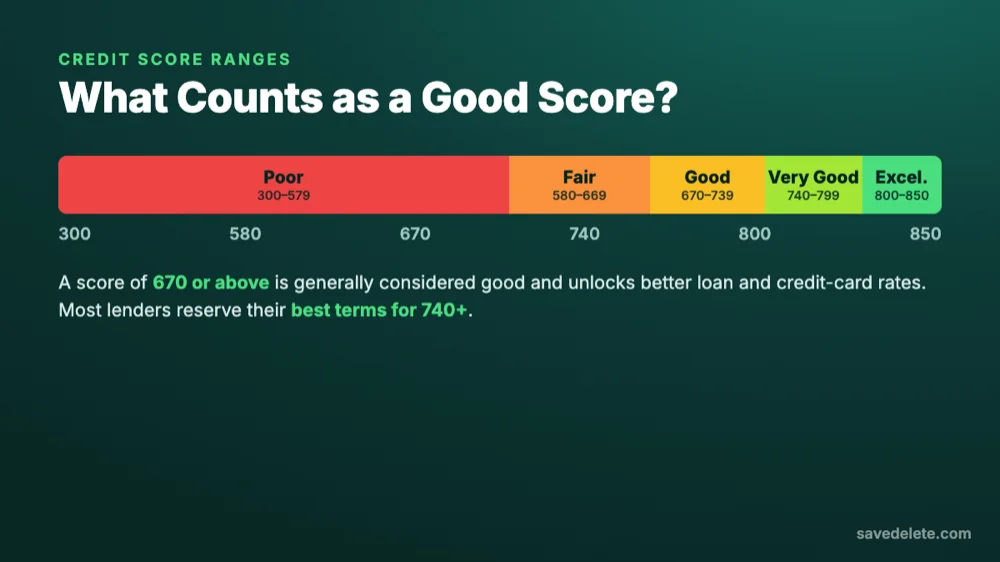
FICO and VantageScore both run from 300 to 850. Here is roughly how lenders read the numbers:
- Poor (300–579): hard to get approved; expect deposits and high rates.
- Fair (580–669): approvable for some products, but at higher rates.
- Good (670–739): qualifies for most mainstream credit at fair rates.
- Very good (740–799): better-than-average rates and limits.
- Excellent (800–850): the best available rates and terms.
Crossing into the 670+ "good" band is the milestone that unlocks meaningfully better borrowing – and it makes a real difference on big decisions like getting your first mortgage.
8 Proven Ways to Boost Your Credit Score
These methods are free, legitimate, and ordered roughly by impact. You do not need all eight at once – start with the first two and build from there.
1. Pay every bill on time
Your payment history is the single biggest factor in your score – a full 35%. Even one payment that slips 30 days past due can knock significant points off, and late marks can linger on your report for up to seven years. Set up autopay for at least the minimum on every account, add calendar reminders, and treat on-time payment as non-negotiable. Nothing else on this list matters as much.
2. Keep your credit utilization under 30%
Credit utilization – the share of your available credit you are actually using – makes up about 30% of your score, second only to payment history. To calculate it, divide your outstanding balances by your total credit limit and multiply by 100. For example, a $5,000 balance against a $20,000 limit is 25% utilization.
Aim to stay below 30%, and under 10% if you can. The easiest way is to pay your balance in full each month; you can also lower the ratio by asking for a credit-limit increase or spreading spending across cards. If high balances are the problem, our guide to paying off credit-card debt can help.
3. Check your credit report and dispute errors
Credit reports are not always accurate, and an error – a payment wrongly marked late, an account that is not yours – can quietly drag down your score. Review your report regularly: you can get a free copy from all three major bureaus (Experian, Equifax and TransUnion) at AnnualCreditReport.com, the only federally authorized source. If you find a mistake, the Consumer Financial Protection Bureau (CFPB) explains exactly how to dispute it with the bureau.
4. Keep your oldest accounts open
The length of your credit history accounts for about 15% of your score, so older accounts work in your favour. Closing a long-held card shortens your average account age and shrinks your available credit (which can spike your utilization). Even if you rarely use an old card, it is usually better to keep it open – put a small recurring charge on it and pay it off automatically to keep it active.
5. Limit new credit applications
Every time you formally apply for credit, the lender runs a hard inquiry, which can shave a few points off your score. One inquiry is minor and temporary, but several in a short period can add up and signal risk to lenders. Apply only when you genuinely need to, and avoid opening multiple new accounts at once. (Rate-shopping for a single mortgage or car loan within a short window is usually counted as one inquiry.)
6. Become an authorized user
If a family member or trusted friend has a well-managed, long-standing credit card, ask to be added as an authorized user. Their positive payment history and low utilization on that account can flow onto your credit file, giving your score a lift – without you needing to spend a cent on the card. Just make sure the primary cardholder genuinely pays on time, because their mistakes can hurt you too.
7. Build credit with a secured credit card
If you have little or poor credit, a secured credit card is one of the best ways to (re)build. It works like a normal card but requires a refundable deposit that usually equals your credit limit, which removes the lender's risk. Use it for a few small purchases, pay the balance in full every month, and your responsible activity gets reported to the bureaus. Many issuers will graduate you to a standard unsecured card over time.
8. Monitor your credit regularly
You cannot improve what you do not measure. Free tools such as Credit Karma – or the free score most banks and card issuers now provide – let you track your score, see what is moving it, and catch fraudulent activity early. Checking your own score this way is a soft inquiry and never lowers it, so look as often as you like.
How Long Does It Take to Improve Your Credit Score?
There is no overnight fix, but progress is faster than many people expect. Lowering your credit utilization can show up within one or two billing cycles. Adding positive payment history builds steadily month over month, while serious damage – like missed payments or collections – fades with time and mostly falls off your report after seven years. The key is consistency: keep the good habits going and your score will keep climbing. If debt is the real obstacle, start with our guides on what to do when you are drowning in debt and how your debt stacks up.
Frequently Asked Questions
What is the most important factor in a credit score?
Payment history is the most important factor, making up about 35% of a FICO score. Consistently paying every bill on time is the most powerful thing you can do for your credit.
What is a good credit score?
On the standard 300-850 FICO scale, 670 and above is generally considered good, 740+ is very good, and 800+ is excellent. The higher your score, the better the loan and credit-card rates you will qualify for.
How long does it take to improve a credit score?
Small wins, like lowering your credit utilization, can show up within one or two billing cycles. Rebuilding from a poor score to a good one typically takes six months to two years of consistent, on-time habits.
Does checking my own credit score lower it?
No. Checking your own score or report is a soft inquiry and has no effect on your score. Only hard inquiries, which happen when you apply for new credit, can lower it slightly.
How can I check my credit report for free?
You can get free reports from all three major bureaus at AnnualCreditReport.com, the only federally authorized source. Many banks, card issuers and apps like Credit Karma also offer a free score.
Does closing a credit card hurt my score?
It can. Closing a card lowers your total available credit (raising your utilization) and can reduce your average account age. In most cases it is better to keep older cards open, even if you rarely use them.
Can I improve my credit score quickly?
The fastest legitimate lever is paying down balances to cut your credit utilization, which can move your score within a cycle or two. Be wary of any service promising an instant fix or to erase accurate negative information – that is a red flag for a scam.
Conclusion
Boosting your credit score is not about secret tricks – it is about understanding what counts and building steady habits around it. Pay on time, keep balances low, leave old accounts open, and check your reports for errors, and your score will reward you with cheaper credit and more options. For the bigger picture, see our tips for managing your personal finances.
This article is for general information only and is not financial advice. For guidance on your specific situation, consult a qualified financial professional.