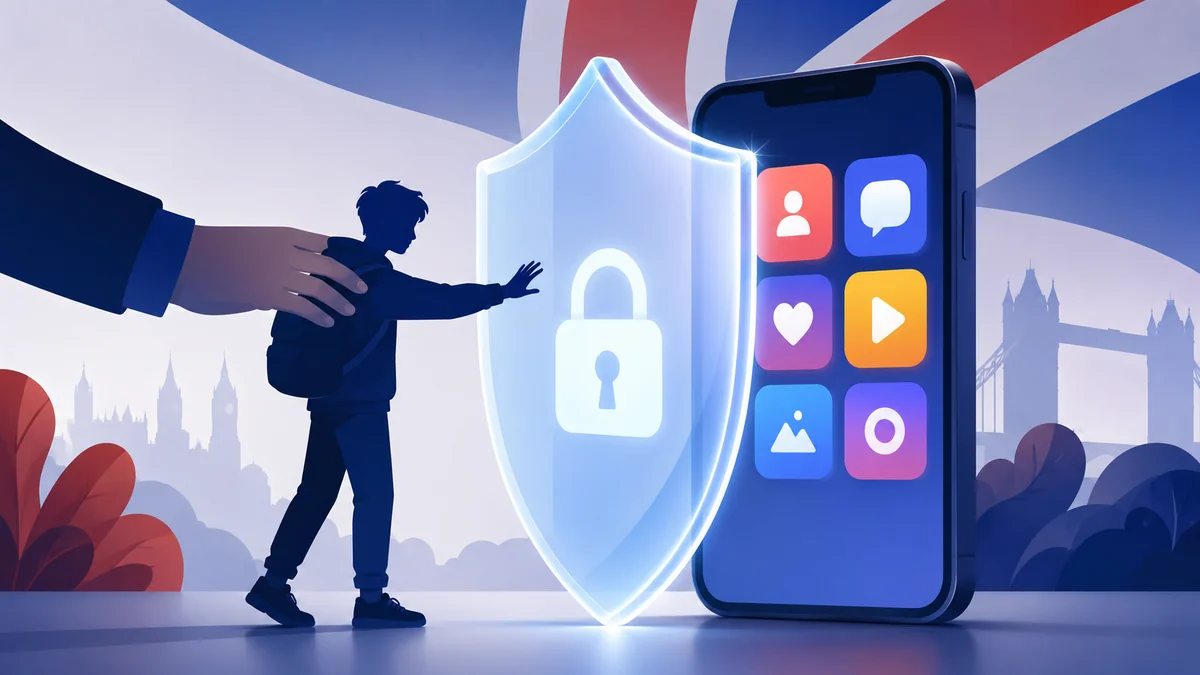
For years, governments have wrung their hands about kids and social media. Britain just decided to act. In June 2026, Prime Minister Keir Starmer's government unveiled one of the world's toughest online-safety regimes: a legal ban on under-16s using major social media platforms, backed by fines big enough to make even the largest tech companies flinch.
It's a landmark moment — and a deeply contested one. Supporters call it a long-overdue shield for children's mental health. Critics call it unworkable, a privacy nightmare, or both. Here's the full breakdown of what's actually changing.
What Happened
The UK government announced that children under 16 will be legally barred from "high-risk" social media apps. The plan closely follows the model set by Australia, which voted to ban under-16s from social media in 2024.
The most important design choice: the burden falls on the platforms, not families. Parents won't be fined if their teenager sneaks onto an app. Instead, companies must take "reasonable steps" to keep under-16s off — or face the regulator, Ofcom.
Which Platforms Are Banned
The ban targets the big mainstream social networks. Based on the government's plans, here's where things stand:
| Status | Services |
|---|---|
| Covered by the ban | Instagram, TikTok, YouTube, Snapchat, Facebook, X |
| Excluded | Messaging apps (WhatsApp, Signal), dedicated education platforms |
The carve-outs matter. Keeping messaging apps like WhatsApp and Signal out of scope means teens can still text family and friends. Exempting educational platforms avoids disrupting schoolwork. The line the government is trying to draw is between open, algorithmic "social media" and private or educational communication.
16–17s and the AI Chatbot Twist
The rules aren't only about a hard under-16 cutoff. There's a second tier — and an AI angle that's easy to miss:
- Under 16: a full ban from the listed social platforms.
- 16–17-year-olds: allowed on social media, but with livestreaming and messaging from strangers turned off by default.
- Under 18: a planned ban on access to some AI chatbots.
That last point is a quiet but significant expansion. Regulators are no longer just worried about feeds and followers — they're worried about AI chatbots and companions talking to minors. The same AI assistants millions of adults now rely on are suddenly in the child-safety spotlight — a sign that online-safety law is racing to catch up with the AI era, not just the social-media one.
When Does It Start?
Not tomorrow. The rollout is deliberately staged:
- End of 2026: the first regulations are laid before Parliament.
- Spring 2027: the rules are expected to come into force.
That runway gives platforms and Ofcom time to build, test and approve the age-checking systems the whole scheme depends on — which is exactly where the hard problems begin.
How Age Checks Will Work
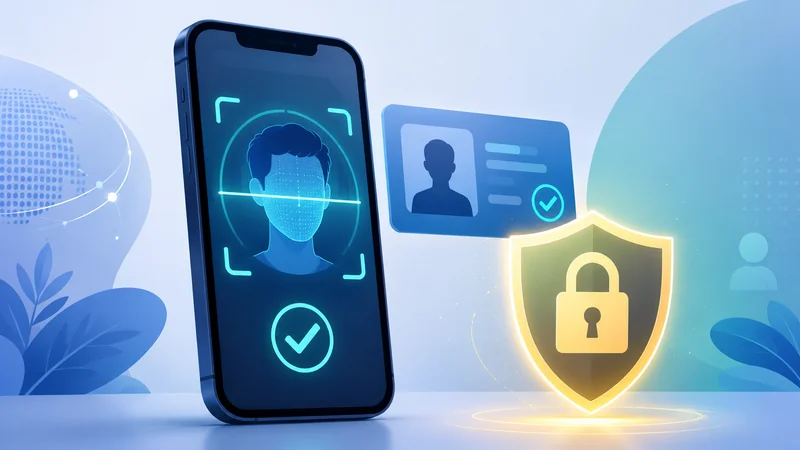
This is the engine room of the policy — and its biggest weakness. To keep under-16s out, platforms have to reliably know how old everyone is. Ofcom will approve several "age assurance" methods, which can include ID document checks and facial-recognition age estimation.
To avoid forcing every existing adult through a checkpoint, the government has floated shortcuts: an account may be treated as an adult's if it has been open for more than 16 years, has a connected credit card, or a verified email. New or unverified adult accounts, though, could face checks — potentially including a face scan.
In other words, a rule aimed at children may end up asking millions of adults to prove their age to keep scrolling. That's the tension critics keep returning to.
The Penalties
The teeth here are real. Ofcom can hit platforms that fail to take reasonable steps with fines of up to 10% of their global annual revenue — for the biggest companies, that's billions. And if a platform simply refuses to comply, Ofcom can go to the courts to block it in the UK altogether.
Compare that to the family side of the ledger, where the penalty is zero. No fines for parents, no trouble for kids who find a workaround. The government has deliberately aimed all the legal pressure at the companies.
Why Now?
The move follows a national consultation held between March and May 2026, and the political case is built on striking public support:
- 9 in 10 parents backed a social media ban for under-16s.
- Two-thirds of young people agreed under-16s shouldn't use at least some platforms.
To soften a "ban-only" message, ministers paired the rules with money for things teens can do instead: around £500 million for enrichment activities, £132.5 million for school programs, and £3 billion for youth centers and sports facilities. The framing: less doomscrolling, more real-world life.
The Australia Warning
Before declaring victory, it's worth looking down under. Australia passed its under-16 ban in 2024, and it took effect in December 2025. The early verdict? Sobering.
Australia's online-safety regulator, eSafety, found that roughly 70% of under-16s were still accessing banned platforms. Enforcement has proven genuinely hard. It's the clearest evidence yet that writing a ban into law and actually keeping kids off apps are two very different things — a cautionary tale the UK is walking into with eyes open.
The Privacy Backlash
The loudest objections aren't about protecting kids — everyone wants that — but about the collateral damage to privacy.
- Mass age verification: groups like the Open Rights Group warn that handing ID scans and face data to age-check vendors creates fresh honeypots of sensitive personal information.
- The VPN problem: after the UK's earlier Online Safety Act age checks, VPN use surged as adults sought privacy. Australia's regulator now asks platforms to detect and block VPNs — while the US government's own submission called VPNs "a useful, lawful privacy tool."
- Effectiveness vs. intrusion: if tech-savvy teens route around the ban anyway, critics ask, is the main result simply that law-abiding adults give up more privacy?
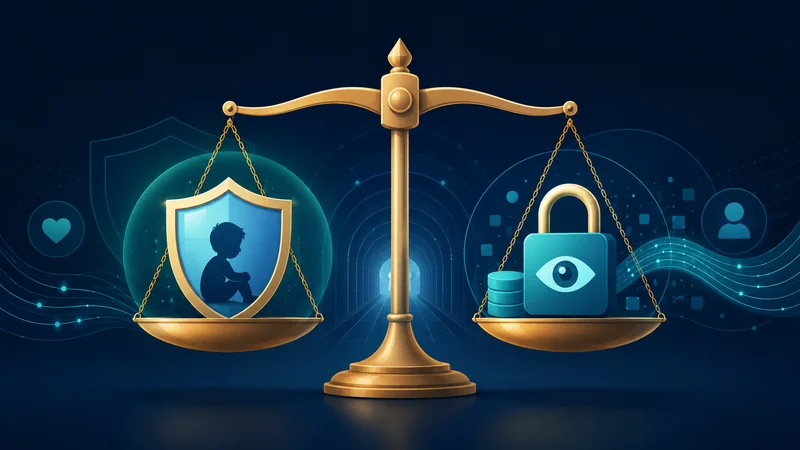
It's the central dilemma of online-safety policy in 2026: the same tools that verify a child's age can erode everyone's anonymity. Britain is now the highest-profile test of whether that trade-off is worth it.
Frequently Asked Questions
Is the UK banning social media for under-16s?
Yes. The UK government, led by Prime Minister Keir Starmer, announced in June 2026 that children under 16 will be legally barred from using major social media platforms. The rules follow Australia's 2024 precedent and put the legal responsibility on the platforms — not on parents or children — to keep under-16s off their apps.
Which platforms are affected by the UK ban?
The ban covers the major 'high-risk' social networks: Instagram, TikTok, YouTube, Snapchat, Facebook and X. Private messaging services such as WhatsApp and Signal are excluded, as are dedicated educational platforms that support schoolwork. Separately, a ban on some AI chatbots is planned for anyone under 18.
When does the UK social media ban take effect?
It is not immediate. The first regulations are due to be laid before the end of 2026, with the changes expected to come into force in Spring 2027. That gives platforms and the regulator, Ofcom, time to build and approve age-checking systems before enforcement begins.
How will platforms check users' ages?
Ofcom will set out approved 'age assurance' methods, which can include ID document checks and facial-recognition age estimation. Existing adult users may be able to skip checks if their account is more than 16 years old, has a connected credit card, or a verified email. This is the most controversial part, because it can require millions of adults to prove their age too.
What are the penalties for platforms that break the rules?
Enforcement sits with Ofcom, which can fine companies that fail to take reasonable steps up to 10% of their global annual revenue. For repeat or flagrant breaches, Ofcom can ask the courts to block the platform in the UK entirely. Crucially, families face no penalty if a child gets around the rules — the responsibility is entirely on the platforms.
Does the ban also cover AI chatbots?
Yes, in part. Alongside the under-16 social media ban, the UK plans to restrict access to some AI chatbots for anyone under 18. It reflects growing concern about how AI companions and chatbots interact with minors, and signals that online-safety rules are expanding beyond traditional social networks into AI products.
Will the ban actually work?
That is the big question. Australia introduced a similar under-16 ban that took effect in December 2025, yet its regulator found that around 70% of under-16s still accessed banned platforms. Critics warn that determined teens use VPNs and workarounds, while privacy groups worry that mandatory age checks force everyone to hand over IDs or face scans. Supporters counter that even imperfect rules can reduce harm and shift industry behavior.
Final Thoughts
The UK's under-16 ban is the most ambitious attempt yet to redraw childhood online — and it lands the debate squarely on a knife-edge. If it works, Britain becomes the template for protecting kids in the algorithmic age. If it stumbles like Australia's, it risks proving that bans are easier to announce than to enforce, while quietly chipping away at everyone's privacy.
Either way, the next 12 months will be decisive. Platforms have until Spring 2027 to build age checks that actually work without turning the internet into a checkpoint. Whether they can — and whether teens simply route around them — will shape online-safety policy far beyond Britain. We'll be tracking it closely.