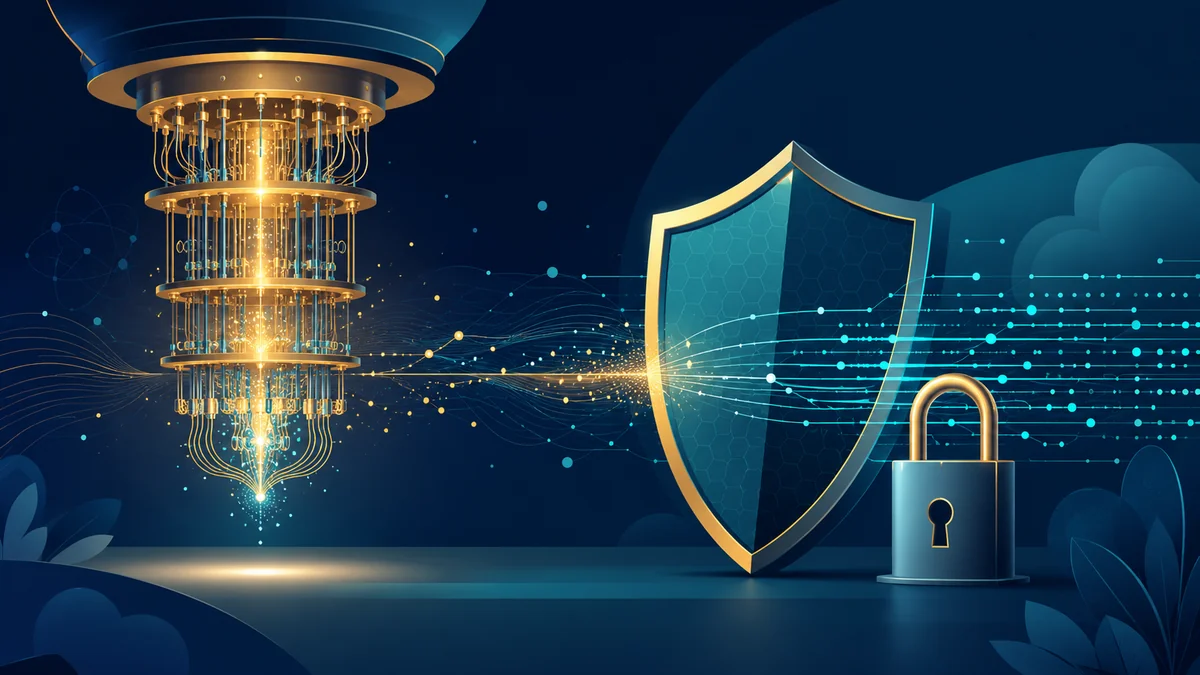
Quantum computing has long felt like a "someday" technology. On June 22, 2026, the US government treated it like an urgent one. President Trump signed two executive orders — one to accelerate the building of quantum computers, and one to defend the country against the day those machines can shatter today's encryption.
Together they frame quantum as a two-front race: offense and defense. Build the future first, and make sure your secrets survive it. Here's a clear breakdown of both orders, and why the second one matters to anyone who uses the internet.
What Happened
The two orders are EO 14411, "Ushering in the Next Frontier of Quantum Innovation," and EO 14409, "Securing the Nation Against Advanced Cryptographic Attacks." One pushes the technology forward; the other hardens the country's defenses against it. Think of them as the accelerator and the seatbelt.
Order 1: The Quantum Moonshot
The first order launches a national effort to build a genuinely useful quantum computer — fast. Its centerpiece is a program called QC-ADDS (Quantum Computer for Application Development and Discovery Science), with concrete goals:
- Deliver a "scientifically relevant" quantum computer to a US Department of Energy facility by 2028, open to the scientific community.
- Develop quantum sensors and quantum networks alongside the computers themselves.
- Build out domestic supply chains for quantum materials and infrastructure.
- Grow an American quantum workforce through apprenticeships, credentials and new training institutes.
The ambition is to reach a point where quantum machines can begin doing real scientific work — chemistry, materials, physics — that classical supercomputers struggle with. It's a deliberate echo of the compute build-out driving the AI boom, extended to a new kind of hardware. (For the chip side of that race, see our look at custom AI chips.)
Order 2: Quantum-Proofing Encryption
The second order is, for most people, the more consequential one. It dramatically accelerates the federal government's move to quantum-resistant encryption:
| Milestone | Deadline |
|---|---|
| Old government-wide PQC target | 2035 |
| New accelerated target | 2031 |
| NIST pilot migration of federal systems | by 2027 |
| Key-establishment systems migrated | by 2030 |
| Digital-signature systems migrated | by 2031 |
In short, the order pulls the deadline forward by four years and tells agencies to start moving high-value systems to NIST-approved post-quantum cryptography now. Why the rush? Because of a chilling concept explained below.
Why Quantum Threatens Encryption
Almost everything you do online is protected by encryption that relies on math problems classical computers find practically impossible — like factoring enormous numbers. That's the basis of widely used systems such as RSA and elliptic-curve cryptography.
A sufficiently powerful quantum computer changes the game. Running an algorithm known as Shor's algorithm, it could factor those numbers efficiently — effectively breaking much of the encryption that secures banking, messaging, logins and more. The machines that can do this don't fully exist yet, but the threat is credible enough that the US would rather upgrade early than get caught out.
"Harvest Now, Decrypt Later"
Here's the part that makes "someday" feel like "today." Adversaries don't need a quantum computer right now to benefit. They can capture encrypted data today and store it, then decrypt it years later once quantum hardware catches up.
That means any data with a long shelf life — government secrets, medical records, financial information, intellectual property — is already potentially exposed, even if it can't be read yet. This "harvest now, decrypt later" risk is exactly why the order refuses to wait for quantum computers to actually arrive. The clock is already running.
Why Now?
Two forces are pushing Washington:
- Global competition. Quantum supremacy is seen as strategically decisive, and rivals — China above all — are pouring resources into it. The US doesn't want to come second, the same anxiety driving the broader US–China technology race.
- Security math. Because of "harvest now, decrypt later," the safe move is to quantum-proof critical data before a breakthrough, not after.
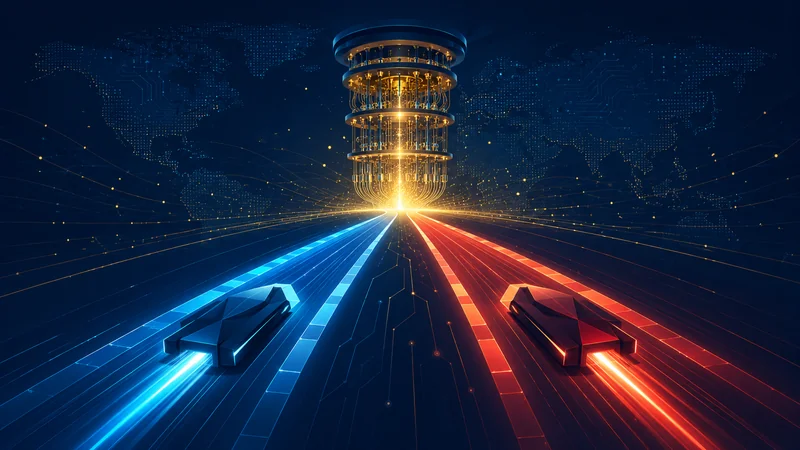
By pairing an offensive push (build quantum computers) with a defensive one (protect against them), the orders try to win the race no matter who reaches powerful quantum computing first.
What It Means for You
- No panic required. Your data isn't suddenly crackable — useful code-breaking quantum computers don't exist yet.
- Upgrades will happen quietly. Banks, browsers and apps will shift to post-quantum encryption over the next few years; mostly you won't notice.
- Long-lived secrets matter most. Organizations handling sensitive data with decade-long value should be planning their PQC migration now.
- Quantum is now a national priority. Expect more funding, more startups, and more headlines as the 2028 and 2031 deadlines approach.
Frequently Asked Questions
What did Trump's quantum executive orders do?
On June 22, 2026, President Trump signed two executive orders on quantum technology. The first (EO 14411) launches a national effort to build a 'scientifically relevant' quantum computer at a US Department of Energy facility by 2028, plus quantum sensors, networks, supply chains and workforce programs. The second (EO 14409) accelerates the federal government's move to quantum-resistant encryption, pulling the deadline forward from 2035 to 2031.
Why does quantum computing threaten encryption?
Most of today's online security (for banking, messaging, and even cryptocurrencies) relies on math problems that normal computers can't solve quickly, like factoring huge numbers. A powerful enough quantum computer running Shor's algorithm could crack that math, breaking widely used encryption such as RSA and elliptic-curve cryptography. That's why governments are racing to upgrade before such machines arrive.
What is 'harvest now, decrypt later'?
It's the central reason for urgency. Adversaries can capture and store encrypted data today — even if they can't read it yet — and simply wait until a future quantum computer can decrypt it. Sensitive data with a long shelf life (state secrets, health records, financial data) is therefore already at risk, which is why the US wants protections in place well before quantum computers mature.
What is post-quantum cryptography?
Post-quantum cryptography (PQC) refers to new encryption algorithms designed to resist attacks from both classical and quantum computers. The US standards body NIST has finalized several PQC standards. Trump's second order directs federal agencies to migrate to these standards faster — with a NIST pilot migration by 2027 and key government systems transitioned by 2030–2031.
When will a useful quantum computer actually exist?
Nobody knows for sure. The first order targets a 'scientifically relevant' machine at a national lab by 2028, but a quantum computer powerful enough to break modern encryption is generally expected to be further out. The whole point of acting now is that the timeline is uncertain — and the cost of being unprepared is catastrophic, so the US is hedging against an early breakthrough.
Does this affect Bitcoin and everyday users?
Potentially, in the long run. Cryptocurrencies like Bitcoin rely on the same kinds of cryptography that quantum computers could eventually threaten, which is why the topic gets so much attention. For everyday users there's no immediate action needed, but the services you rely on — banks, browsers, messaging apps — will gradually upgrade to quantum-resistant encryption behind the scenes over the coming years.
Why is the US doing this now?
Two pressures: global competition and security. Quantum leadership is seen as strategically vital, with China investing heavily in the field, so the US wants to stay ahead. At the same time, the 'harvest now, decrypt later' risk means encryption must be upgraded before quantum computers become capable. The orders try to win the race on both offense (building quantum computers) and defense (quantum-proofing data).
Final Thoughts
What makes these orders notable isn't just the money or the moonshot deadline — it's the dual mindset. The US is simultaneously sprinting to build quantum computers and bracing for the damage they could do. That's a tacit admission that the technology is closer, and more dangerous, than the "decades away" framing suggested.
For now, your encrypted messages are safe. But the quiet, years-long migration to quantum-resistant security has officially begun — and the deadline just moved up. We'll keep tracking the quantum race as 2028 approaches.