10 Best Buyer Intent Data Software Platforms for 2026 (Ranked & Compared)
Buyer intent data tells your sales and marketing teams which companies are actively researching solutions like yours — before they ever fill out a form. The 2026 landscape has consolidated fast: Clearbit is now HubSpot's Breeze Intelligence, Dealfront has unified its products under the Leadfeeder brand, and G2 has folded Capterra, Software Advice and GetApp into one buyer-intent dataset. This guide compares the leading first-party and third-party intent platforms so you can match the right signal source to your go-to-market motion and budget.
Key takeaways:
- Buyer intent data identifies which companies are actively researching solutions like yours, so teams can prioritise in-market accounts instead of cold-prospecting everyone.
- Bombora, 6sense, Demandbase and Intentsify were named Leaders in Forrester's Q1 2025 Wave for B2B intent data, anchoring the enterprise tier.
- The 2026 market has consolidated: Clearbit is now HubSpot's Breeze Intelligence, Dealfront unified under the Leadfeeder brand, and G2 absorbed Capterra, Software Advice and GetApp.
- Blend first-party signals (website, review-site, demo activity) with third-party co-op data, and confirm native CRM integration so intent reaches reps in their workflow.
- Match the platform to budget and motion — Apollo and Leadfeeder for affordable self-serve, 6sense/Demandbase/ZoomInfo for enterprise ABM — and prioritise consent-based sources for EMEA.
Best Buyer Intent Data Platforms at a Glance
- Bombora — 3rd-party (content co-op) · annual contract from ~$25K/yr · best for feeding intent into your stack
- 6sense — 1st + 3rd-party (AI-predicted) · enterprise, ~$60K+/yr · best for predictive ABM
- ZoomInfo — 1st + 3rd-party (Streaming Intent add-on) · ~$15K–$60K+/yr · best for a huge contact DB plus intent
- Demandbase — 1st + 3rd-party (with Bombora co-op) · enterprise, ~$60K+/yr · best for account-based advertising
- Cognism — 3rd-party (Bombora topics) · ~$15K+/yr platform fee + per-user · best for GDPR-compliant EMEA prospecting
- Leadfeeder (Dealfront) — 1st-party (website visitor ID) · free tier + ~$99–$499/mo · best for turning website traffic into leads
- Breeze Intelligence (formerly Clearbit) — 1st + 3rd-party (enrichment + intent) · credit packs · best for HubSpot users
- Apollo.io — 3rd-party (Bombora + LeadSift) · per-seat from ~$49–$79/user/mo · best for affordable all-in-one outbound
- G2 Buyer Intent — 1st-party (review-site behavior) · custom, ~$20K–$30K+/yr · best for software vendors at comparison stage
- Intentsify — 3rd-party (multi-source aggregator) + activation · ~$31K–$100K+/yr · best for intent plus done-for-you activation
- PathFactory / Foundry Intent — 3rd-party (publisher network) · custom enterprise · best for content-engagement intent
The Picks, Reviewed
1. Bombora
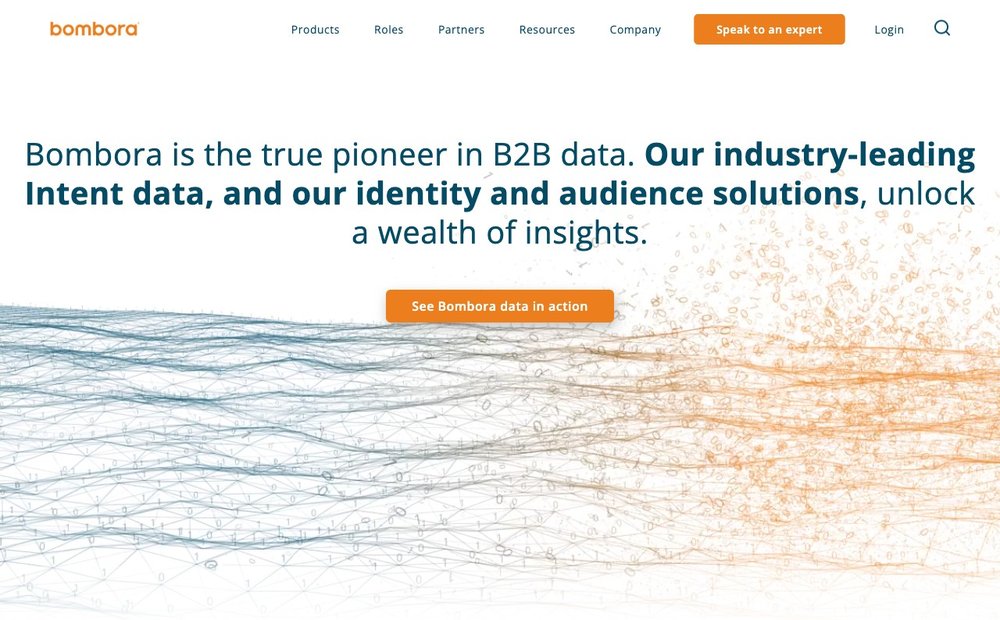
3rd-party (content co-op) · annual contract from ~$25K/yr · best for feeding intent into your stack
Bombora is the most established name in third-party intent, running a consent-based content-consumption co-op across 5,000+ B2B websites and 12,000+ topic categories. Its flagship Company Surge analytics flag week-over-week spikes in research activity at the account level, and many other vendors license Bombora data under the hood. It is best for teams that already have an ABM or sales stack and just want a clean, broad intent feed. A 2026 standout is its Forrester Wave Leader status, keeping it the default neutral data source across the industry.
2. 6sense
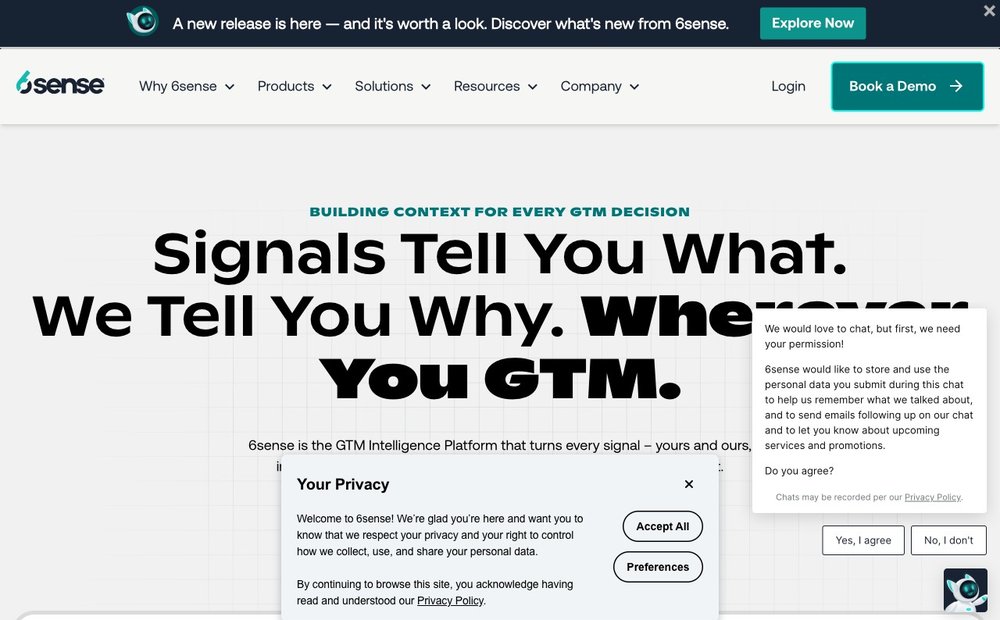
1st + 3rd-party (AI-predicted) · enterprise, ~$60K+/yr · best for predictive ABM
6sense is a full account-engagement platform that fuses its own AI-predicted intent with Bombora's co-op data and technographic signals from its Slintel acquisition. Its Revenue AI models predict which buying stage each account is in and recommend the best contacts and timing, then activate via built-in advertising and orchestration. It is best for enterprise revenue teams that want predictive scoring, ad activation and orchestration in one place. Its expanding agentic-AI workflows keep it a Forrester Wave Leader, though it remains a six-figure, sales-led commitment.
3. ZoomInfo
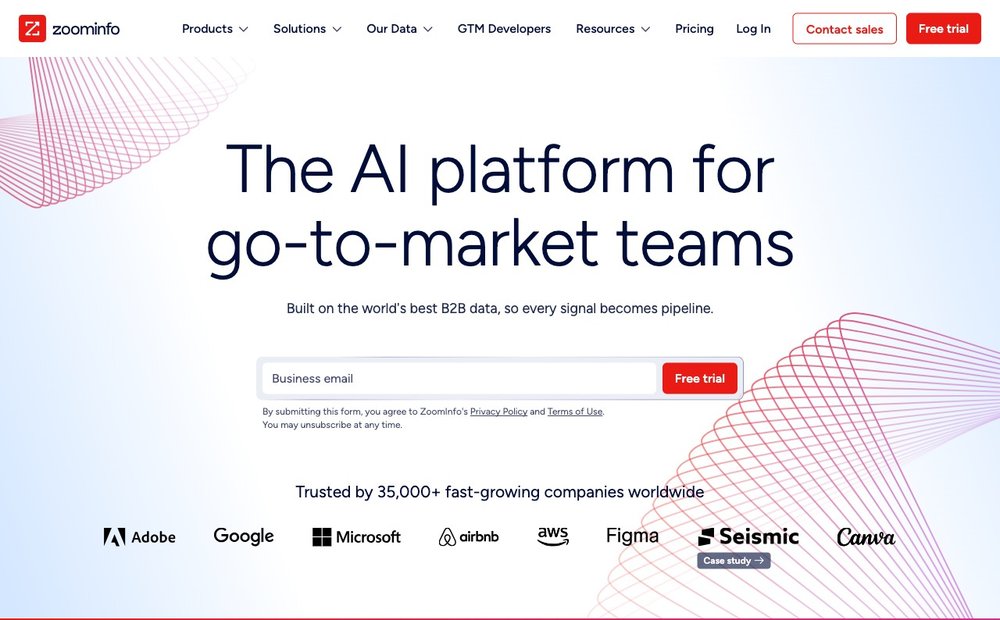
1st + 3rd-party (Streaming Intent add-on) · ~$15K–$60K+/yr · best for a huge contact DB plus intent
ZoomInfo pairs the category's largest verified B2B database (500M+ contacts, 100M+ companies) with intent signals, sold mainly through its Streaming Intent add-on for real-time keyword and topic monitoring. Its GTM Context Graph fuses intent with CRM history and Chorus conversation data to explain why an account is researching and surface signal patterns that match your past wins. It is best for mid-market and enterprise teams that want enrichment, contact data and intent in a single platform.
4. Demandbase
1st + 3rd-party (with Bombora co-op) · enterprise, ~$60K+/yr · best for account-based advertising
Demandbase is an ABM-first platform that layers a proprietary account-identification engine on top of co-op intent data. Its differentiation versus 6sense centres on identity-resolution accuracy and strong account-based advertising, making it a fit when paid media is a core pipeline motion run by marketing. It is best for marketing-led organisations managing significant ad budgets who want intent tied directly to targeting and orchestration. Forrester praised its highly accurate identity resolution in naming it a Wave Leader.
5. Cognism
3rd-party (Bombora topics) · ~$15K+/yr platform fee + per-user · best for GDPR-compliant EMEA prospecting
Cognism is a sales-intelligence platform best known for phone-verified mobile numbers and strict GDPR/CCPA compliance, with Bombora intent embedded directly into its contact database. Intent is delivered as a curated set of Bombora topics alongside firmographic and contact data, so reps can prioritise compliant European prospects with higher connect rates. It is best for outbound teams selling into Europe who need clean, consent-based data more than a full ABM suite. Its 2026 strength remains data compliance and EMEA coverage.
6. Leadfeeder (Dealfront)
1st-party (website visitor ID) · free tier + ~$99–$499/mo · best for turning website traffic into leads
Leadfeeder identifies the companies visiting your website using a comprehensive IP-to-company database, revealing which pages they viewed and how engaged they are. As of 2026 the parent company Dealfront unified its entire go-to-market suite — European company data, contact enrichment and buyer intent — under the single Leadfeeder brand, all built GDPR-first. It is best for SMB and mid-market teams that want affordable, self-serve first-party intent tied to their own site traffic and CRM.
Visit Leadfeeder (Dealfront) »
7. Breeze Intelligence (formerly Clearbit)
1st + 3rd-party (enrichment + intent) · credit packs · best for HubSpot users
Clearbit was acquired by HubSpot in 2023 and now lives entirely inside the CRM as Breeze Intelligence — the standalone Clearbit product and its free tools have been retired. It provides data enrichment plus buyer-intent signals (including website de-anonymisation) natively within HubSpot, sold as monthly credit packs. It is best for teams already standardised on HubSpot who want enrichment and intent without a separate vendor. The catch in 2026 is that it only works inside HubSpot — there is no direct Salesforce or Pipedrive integration.
Visit Breeze Intelligence (formerly Clearbit) »
8. Apollo.io
3rd-party (Bombora + LeadSift) · per-seat from ~$49–$79/user/mo · best for affordable all-in-one outbound
Apollo is an all-in-one sales platform combining a large contact database, sequencing and engagement tools with buying-intent signals sourced from Bombora and LeadSift. Reps select intent topics and Apollo flags accounts actively researching them each week, layered with technographic and account filters to prioritise outreach. It is best for SMBs and growing sales teams that want database, workflow and intent in one low-cost, self-serve per-seat tool, with advanced intent gated to higher tiers.
9. G2 Buyer Intent
1st-party (review-site behavior) · custom, ~$20K–$30K+/yr · best for software vendors at comparison stage
G2 Buyer Intent captures verified first-party signals from buyers researching software on G2 — profile views, pricing-page visits, category browsing and competitor comparisons — and scores accounts by buying stage. Because these signals come from people actively comparing tools, they are among the highest-intent in the market for SaaS sellers. The big 2026 development: after acquiring Capterra, Software Advice and GetApp, G2 now unifies first-party data across four review platforms, reportedly delivering far more in-market accounts.
10. Intentsify
3rd-party (multi-source aggregator) + activation · ~$31K–$100K+/yr · best for intent plus done-for-you activation
Intentsify aggregates intent signals from many sources and adds persona- and buying-group-level resolution, then layers on managed activation — display ads, content syndication and tele-verified leads. Unlike pure data feeds, it can both surface in-market accounts and run the campaigns to reach them, making it a fit for lean teams that want execution bundled in. It earned the highest Current Offering score in Forrester's Q1 2025 Wave, and in 2026 strengthened its technographic signals through acquisition.
11. PathFactory / Foundry Intent
3rd-party (publisher network) · custom enterprise · best for content-engagement intent
Foundry (formerly IDG) supplies account-level intent built on engagement across its large network of B2B technology publications and content, an alternative signal source to the Bombora co-op. It pairs that intent with audience targeting and demand-generation programs, so it suits enterprise tech marketers who want both signals and media reach. Treat it as a complementary or alternative third-party source when you want intent grounded in tech-buyer content consumption rather than the standard co-op.
Visit PathFactory / Foundry Intent »
How to Choose the Right Buyer Intent Data Software in 2026
First-party vs third-party intent. First-party signals come from your own properties — website visits, demo pages, review-site activity — and are highly accurate but limited to people already aware of you. Third-party (co-op) intent, like Bombora's, shows accounts researching your category anywhere on the web, catching buyers earlier but with more noise. Most strong programs blend both: third-party to find the market, first-party to confirm interest.
Data coverage and accuracy. Check the size and freshness of the dataset and how often signals refresh — weekly is common for co-op data, while website-ID and streaming products update closer to real time. Coverage also varies by geography (Cognism and Leadfeeder are strongest in EMEA). Treat any vendor's accuracy claims as directional and validate against your own closed-won accounts.
CRM and stack integrations. Intent data is only useful if it reaches reps in their workflow. Confirm native connectors to your CRM and marketing automation — note that Breeze Intelligence works only inside HubSpot, while platforms like 6sense and Demandbase push scores and segments across the stack. Decide whether you want a raw data feed to wire up yourself or a full platform that activates signals automatically.
Price, fit and GDPR. Pricing ranges from ~$49/user/month self-serve (Apollo, Leadfeeder) to $60K+/year enterprise commitments (6sense, Demandbase, ZoomInfo intent add-ons), often with custom, sales-gated quotes. Match the spend to your team's ability to act on signals weekly, and for European prospecting prioritise consent-based, GDPR-compliant sources (Cognism, Dealfront/Leadfeeder, Bombora's opt-in co-op).
Sources & Further Reading
- The Forrester Wave: Intent Data Providers For B2B, Q1 2025
- G2 Buyer Intent data category and reviews
- HubSpot Breeze Intelligence (formerly Clearbit)
- Bombora Company Surge intent data
Frequently Asked Questions
What is buyer intent data?
Buyer intent data is information that signals when a company or person is actively researching a product or solution like yours, based on behaviours such as reading relevant content, comparing tools or visiting pricing pages. It helps sales and marketing teams prioritise accounts that are 'in-market' rather than cold-prospecting everyone equally. The goal is to reach buyers earlier and with more relevant timing, before they submit a form or request a demo.
What is the difference between first-party and third-party intent data?
First-party intent comes from your own channels — your website, your demo pages, your review-site listing — so it is accurate but limited to buyers already engaging with you. Third-party intent, usually from a data co-op like Bombora, shows accounts researching your category across thousands of other websites, catching buyers earlier but with less precision. Most effective programs combine both: third-party to discover in-market accounts and first-party to confirm genuine interest.
Is Clearbit still available in 2026?
No, not as a standalone product. HubSpot acquired Clearbit in 2023 and rebranded it as Breeze Intelligence, which now runs entirely inside the HubSpot CRM. The free Clearbit tools were shut down, and Breeze Intelligence only works for HubSpot customers — there is no direct integration for Salesforce, Pipedrive or other CRMs. Teams that need standalone enrichment and intent typically move to alternatives like ZoomInfo, Apollo or Cognism.
How much does buyer intent data software cost?
Pricing varies widely by model. Self-serve tools like Apollo (~$49–$79/user/month) and Leadfeeder (free tier up to ~$499/month) are accessible to small teams, while enterprise platforms such as 6sense, Demandbase and ZoomInfo's intent add-ons typically start around $25K–$60K+ per year. Most enterprise vendors do not publish list pricing and quote based on seats, account volume and add-ons, so expect custom proposals.
Is buyer intent data GDPR compliant?
It can be, but compliance depends on how the data is collected. Reputable third-party providers like Bombora operate consent-based, opt-in co-ops, and vendors such as Cognism and Dealfront/Leadfeeder build GDPR compliance into their core products, which matters for European prospecting. Website-visitor identification generally resolves to company-level (not individual) data, which lowers privacy risk. Always ask a vendor how its data is sourced before buying, especially for EU and UK markets.
Information is based on public sources and vendor pages current as of June 2026. Prices, plans and features change frequently — verify on the official site before purchasing. SaveDelete may earn a small commission on purchases made through some links on this page, at no extra cost to you.