Top Digital Pianos of the Year Reviewed
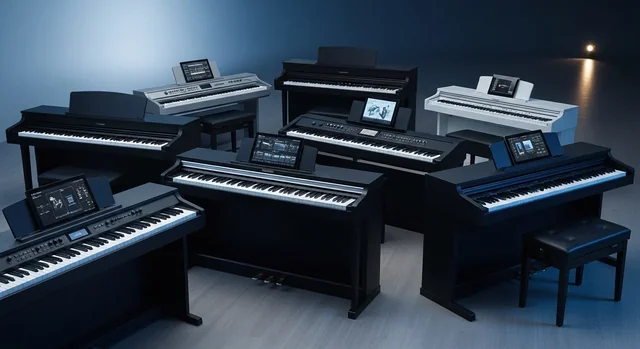
Digital pianos have revolutionized the way musicians learn, practice, and perform. In 2025, the technology has reached new heights, offering incredibly realistic playing experiences that rival traditional acoustic pianos while providing modern conveniences like recording capabilities, multiple sound options, and compact designs. Whether you're a beginner taking your first steps into music or a professional seeking a reliable practice instrument, choosing the right digital piano can significantly impact your musical journey.
This comprehensive guide examines the top digital pianos of 2025, organized by price range and featuring the latest innovations in key action technology, sound sampling, and digital modeling. We'll explore offerings from the three major manufacturers - Yamaha, Roland, and Kawai - each bringing their unique approach to recreating the authentic piano experience.
Understanding Digital Piano Technology in 2025
Why Weighted Keys Matter
Weighted keys are the foundation of any quality digital piano. Unlike simple keyboard actions, weighted keys simulate the mechanical resistance of acoustic piano hammers striking strings. This resistance is crucial for developing proper finger strength, technique, and musical expression. In acoustic pianos, lower notes require more force to play than higher notes due to the varying hammer weights - a characteristic that quality digital pianos replicate through graded hammer action.
For more details, check out our guide on The Ultimate Guide to Free Online Music Players in 2025.
Without weighted keys, pianists develop poor technique that becomes problematic when transitioning to acoustic instruments. The muscle memory and finger strength developed on properly weighted keys translates directly to acoustic pianos, making weighted action essential for serious musical development.
Advanced Key Action Technologies
Graded Hammer Action: The standard for quality digital pianos, this technology varies the key weight from heavy in the bass to lighter in the treble, mimicking acoustic piano feel across the entire keyboard range.
Kawai Grand Feel III: Kawai's flagship action technology features wooden keys with synthetic ivory key tops, triple-sensor detection, and let-off simulation that recreates the subtle "notch" feeling experienced on grand pianos just before the hammer strikes the string.
Yamaha GrandTouch-S: Yamaha's premium action combines wooden keys with synthetic ebony and ivory key surfaces, offering exceptional responsiveness and the ability to detect the most subtle changes in touch and timing.
Roland Hybrid Wood Keys: Roland's innovative approach uses a wooden core with molded outer materials, providing the natural feel of wood while maintaining durability and consistency across all playing conditions.
Sound Technology: Sampling vs. Modeling
Modern digital pianos use two primary technologies to recreate piano sounds:
Advanced Sampling: Records actual acoustic piano sounds at multiple velocity levels and sustain stages. Yamaha's CFX and Bösendorfer samples, Kawai's Shigeru Kawai SK-EX samples, and Roland's Concert Piano samples represent the pinnacle of this technology.
Physical Modeling: Uses mathematical algorithms to simulate how piano strings, hammers, and resonance chambers interact. Roland's SuperNATURAL Piano Modeling and Kawai's Progressive Harmonic Imaging create sounds in real-time, offering infinite tonal variations and more realistic sustain and decay characteristics.
Budget Digital Pianos Under $1,000
Roland FP-30X
The Roland FP-30X stands as the gold standard for budget digital pianos in 2025. Priced around $699, this portable instrument features Roland's PHA-4 Standard keyboard with 88 weighted keys and escapement. The SuperNATURAL Piano sound engine delivers authentic acoustic piano tones with excellent dynamic response.
Key features include Bluetooth connectivity for wireless audio streaming and app integration, built-in speakers with surprising power for its size, and a comprehensive selection of sounds beyond piano. The FP-30X excels in portability while maintaining serious musical capabilities, making it ideal for students, gigging musicians, and home players with space constraints.
Kawai ES120
Kawai's ES120, retailing for approximately $649, offers exceptional value with the company's Responsive Hammer Compact action. This 88-key weighted action provides a more authentic feel than many competitors in this price range. The instrument features Kawai's Harmonic Imaging sound technology with samples from their flagship Shigeru Kawai SK-EX concert grand piano.
The ES120 includes useful practice features like dual mode for teacher-student lessons, split mode for playing different sounds with each hand, and a selection of high-quality additional voices. Its compact design and optional matching stand make it suitable for both portable and semi-permanent setups.
Yamaha P-225
The newest addition to Yamaha's portable piano lineup, the P-225 (around $749) features the company's GHS (Graded Hammer Standard) action with synthetic ebony and ivory key tops. The instrument utilizes Yamaha's CFX sound samples, providing rich, expressive piano tones that respond naturally to playing dynamics.
See also: The Ultimate Guide to Free Music Players for 2025.
Notable features include the Smart Pianist app integration, which adds extensive functionality through your smartphone or tablet, recording capabilities, and a variety of high-quality voices. The P-225's sleek design and reliable build quality make it an excellent choice for developing pianists who need professional features at an accessible price point.
Mid-Range Digital Pianos ($1,000-$3,000)
Kawai ES920
The ES920, priced around $1,899, represents Kawai's premium portable piano offering. It features the advanced Responsive Hammer III action with triple-sensor key detection and let-off simulation, providing an incredibly realistic playing experience. The sound engine utilizes Progressive Harmonic Imaging with samples from multiple world-class concert grands.
This instrument excels in both acoustic piano authenticity and digital versatility. The comprehensive connectivity options include USB, MIDI, and audio interfaces, while the built-in recorder and extensive sound library make it suitable for both classical study and contemporary music production. The ES920's wooden key construction and premium materials justify its position in the mid-range category.
Yamaha CLP-735
Yamaha's CLP-735 ($2,499) bridges the gap between portable and cabinet-style digital pianos. It features the GrandTouch-S keyboard with wooden keys and synthetic ivory/ebony key tops, providing exceptional touch sensitivity and playing comfort. The sound system incorporates samples from both Yamaha CFX and Bösendorfer Imperial concert grands.
The CLP-735's cabinet design includes a three-pedal unit with half-damper support and a powerful speaker system that fills rooms with rich, resonant sound. Advanced features like Virtual Resonance Modeling and smooth release technology create an incredibly immersive playing experience that approaches acoustic piano realism.
Premium Digital Pianos ($3,000+)
Yamaha CLP-835
At $4,999, the CLP-835 represents Yamaha's commitment to premium digital piano technology. The GrandTouch keyboard features real wooden keys with synthetic ivory and ebony surfaces, while the advanced sound engine provides multiple high-resolution samples from world-renowned concert pianos. The sophisticated speaker system creates an acoustic piano-like sound projection that enhances the playing experience.
Premium features include advanced resonance modeling, key-off sampling, and smooth release technology that captures every nuance of acoustic piano behavior. The elegant cabinet design with matching bench makes this instrument a stunning centerpiece for any home while providing professional-level performance capabilities.
Kawai CA701 and CA901
Kawai's Concert Artist series represents the pinnacle of digital piano technology. The CA701 ($3,999) and CA901 ($5,999) both feature the Grand Feel III action with wooden keys and triple-sensor detection. The sound systems utilize Kawai's most advanced Progressive Harmonic Imaging technology with detailed samples from multiple concert grands.
You might also be interested in Best HTML5 Audio Player for your Site.
The CA901 distinguishes itself with an enhanced speaker system and additional sound processing capabilities. Both models feature comprehensive connectivity, extensive sound libraries, and recording capabilities that satisfy both serious students and professional musicians. The authentic key action and sound quality make these instruments nearly indistinguishable from acoustic pianos in playing experience.
Roland LX9
Roland's flagship LX9 ($6,999) combines the company's most advanced technologies in an elegant cabinet design. The PHA-50 keyboard features wooden keys with escapement and ivory-feel surfaces, while the SuperNATURAL Piano Modeling technology creates sounds in real-time for unlimited expression possibilities.
The sophisticated speaker system includes individual drivers for different frequency ranges, creating three-dimensional sound projection similar to acoustic pianos. Advanced features like Headphones 3D Ambience and extensive connectivity options make the LX9 suitable for both traditional piano study and modern music production applications.
Brand Comparison: Yamaha vs. Roland vs. Kawai
Sound Characteristics
Yamaha: Known for bright, clear tones with excellent projection. Yamaha pianos typically offer crisp articulation and brilliant highs, making them popular for classical music and situations requiring clear note definition. The CFX and Bösendorfer samples provide versatile tonal options from bright and percussive to warm and romantic.
Roland: Emphasizes balanced, natural tones with smooth transitions across the dynamic range. Roland's SuperNATURAL technology excels in creating realistic sustain and decay characteristics. Their sound tends to be more neutral, making it versatile across musical genres while maintaining authentic acoustic piano character.
Kawai: Produces warm, mellow tones with rich harmonic content. Kawai pianos often appeal to players seeking a more intimate, expressive sound. The Shigeru Kawai SK-EX samples provide exceptional depth and complexity, particularly in the mid-range frequencies where much musical expression occurs.
Key Action Philosophy
Each manufacturer approaches key action differently. Yamaha focuses on consistency and reliability across their range, with wooden keys reserved for premium models. Roland emphasizes innovation with hybrid materials and advanced sensor technology. Kawai prioritizes authentic acoustic piano feel, incorporating wooden keys and advanced escapement simulation even in mid-range models.
Learn more in our article about Best Headphones Under Rs.4000 in 2025: Ultimate Buying Guide.
| Price Range | Model | Key Action | Sound Technology | Price | Best For |
|---|---|---|---|---|---|
| Budget (<$1000) |
Roland FP-30X | PHA-4 Standard | SuperNATURAL | $699 | Portability & versatility |
| Kawai ES120 | Responsive Hammer Compact | Harmonic Imaging | $649 | Authentic feel, value | |
| Yamaha P-225 | GHS | CFX Sampling | $749 | App integration, reliability | |
| Mid-Range ($1000-$3000) |
Kawai ES920 | Responsive Hammer III | Progressive Harmonic Imaging | $1,899 | Premium portable |
| Yamaha CLP-735 | GrandTouch-S | CFX/Bösendorfer | $2,499 | Home piano replacement | |
| Premium ($3000+) |
Yamaha CLP-835 | GrandTouch | CFX/Bösendorfer | $4,999 | Serious classical study |
| Kawai CA701/CA901 | Grand Feel III | Progressive Harmonic Imaging | $3,999/$5,999 | Most authentic feel | |
| Roland LX9 | PHA-50 | SuperNATURAL Modeling | $6,999 | Technology & innovation |
Choosing the Right Digital Piano for Your Needs
For Beginners
New pianists should prioritize weighted keys and authentic sound over extensive features. The Kawai ES120 offers exceptional value with superior key action, while the Roland FP-30X provides modern connectivity features that can enhance learning through apps and online resources.
For Intermediate Players
Developing pianists benefit from premium key actions and high-quality sound engines. The Yamaha CLP-735 and Kawai ES920 both offer significant upgrades in touch sensitivity and sound quality that support advancing technique and musical expression.
For Advanced Players and Professionals
Serious musicians require instruments that don't compromise on authenticity. The premium models from all three manufacturers offer key actions and sound quality that satisfy professional performance requirements while providing the convenience and reliability of digital technology.
Frequently Asked Questions
What's the difference between weighted and semi-weighted keys?
Weighted keys use hammer mechanisms to simulate acoustic piano touch, providing realistic resistance and dynamic response. Semi-weighted keys use springs for resistance, offering some weight but lacking the authentic feel and dynamic range of fully weighted actions. For serious piano study, fully weighted keys are essential.
How important is the number of keys on a digital piano?
A full 88-key keyboard is crucial for complete musical expression and proper technique development. While 76-key models exist, they lack important bass and treble notes found in piano literature. Professional and serious amateur players should always choose 88-key instruments.
What is polyphony and how much do I need?
Polyphony refers to how many notes can sound simultaneously. Modern digital pianos typically offer 192-256 notes of polyphony, which is more than sufficient for any playing style. Lower polyphony (64 notes or less) can cause note dropouts during complex passages or when using multiple sounds simultaneously.
Can digital pianos really replace acoustic pianos for learning?
High-quality digital pianos with weighted keys and authentic sound can effectively replace acoustic pianos for learning and practice. They offer advantages like volume control, recording capabilities, and no tuning requirements, while premium models provide playing experiences nearly identical to acoustic instruments.
What connectivity features should I look for?
Essential connectivity includes USB for computer connection, audio outputs for recording or amplification, and increasingly, Bluetooth for wireless device pairing. MIDI connectivity enables integration with music software, while app compatibility can enhance learning and practice sessions.
How do I maintain a digital piano?
Digital pianos require minimal maintenance compared to acoustic instruments. Regular dusting, keeping liquids away from the keyboard, and avoiding extreme temperatures are the primary concerns. Unlike acoustic pianos, digital instruments never need tuning and have no moving parts requiring adjustment.
What's the expected lifespan of a digital piano?
Quality digital pianos typically last 15-20 years with normal use. The electronic components are generally reliable, and key actions are designed for extensive playing. However, technology advances may make older instruments seem outdated even when still functionally sound.
Should I buy online or from a music store?
While online shopping offers competitive prices, testing instruments in person is valuable for evaluating key action and sound quality. Many musicians prefer trying several models before deciding, as personal preference plays a significant role in instrument selection. Consider visiting stores to test, then comparing prices online.
What accessories do I need with a digital piano?
Essential accessories include a matching stand (for portable models), a quality bench with adjustable height, sustain pedal (if not included), and headphones for private practice. Optional accessories might include music stands, pedal units for cabinet models, and protective covers for portable instruments.
How do digital piano sounds compare to acoustic pianos?
Modern digital pianos using advanced sampling and modeling technology can closely approximate acoustic piano sounds. While subtle differences exist, particularly in complex harmonic interactions and room acoustics, the gap has narrowed significantly. Many professional musicians find current digital pianos acceptable for performance and recording applications.
See also: Top 3 Best Music Player for Android.
The digital piano market in 2025 offers unprecedented quality and value across all price ranges. Whether you're beginning your musical journey or seeking a professional-grade instrument, the models reviewed here represent the finest examples of current digital piano technology. Consider your budget, space requirements, and musical goals when making your selection, and remember that investing in quality key action and sound will support your musical development for years to come.