Magazine Cover Design: Principles, Anatomy & Inspiration (2026)
A great magazine cover does an enormous amount of work in a single glance. It has to capture the brand, sell the issue, and stop you mid-scroll — whether it’s on a crowded newsstand or a tiny phone thumbnail. The covers we remember look effortless, but behind each one is a set of deliberate design choices. This guide breaks down what makes a magazine cover work, the anatomy every cover shares, classic styles worth learning from, how to design your own, and the best tools to do it.
What Makes a Great Magazine Cover?
The strongest covers nearly always get the same fundamentals right:
- One strong focal point. Usually a striking portrait or a single bold image that draws the eye instantly. Clutter kills covers.
- A confident, consistent masthead. The magazine’s logo sits at the top and stays recognisable issue after issue, building brand familiarity.
- A clear hierarchy of cover lines. One dominant headline does the selling, with smaller supporting lines arranged around it — never a wall of equal-sized text.
- Restrained typography. One or two typefaces, used consistently. Great covers say more with fewer fonts.
- Bold colour and contrast. Strong contrast makes the cover pop on the shelf and remain legible when shrunk to a thumbnail.
- Breathing room. Negative space gives the focal image and headline impact; cramming everything in weakens all of it.
- Brand consistency. The best titles feel unmistakably “theirs” every month, even as the cover star changes.
The Anatomy of a Magazine Cover
Almost every cover is built from the same handful of elements. Knowing them — and how they work together — is the foundation of good cover design:
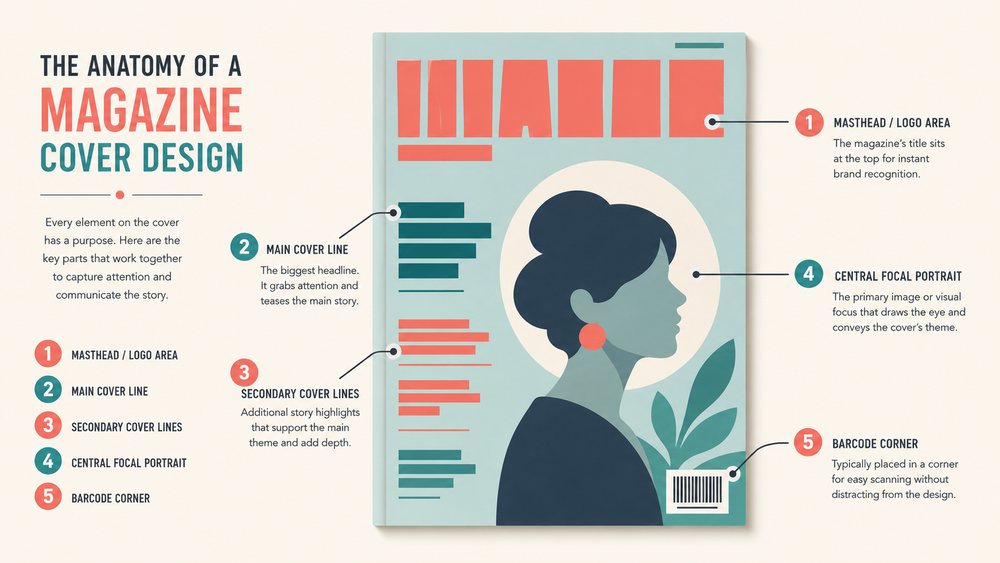
- Masthead / logo: the magazine’s name at the top, the anchor of its brand identity.
- Main cover line: the single biggest, boldest headline that teases the lead story.
- Secondary cover lines: smaller supporting headlines that add depth without competing with the main line.
- Central focal image: the hero photo or illustration the whole layout is built around.
- Dateline & barcode: the issue date/number and the barcode, usually tucked into a corner so they don’t distract.
Magazine Cover Design Styles to Learn From
You don’t need to reinvent the wheel — some of the most iconic titles each teach a different design lesson:
- The single iconic photo — titles like National Geographic built their identity on one powerful, full-bleed image with minimal text. Lesson: let a strong photograph carry the cover.
- The illustrated cover — The New Yorker famously runs original illustration over photography. Lesson: a distinctive art style can be more memorable than any photo.
- The portrait-led fashion cover — fashion titles such as Vogue centre a striking portrait with elegant, restrained type. Lesson: a confident subject plus clean typography reads as premium.
- The bold typographic / conceptual cover — Bloomberg Businessweek and Wired often make type and a clever concept the hero. Lesson: a smart idea and big type can out-stop a stock photo.
- The playful, witty cover — titles like Esquire use humour and surprise. Lesson: personality earns a second look.
How to Design Your Own Magazine Cover
- Define the purpose and audience. A fashion title, a tech magazine and a school yearbook all call for different tones — decide who it’s for first.
- Choose a strong hero image. Pick (or shoot) one high-quality focal image with space around the subject for your masthead and cover lines.
- Set up a grid. A simple column grid keeps the masthead, image and text aligned and professional.
- Build a type hierarchy. Choose one or two fonts, then size them so the eye travels masthead → main cover line → supporting lines.
- Limit your colour palette. Two or three colours, drawn from the image, with one accent for contrast.
- Write punchy cover lines. Short, benefit-driven and curiosity-piquing — every word earns its place.
- Test at thumbnail size. Shrink your design tiny. If the masthead and main line still read clearly, it works; if not, simplify.
Best Tools for Magazine Cover Design
- Adobe InDesign — the industry standard for page layout and print-ready files (usually paired with Photoshop for the cover image).
- Canva — the easiest way to start, with ready-made magazine cover templates and a drag-and-drop editor.
- Affinity Publisher — a powerful InDesign alternative with a one-time price instead of a subscription.
- Figma — great for designing and collaborating on covers in the browser, especially for digital editions.
Frequently Asked Questions
What makes a good magazine cover?
A good cover has one strong focal image, a clear and consistent masthead, a single dominant cover line, restrained typography (one or two fonts), and bold contrast that stays legible even as a small thumbnail.
What software do designers use for magazine covers?
Adobe InDesign is the industry standard for laying out and exporting print-ready covers, usually alongside Photoshop for the image. Canva, Affinity Publisher and Figma are excellent, more accessible alternatives.
What are the standard parts of a magazine cover?
The core elements are the masthead (logo), a main cover line, smaller secondary cover lines, a central focal image, and the issue date plus a barcode — usually tucked into a corner.
What size is a magazine cover?
A common US trim size is 8.375 × 10.875 inches (with bleed added), while A4 is widely used internationally. Always design to your specific printer’s dimensions and bleed requirements.
How do I make my cover stand out on a shelf or thumbnail?
Use strong contrast, a single clear focal point and a large, readable headline, then shrink the design to thumbnail size to check it still reads. If the masthead and main line survive, it will work anywhere.
Final Thoughts
Behind every “effortless” magazine cover is a clear focal point, a confident masthead, a strong headline and a lot of restraint. Master the anatomy, borrow lessons from the icons, design to your print specs, and always test your work small. Do that, and your covers will stop the scroll — on the shelf and on screen.