How UAE Traffic Laws Affect Motor Insurance Policies
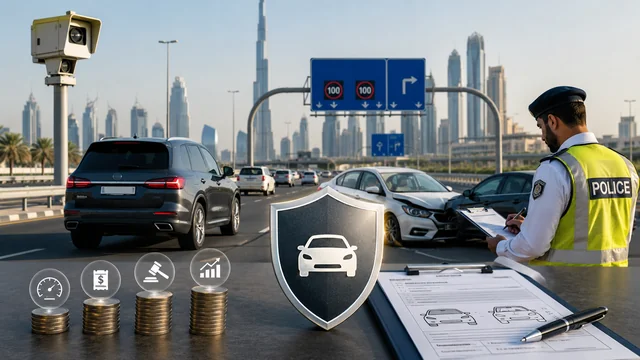
Traffic laws in the UAE do more than regulate behavior on the road. They also shape how insurance companies calculate risk, process claims, and decide renewal costs.
A lot of drivers treat these as two separate systems. One belongs to the police and traffic authorities; the other belongs to insurers. In reality, they constantly overlap.
A speeding fine might seem minor in the moment. A black point may feel temporary. But over time, repeated violations can influence your relationship with insurers in ways many drivers do not notice immediately.
That connection has become even stronger as the UAE continues investing in automated enforcement systems, digital records, and stricter penalties for dangerous driving.
Why Traffic History Matters to Insurers
Insurance companies work by assessing probability.
Drivers with repeated violations statistically create more claims, more repair costs, and more liability issues. Because of that, insurers pay attention to driving history when evaluating renewals and pricing.
Common factors that may indirectly affect insurance evaluations include:
-
Repeated speeding violations
-
Reckless driving citations
-
Black points accumulation
-
Major accident history
-
Driving under the influence offenses
-
Dangerous lane changes
-
Illegal racing or stunt driving
One or two fines usually will not dramatically affect a policy. Persistent risky behavior is what changes the conversation.
For many drivers, this becomes noticeable during policy renewal periods.
You may like to read: Trips around Dubai in luxury cars on super roads
The Role of Police Reports After Accidents
In the UAE, police reports are central to the insurance process.
After an accident, insurers rely heavily on the official report to determine liability and process claims. Even relatively small details can matter.
If the report shows that a driver:
-
Ignored traffic signals
-
Used a mobile phone while driving
-
Violated lane discipline
-
Was speeding excessively
-
Drove recklessly
that information may affect how smoothly the claim proceeds.
This is one reason experienced drivers in the UAE often say that staying calm after an accident matters almost as much as the accident itself. The official report shapes nearly everything that follows.
Situations That Can Complicate Insurance Claims
Many drivers assume comprehensive coverage automatically protects them under all circumstances.
That is not always true.
Certain traffic-law violations or policy breaches can complicate claims investigations.
Some examples include:
Driving Under the Influence
This is among the most serious situations in both legal and insurance terms.
In many cases, insurers may reject or dispute claims connected to illegal intoxicated driving.
Illegal Vehicle Modifications
The UAE has a strong car culture, and modifications are common. However, undeclared or illegal modifications can create problems during claims processing.
Examples may include:
-
Excessively tinted windows
-
Unauthorized engine modifications
-
Illegal exhaust systems
-
Unapproved structural changes
If the insured vehicle no longer matches the declared condition on the policy, disputes may arise.
Using Personal Vehicles for Commercial Activity
Some drivers use personal vehicles for delivery work or commercial transport without checking whether the policy allows it.
That can become an issue after accidents, especially if the insurer determines the vehicle was being used outside the agreed policy terms.
How Safer Driving Can Help Financially
Many drivers think careful driving only helps avoid fines.
In reality, maintaining a cleaner record can also make insurance renewals easier over time.
Drivers with fewer violations often experience:
-
Smoother renewal negotiations
-
Fewer claim complications
-
Better long-term premium stability
-
Lower risk classifications
That does not mean insurers reward perfection. Most people receive occasional fines at some point.
The bigger issue is pattern.
Consistent reckless behavior eventually becomes visible across multiple systems.
Why This Matters More Today
Traffic enforcement in the UAE has become increasingly data-driven.
Smart cameras, automated monitoring systems, digital registration services, and centralized records make driver histories easier to evaluate than before.
For insurers, that means risk assessment is no longer based only on broad demographics or vehicle type.
Driving behavior itself has become part of the equation.
This is especially relevant for people researching motor insurance Dubai policies for the first time. Two drivers with identical vehicles may still receive very different long-term insurance experiences depending on how they drive over several years.
Practical Habits That Reduce Insurance Problems
Drivers cannot control everything on the road, but certain habits make future insurance issues less likely.
A few practical examples include:
-
Reading policy exclusions carefully
-
Reporting accidents immediately
-
Keeping modification records documented
-
Avoiding aggressive driving behavior
-
Checking whether vehicle usage matches policy terms
-
Renewing insurance before expiration dates
-
Keeping copies of police and claim documents
None of these habits are particularly dramatic.
But they reduce confusion during stressful moments.
Frequently Asked Questions
Can traffic fines increase insurance premiums in the UAE?
Repeated serious violations may contribute to higher renewal costs over time because insurers often evaluate driving history when assessing risk.
Do black points affect motor insurance?
Black points themselves are part of the traffic enforcement system, but a long record of violations can indirectly influence insurance evaluations and renewals.
Will insurance cover accidents caused by reckless driving?
Coverage depends on the policy terms and the circumstances of the accident. Serious violations or illegal behavior may complicate claims.
Are car modifications allowed under UAE insurance policies?
Some modifications are acceptable if properly declared and legally approved. Undisclosed or illegal modifications can create claim disputes.
Why are police reports important for insurance claims?
Police reports help insurers determine fault, review traffic violations connected to the accident, and process compensation decisions.
Final Thoughts
Traffic laws and insurance policies are tied together more closely than many drivers realize.
Most of the time, that connection stays invisible in everyday life. You drive, renew the policy, and move on.
But after accidents, disputes, or repeated violations, the overlap becomes very clear.
Understanding both systems usually makes life on the road far less stressful later on.