Gizmo App and the Rise of Interactive Mini Apps
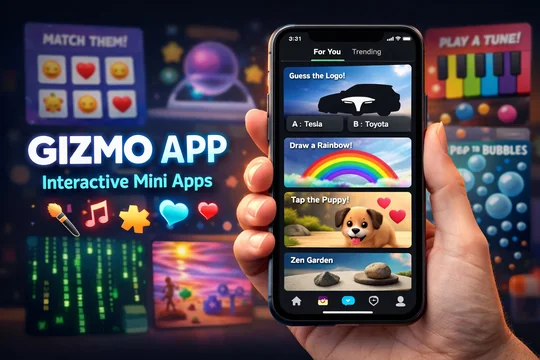
Gizmo App Shows the Future of Interactive Mini Apps
A new app called Gizmo is quietly redefining what “content” looks like on mobile. Instead of watching endless short videos, users interact, play, and remix. The so-what is simple but powerful: Gizmo hints at a future where creativity is participatory, not passive—and where anyone can build playful digital experiences without writing code.
Key Facts: What Gizmo Actually Is
Gizmo is a mobile app created by New York–based startup Atma Sciences. It presents user-generated “Gizmos,” which are small interactive experiences displayed in a vertical feed similar to TikTok or Instagram Reels.
Unlike video-first platforms, Gizmo content responds to touch. Users can tap, swipe, draw, drag, or poke the screen to engage. Creators don’t need coding skills; they simply describe their idea in plain language, and AI generates the underlying code and visuals.
The app launched quietly less than six months ago and has already reached roughly 600,000 installs, with especially rapid growth in late 2024.
Why the Gizmo App Matters for Creators and Brands
The Gizmo app sits at the intersection of three growing trends: AI-assisted creation, interactive media, and the rise of “vibe coding”—building software through natural language prompts instead of traditional programming.
For creators, this lowers the barrier to experimentation. You’re no longer choosing between learning to code or settling for static content. Gizmo lets ideas become interactive toys, not just posts. That shift matters because interaction drives deeper engagement than passive scrolling.
For brands and marketers, the implications are even bigger. Interactive mini apps can act as lightweight experiences—think quizzes, playful product demos, or branded puzzles—that feel native to a feed rather than like ads. This opens a new lane for storytelling that doesn’t interrupt the user experience.
A Bigger Picture: From Video Feeds to Playgrounds
Social platforms have spent a decade optimizing for watch time. Gizmo challenges that assumption by prioritizing play time instead.
This reflects a broader shift in digital culture. Younger users, especially Gen Z, are increasingly drawn to spaces where they can remix, customize, and co-create. Gizmo’s remix feature—allowing users to build on others’ creations—mirrors trends seen in gaming, memes, and open creative platforms.
Compared to earlier tools like Rooms, which introduced scripting for advanced users, Gizmo keeps everything prompt-based. The trade-off is less technical control but much broader accessibility. In practice, that means faster iteration and more diverse creative output.
Practical Implications and What Comes Next
If Gizmo continues growing, expect three likely developments:
-
New creator categories – Designers, writers, and artists who never identified as “developers” will build interactive experiences.
-
Brand experimentation – Early adopters will test interactive campaigns that feel closer to games than ads.
-
Platform competition – Larger social apps may borrow similar interactive formats or acquire startups in this space.
For now, the best practical move for curious users is simple: experiment. Treat Gizmo as a sandbox. Create something weird, playful, or unfinished. The low stakes are part of the appeal.
Gizmo vs. Other Vibe Coding Platforms
While Gizmo isn’t alone, its positioning is distinct.
| Feature | Gizmo App | Other Vibe Coding Tools |
|---|---|---|
| Core focus | Playful interaction | Utility-focused micro apps |
| Coding required | None | Sometimes optional |
| Feed-based discovery | Yes | Rare |
| Remix culture | Built-in | Limited |
Bottom Line: Gizmo prioritizes fun and creativity over productivity, which makes it more social—and potentially more viral—than competing platforms.
FAQ: Understanding the Gizmo App
Q: What is the Gizmo app used for?
A: The Gizmo app is used to create and explore interactive mini apps, such as puzzles, games, art, and experiments. Instead of watching videos, users play with content and can remix creations using AI-generated code.
Q: Do you need coding skills to use Gizmo?
A: No. Gizmo is designed for non-coders. Users describe what they want in natural language, and the app’s AI handles the technical work behind the scenes.
Q: Is the Gizmo app safe to use?
A: According to the company, Gizmo uses a mix of AI and human moderation to review content, aiming to ensure user safety and platform quality.
Q: How is Gizmo different from TikTok or Reels?
A: TikTok and Reels focus on watching short videos. Gizmo focuses on interaction—users tap, swipe, draw, and play with content instead of just scrolling.
Looking Ahead
The Gizmo app may still be early, but its momentum suggests something real: a hunger for more playful, hands-on digital experiences. If the last era of social media was about watching, the next one might be about touching, shaping, and building—one tiny interactive app at a time.