Expert Networks vs. Traditional Consulting: Which One Should You Choose?
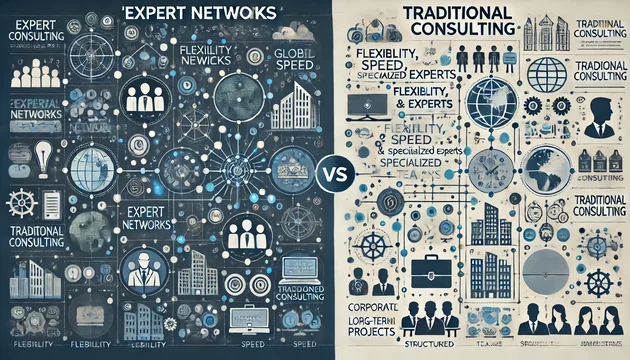
In today's rapidly evolving business landscape, organizations face increasingly complex challenges that require specialized knowledge and expertise. When seeking external guidance, decision-makers often find themselves at a crossroads: should they engage with traditional consulting firms or leverage expert networks? This comprehensive guide will help you understand the key differences between these two approaches and determine which option better suits your needs.
Understanding the Fundamentals
What Are Expert Networks?
Expert networks are platforms that connect businesses with subject matter experts for short-term consultations and knowledge sharing. Understanding how expert networks connect professionals is crucial - they maintain vast databases of experts and use sophisticated matching algorithms to pair clients with relevant specialists. These networks maintain vast databases of professionals across various industries, functions, and geographies. Companies like GLG (Gerson Lehrman Group) and AlphaSights have revolutionized how businesses access specialized expertise.
Traditional Consulting Explained
Traditional consulting firms, such as McKinsey, Boston Consulting Group (BCG), and Bain & Company, provide comprehensive business solutions through structured engagements. These firms employ full-time consultants who work on projects for extended periods, typically delivering end-to-end solutions for complex business challenges.
Key Differences Between Expert Networks and Traditional Consulting
1. Engagement Structure
Expert Networks:
- Short-term, focused consultations (typically 1-2 hours)
- Direct access to specific subject matter experts
- Flexible scheduling and on-demand expertise
- Pay-per-consultation model
Traditional Consulting:
- Long-term engagements (weeks to months)
- Team-based approach with multiple consultants
- Structured project timelines and deliverables
- Retainer or project-based pricing
2. Cost Structure and Investment
Expert Networks:
- Lower initial investment
- Transparent pricing based on expert hourly rates
- No long-term commitments required
- Ability to scale up or down based on needs
Traditional Consulting:
- Higher overall investment
- Complex pricing structures
- Minimum engagement requirements
- Additional costs for travel and expenses
3. Expertise and Knowledge Transfer
Expert Networks:
- Direct access to practitioners and industry veterans
- Real-world, operational expertise
- Specific, targeted insights
- Current market intelligence
Traditional Consulting:
- Strategic and theoretical frameworks
- Broad industry knowledge
- Extensive analytical capabilities
- Comprehensive research resources
When to Choose Expert Networks
Expert networks are particularly valuable when:
- You need quick answers to specific questions
- Your budget is limited or you prefer variable costs
- You want to validate internal assumptions
- You're exploring new markets or industries
- You require multiple perspectives on a particular topic
Real-World Example
A private equity firm conducting due diligence on a potential investment in the semiconductor industry might engage with expert networks to:
- Speak with former executives of target companies
- Understand technical specifications and market dynamics
- Validate growth projections and competitive landscape
- Assess regulatory risks and compliance requirements
When to Choose Traditional Consulting
Traditional consulting is often the better choice when:
- You need comprehensive problem-solving
- Your challenge requires significant organizational change
- You lack internal resources for project management
- You want end-to-end implementation support
- You require extensive data analysis and research
Real-World Example
A global manufacturer seeking to optimize its supply chain might engage a traditional consulting firm to:
- Analyze current operations and identify inefficiencies
- Develop comprehensive improvement strategies
- Create detailed implementation plans
- Manage change across multiple departments
- Train staff on new processes and systems
Hybrid Approach: Getting the Best of Both Worlds
Many organizations are discovering the benefits of combining both approaches:
- Use expert networks for rapid insights and validation
- Engage traditional consultants for strategic implementation
- Leverage each service's strengths at different project stages
- Maintain flexibility while ensuring comprehensive support
Making Your Decision: Key Considerations
1. Project Scope and Complexity
- How well-defined is your challenge?
- What level of support do you need?
- Are you looking for answers or implementation?
2. Timeline and Urgency
- When do you need results?
- How long can you wait for solutions?
- What is your implementation timeline?
3. Budget and Resources
- What is your available budget?
- Do you have internal resources to support the project?
- How important is cost flexibility?
4. Knowledge Requirements
- Do you need specific expertise or broad industry knowledge?
- Are you looking for strategic or operational insights?
- How important is practical experience versus theoretical knowledge?
Conclusion
The choice between expert networks and traditional consulting ultimately depends on your specific needs, resources, and objectives. Expert networks offer flexibility, specific expertise, and cost-effective solutions for targeted challenges. Traditional consulting provides comprehensive support, strategic guidance, and implementation capabilities for complex organizational changes.
Consider starting with expert networks if you need quick, specific insights or have budget constraints. Opt for traditional consulting when facing complex challenges requiring extensive support and implementation assistance. For optimal results, many organizations successfully combine both approaches, leveraging each service's unique strengths at different stages of their projects.
Remember that the business landscape continues to evolve, and new hybrid models are emerging. Stay informed about innovative consulting solutions and be prepared to adapt your approach based on changing needs and circumstances.
Learn more about expert networks and their applications in modern business
Explore the evolution of management consulting in the digital age