The Importance of Cybersecurity Awareness in Online Education
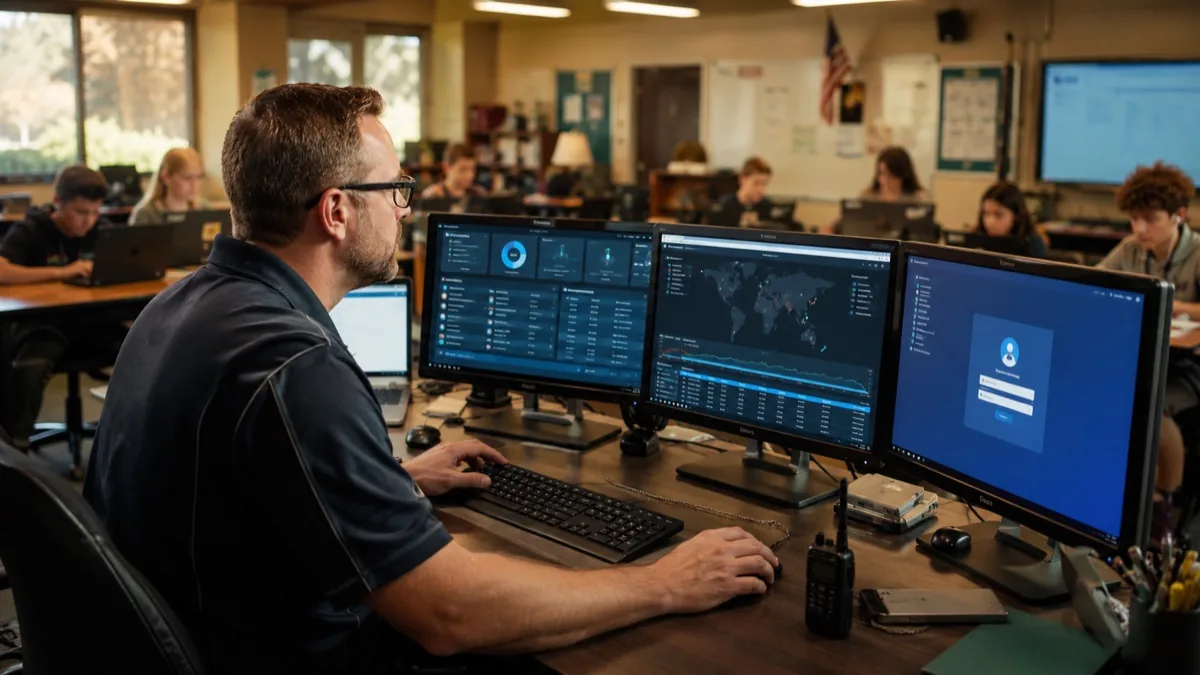
School ransomware attacks tripled between 2022 and 2025 in the U.S., with the average cost of a successful attack on a K-12 district climbing to $1.2 million. The grim statistic that doesn't make most news cycles: most of those attacks could have been prevented for less than $5,000 in defensive measures. The gap between schools' actual cybersecurity posture and what would meaningfully reduce risk is enormous, mostly because schools are buying the wrong things — expensive security theater that vendors love to sell — while leaving the cheap, high-impact basics undone.
This guide is the realistic cybersecurity field report for online education in 2026 — what schools, students, parents, and online-learning platforms should actually be doing, what's worth paying for, and what's marketing-driven security theater that protects no one.
The actual threats schools face in 2026
Three categories of attacks account for over 90% of successful breaches against U.S. schools and online-learning platforms.
Ransomware via phishing. Still the dominant attack vector. A teacher or admin clicks a malicious link in a convincing email, credentials are stolen, attackers move laterally through the network, encrypt critical systems, and demand payment. The 2024 Los Angeles Unified attack, the 2025 Minneapolis Public Schools attack, and dozens of smaller district incidents followed this pattern almost identically.
Student data exposure via misconfigured EdTech vendors. The lower-profile but more frequent breach: a school's EdTech vendor leaves a database publicly accessible, or has an authentication bug, and student records (names, IDs, sometimes addresses, sometimes grades and disciplinary records) become exposed. PowerSchool's 2024 incident exposed millions of student records; smaller vendors have done similar things less publicly.
Account compromise via reused passwords. Students or staff reuse the same password they use elsewhere; that password gets leaked in some other site's breach; attackers try it on the school's systems and walk in. The single most preventable attack pattern, with the simplest fix (mandatory MFA), and the one schools most consistently fail to address.
The cheap fixes that actually work
Five defensive measures account for the majority of risk reduction at minimal cost.
Multi-factor authentication on all staff accounts. The single highest-impact defensive measure available to schools. Cost: zero (Google Workspace, Microsoft 365, and most EdTech platforms support MFA at no additional cost). Risk reduction: huge (estimates from CISA and Verizon DBIR put MFA's impact on credential-based attack success at 99%+ reduction).
Phishing-awareness training that's actually run. Cost: $3-8 per staff member per year via Knowbe4 or Hoxhunt. The high-leverage version is quarterly simulated phishing tests with brief follow-up training for those who click. Schools that do this consistently see real reductions in successful phishing — but the inconsistent ones don't, and almost no school does it consistently.
Endpoint protection on staff and student devices. Cost: $20-40 per device per year via Sophos, CrowdStrike, or comparable. Catches most malware before it spreads. The bare minimum is Windows Defender or macOS XProtect (built-in, free), which is meaningfully better than nothing.
Backups that are actually tested. The often-neglected step. Most schools have backups; few test them by actually restoring critical systems quarterly. The schools that have survived ransomware attacks without paying have typically been the ones with verified backups. Cost: existing backup software plus a few hours of staff time quarterly.
EdTech vendor due diligence. Before signing a contract with any new EdTech vendor, ask three questions: where do they store data, do they have SOC 2 Type II compliance, and do they encrypt at rest and in transit. Most vendors will answer these. The ones who can't or won't are the ones to avoid.
The expensive things that often don't help
Three categories of cybersecurity spending consistently underdeliver value for schools.
"Threat intelligence" platforms. Enterprise security companies sell these heavily to school districts. They typically aggregate threat feeds and dashboard them prettily. For schools without dedicated security analysts to act on the intelligence, the platforms produce dashboards that nobody reads.
Network-based intrusion detection at K-12 scale. Network IDS/IPS systems require trained analysts to manage and tune. Schools without those analysts get a system generating thousands of false positives that nobody investigates. Better to skip the system and spend the money on basics.
Cyber insurance as a substitute for defense. Cyber insurance for schools has gotten 200-400% more expensive in 2023-2026 and increasingly excludes ransomware. Schools that bought insurance instead of investing in defenses are now stuck with both expensive insurance and inadequate protection.
Student data privacy specifically
FERPA compliance and student data privacy is a separate problem from network security, and a different set of practices applies.
Vendor data practices matter more than your network. Most student data breaches in 2024-2026 happened through third-party EdTech vendors, not through the school's own systems. The implication: vetting vendors carefully matters more than locking down your firewall.
Limit data sharing to what's actually needed. Many EdTech vendors collect more student information than they need. Use vendor contracts to limit data to specific fields and specific purposes. The 2023-2025 wave of state-level student data privacy laws gives schools more leverage to negotiate this than they had previously.
Train staff on what they can share and with whom. Most accidental student data exposures happen through staff sharing data they shouldn't — email forwards to wrong addresses, screenshots that include other students' names, attachment errors. Brief, regular reminders work better than long annual training.
For schools whose primary instructional model includes remote-learning components, our guide to the future of remote learning covers the broader infrastructure considerations that interact with these security questions. For practical context on the broader EdTech landscape, see our practical tips for teachers in the digital age.
What students and parents should know
Three things students and parents should understand about online-education cybersecurity:
The school's security is only as good as the weakest vendor it uses. A school can have excellent internal security and still suffer a major data breach because one of its EdTech vendors gets compromised. Parents asking schools "what data are vendors collecting and how is it protected" is a reasonable question that more parents should ask.
Reused passwords are the single biggest personal risk. If your child uses the same password on their school account that they use on a gaming forum that gets hacked, attackers will try that password on the school account. Use a password manager (1Password, Bitwarden, even Google's built-in one) to generate unique passwords. This is free and prevents the most common personal account compromise.
AI-driven phishing is more convincing than older versions. Phishing emails in 2026 are dramatically better-written than they were five years ago thanks to AI-assisted attackers. The "look for typos and weird grammar" advice is outdated. The new advice: when in doubt, contact the supposed sender via a different channel before clicking anything.
For online learning platforms specifically
Platforms hosting student-facing content have specific obligations that go beyond standard SaaS security practices.
Adopt SOC 2 Type II at a minimum. School district procurement increasingly screens for this. The cost of compliance is real but the cost of not having it is worse — you simply can't sell to enterprise school customers without it.
Implement student data minimization. Don't collect what you don't need. The data you don't have can't be exposed.
Provide MFA and SSO from day one. School IT departments expect these. Platforms that don't support them get screened out at procurement.
Have an incident response plan that's been tested. The schools you sell to will ask. The vendors who answer "yes, last tested in March, here's the post-mortem from our drill" win procurement battles against vendors who fumble.
Frequently Asked Questions
What's the realistic cybersecurity budget for a small district?
For a 3,000-5,000 student district: $30,000-60,000 per year covers the basics — endpoint protection, MFA across staff, phishing training, basic monitoring. Anything below that range is rolling the dice; anything above and you're often into security theater unless the district has dedicated security staff to use the tools.
Should schools pay ransomware demands?
The official position from CISA and the FBI is: don't pay. The practical reality is more complicated — some districts have paid because the alternative was unrecoverable system loss. The right answer is to invest in backups and testing so the question doesn't come up. Once you're in a ransomware crisis, the choices are all bad.
How do I evaluate an EdTech vendor's security?
Five questions: do they have SOC 2 Type II, do they encrypt data at rest and in transit, what's their data retention policy, who has access to student data on their team, and have they had a breach in the last three years (and if so, what did they learn). Vendors who can't answer these clearly are vendors to avoid.
What about cyber insurance — worth it or not?
Worth it as a complement to defense, not a substitute. Insurance won't prevent attacks, won't restore data, and increasingly won't cover ransomware. It's worthwhile for the legal and breach-response services bundled with most policies, not for the payout coverage.
Are AI tools making the cybersecurity problem worse for schools?
Modestly worse on the offense side (AI-assisted phishing) and modestly better on the defense side (AI-assisted threat detection). The net effect for schools is roughly neutral; what matters more is whether the school is doing the basics consistently.
The bottom line
Cybersecurity for online education in 2026 isn't a technology problem — it's an execution and prioritization problem. The technologies that meaningfully reduce risk (MFA, endpoint protection, backups, phishing training, vendor due diligence) are well-understood, mostly cheap, and largely undone in U.S. schools. The expensive technologies that schools often buy instead (threat intelligence platforms, network IDS, cyber insurance as primary protection) consistently underdeliver value.
Spend the basics first. Test the backups. Train the staff. Vet the vendors. Most schools that do these consistently get most of the benefit. The fancy stuff can come later, if at all, after the basics are durable. Most ransomware victims would have been protected by the cheap, unsexy basics; they had bought the expensive sexy stuff instead.
For more on the broader EdTech landscape this fits into, see our AI in education pillar. For specifics on platform integration, see the future of remote learning.