
Artificial intelligence has revolutionized the writing process, transforming how we create content, brainstorm ideas, and refine our prose. Whether you're a professional writer, student, marketer, or business owner, AI writing tools can significantly enhance your productivity and creativity. This comprehensive guide will walk you through everything you need to know about writing with AI in 2025, from choosing the right tools to mastering advanced techniques that will elevate your content creation process.
By the end of this guide, you'll understand how to effectively collaborate with AI to produce high-quality content, avoid common pitfalls, and leverage the latest AI writing technologies to achieve your writing goals faster and more efficiently than ever before.
Prerequisites
Before diving into AI-assisted writing, you'll need a few basic requirements:
- Internet connection: Most AI writing tools are cloud-based and require a stable internet connection
- Basic computer literacy: Familiarity with web browsers, text editors, and basic software navigation
- Clear writing objectives: Understanding of what type of content you want to create and your target audience
- Budget consideration: While many AI tools offer free tiers, premium features typically require a subscription
- Basic writing skills: AI enhances writing but doesn't replace fundamental writing knowledge
- Email account: Required for most AI platform registrations
Step 1: Choose the Right AI Writing Tool
The first step in your AI writing journey is selecting the appropriate tool for your needs. Different AI writing platforms excel in various areas, from general content creation to specialized tasks like academic writing or marketing copy.
ChatGPT
Versatile conversational AI for all writing needs
OpenAI's ChatGPT is one of the most popular AI writing assistants, offering excellent conversational abilities and versatility across different writing tasks.
- Natural conversation interface
- Code generation and debugging
- Multiple language support
- Custom instructions and memory
Claude
Advanced AI assistant for complex writing tasks
Anthropic's Claude excels at long-form content, analysis, and maintaining context across extended conversations, making it ideal for research and detailed writing projects.
- Large context window (200K+ tokens)
- Strong analytical capabilities
- Document upload and analysis
- Ethical AI responses
Jasper AI
Marketing-focused AI writing platform
Jasper specializes in marketing copy, offering templates and workflows specifically designed for businesses, agencies, and content marketers.
- 50+ writing templates
- Brand voice training
- SEO optimization tools
- Team collaboration features
Grammarly
AI-powered writing enhancement and editing
While primarily known for grammar checking, Grammarly's AI features now include tone detection, clarity improvements, and writing suggestions.
- Real-time grammar and spell check
- Tone and clarity suggestions
- Plagiarism detection
- Browser extension integration
Step 2: Set Up Your AI Writing Environment
Once you've chosen your AI writing tool, it's time to set up an optimal writing environment that maximizes productivity and maintains organization.
Account Setup and Customization
- Create your account: Sign up for your chosen AI platform using a professional email address
- Configure preferences: Set your default language, writing style, and tone preferences
- Set up integrations: Connect your AI tool with other platforms you use (Google Docs, Notion, etc.)
- Organize your workspace: Create folders or projects to categorize different writing tasks
Essential Browser Setup
For optimal AI writing experience, configure your browser with these essential elements:
- Install browser extensions for your chosen AI tools
- Bookmark frequently used AI platforms
- Set up password managers for secure access
- Configure ad blockers to minimize distractions
- Enable browser sync across devices
Step 3: Master Effective Prompt Engineering
The key to successful AI writing lies in crafting effective prompts. A well-structured prompt can mean the difference between mediocre output and exceptional content that meets your exact needs.
The CLEAR Prompt Framework
Use this framework to structure your AI writing prompts:
| Element | Description | Example |
|---|---|---|
| Context | Provide background information | "I'm writing a blog post for small business owners about social media marketing" |
| Length | Specify desired word count or format | "Write a 1,500-word article with 5 main sections" |
| Expectations | Define tone, style, and quality standards | "Use a friendly, professional tone with actionable advice" |
| Audience | Identify your target readers | "Target audience: entrepreneurs with limited marketing experience" |
| Requirements | Specify any special formatting or constraints | "Include bullet points, subheadings, and a call-to-action" |
Advanced Prompting Techniques
Chain of Thought Prompting: Guide the AI through your thinking process by breaking complex tasks into smaller steps.
Example: "First, outline the main benefits of email marketing. Then, explain each benefit with a real-world example. Finally, provide actionable steps for implementation."
Role-Based Prompting: Ask the AI to assume a specific role or expertise level.
Example: "As a senior marketing strategist with 10 years of experience, write an analysis of current social media trends for B2B companies."
Few-Shot Learning: Provide examples of the desired output format.
Example: "Write product descriptions following this format: [Product Name] - [Key Benefit] - [Technical Specs] - [Price]. Here are two examples: [provide examples]"
Step 4: Plan Your Content Strategy
Before diving into writing, develop a comprehensive content strategy that aligns with your goals and audience needs.
Content Planning Process
- Define your objectives: Clearly articulate what you want to achieve with your content
- Research your audience: Use AI to analyze audience preferences and pain points
- Conduct keyword research: Leverage AI tools to identify relevant keywords and topics
- Create a content calendar: Plan your publishing schedule and content themes
- Develop content pillars: Establish 3-5 main topics that align with your expertise
Using AI for Content Research
AI can significantly accelerate your research process. Here's how to effectively use AI for content research:
- Topic exploration: Ask AI to generate subtopics and angles for your main subject
- Competitor analysis: Use AI to analyze competitor content and identify gaps
- Trend identification: Request current trends and emerging topics in your industry
- Question generation: Have AI create lists of questions your audience might ask
- Source compilation: Ask for relevant statistics, studies, and authoritative sources
Step 5: Create Your First AI-Assisted Content
Now it's time to put theory into practice and create your first piece of AI-assisted content. Follow this systematic approach to ensure success.
The AI Writing Workflow
- Start with an outline: Use AI to generate a comprehensive outline based on your topic and objectives
- Write section by section: Focus on one section at a time rather than trying to write everything at once
- Iterate and refine: Use follow-up prompts to improve and expand on initial outputs
- Fact-check and verify: Always verify AI-generated facts and statistics
- Add your personal voice: Inject your unique perspective and experiences
- Edit and polish: Use AI editing tools to refine grammar, style, and clarity
Sample Workflow: Blog Post Creation
Step 1 - Outline Generation:
Prompt: "Create a detailed outline for a 2,000-word blog post about 'Remote Work Productivity Tips for Software Developers.' Include an introduction, 6 main sections with subsections, and a conclusion. Target audience: junior to mid-level developers working from home."
Step 2 - Introduction Writing:
Prompt: "Write an engaging 200-word introduction for the blog post using the outline you created. Start with a relatable scenario about remote work challenges, include a compelling statistic, and clearly state what readers will learn."
Step 3 - Section Development:
Prompt: "Expand on section 2 of the outline: 'Creating an Optimal Home Office Environment.' Write 300-400 words with practical tips, include specific product recommendations, and add a personal anecdote about workspace setup challenges."
Step 6: Optimize and Edit AI-Generated Content
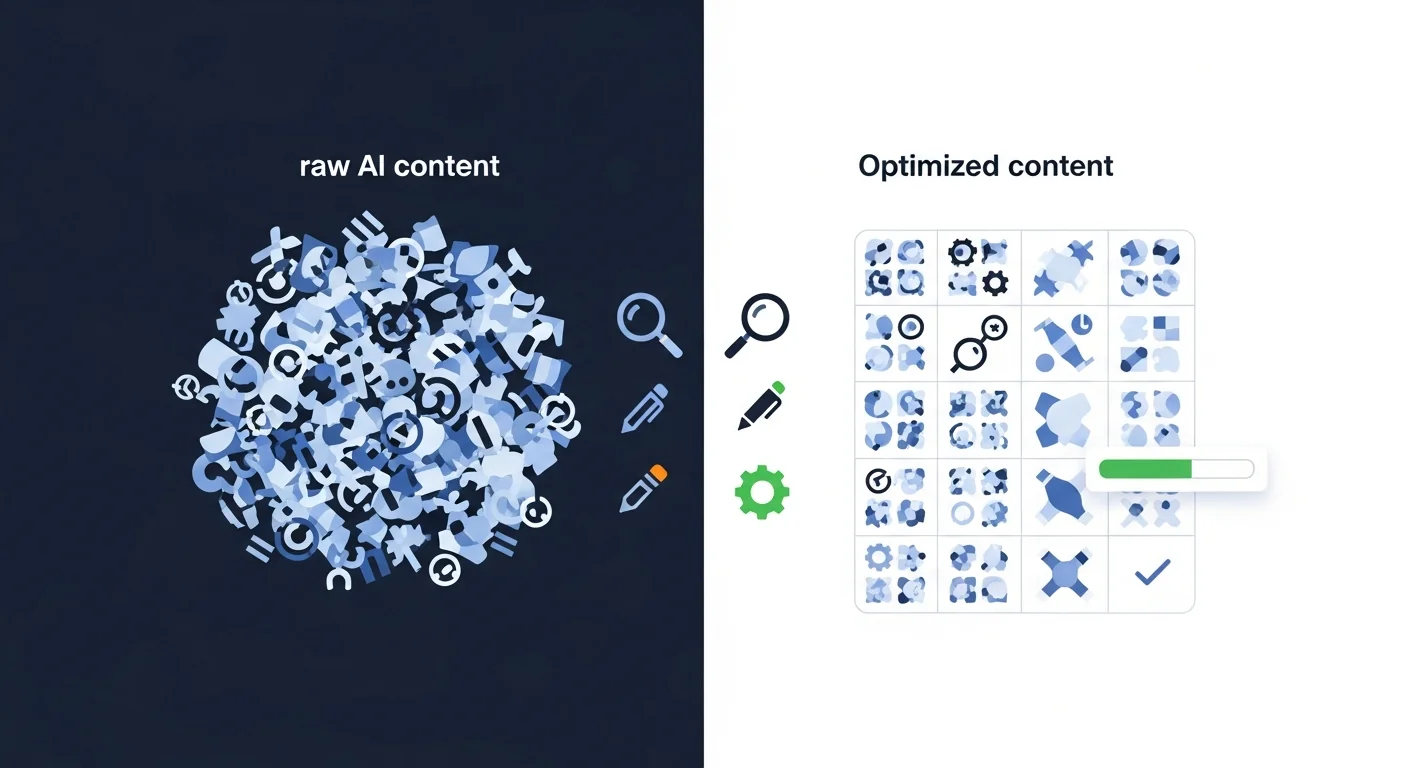
Raw AI output rarely represents the final product. Effective editing and optimization are crucial for creating professional, engaging content that resonates with your audience.
The Three-Pass Editing Method
Pass 1 - Content and Structure:
- Verify factual accuracy and update outdated information
- Ensure logical flow and coherent structure
- Check that all key points are adequately covered
- Identify gaps in reasoning or missing information
- Confirm alignment with your content objectives
Pass 2 - Voice and Style:
- Adjust tone to match your brand voice
- Remove AI-generated phrases that sound generic
- Add personal anecdotes and unique perspectives
- Ensure consistency in terminology and style
- Enhance readability with varied sentence structures
Pass 3 - Technical Polish:
- Correct grammar, spelling, and punctuation errors
- Optimize for SEO with natural keyword integration
- Format for readability with headers, bullets, and white space
- Add relevant links and citations
- Create compelling meta descriptions and titles
AI-Powered Editing Techniques
Leverage AI to enhance your editing process:
Style Improvement: "Rewrite this paragraph to be more conversational and engaging while maintaining the key information."
Clarity Enhancement: "Simplify this technical explanation for readers who are new to the topic."
Tone Adjustment: "Adjust the tone of this section to be more professional and authoritative."
Step 7: Implement Advanced AI Writing Techniques
Once you've mastered the basics, explore advanced techniques that can significantly enhance your AI writing capabilities.
Multi-Model Collaboration
Use different AI models for their specific strengths:
- ChatGPT: Conversational content and brainstorming
- Claude: Long-form analysis and research synthesis
- Specialized tools: Industry-specific content and technical writing
- Image AI: Visual content creation and infographics
Iterative Refinement Process
Develop content through multiple AI interactions:
- Initial draft: Generate the first version with a comprehensive prompt
- Targeted improvements: Focus on specific sections that need enhancement
- Alternative approaches: Request different angles or perspectives on the same topic
- Synthesis: Combine the best elements from multiple versions
- Final polish: Use AI for final editing and optimization
Custom AI Instructions and Memory
Many AI platforms now support custom instructions that remember your preferences:
- Set default writing style and tone preferences
- Specify your target audience characteristics
- Define your brand voice and messaging guidelines
- Establish formatting and structure preferences
- Create templates for recurring content types
Tips and Best Practices
Maximizing AI Writing Efficiency
Be Specific and Detailed: The more specific your prompts, the better the AI output. Instead of "write about marketing," try "write a 1,000-word guide about email marketing automation for e-commerce businesses, focusing on welcome sequences and abandoned cart recovery."
Use Iterative Prompting: Don't expect perfection on the first try. Build upon AI responses with follow-up prompts like "expand on point 3," "make this more actionable," or "add specific examples."
Maintain Human Oversight: Always review and fact-check AI-generated content. AI can make mistakes, hallucinate information, or miss nuanced details that human expertise catches.
Develop Prompt Libraries: Save effective prompts for future use. Create templates for different content types like blog posts, social media content, email newsletters, and product descriptions.
Quality Control Strategies
Cross-Reference Information: Verify statistics, quotes, and factual claims through reliable sources. AI may generate plausible-sounding but incorrect information.
Test Different Approaches: Generate multiple versions of the same content and combine the best elements. This helps overcome AI limitations and creates more robust content.
Use AI for Different Stages: Employ AI throughout the writing process - for brainstorming, outlining, drafting, editing, and optimizing - rather than just content generation.
Maintain Your Voice: Regularly inject your personal experiences, opinions, and unique insights to prevent content from sounding generic or robotic.
Productivity Enhancement Tips
Batch Similar Tasks: Group similar writing tasks together to maintain momentum and consistency. For example, write all your social media posts for the week in one session.
Create Content Series: Use AI to develop multi-part content series that can be repurposed across different platforms and formats.
Automate Routine Tasks: Use AI for repetitive writing tasks like meta descriptions, social media captions, or email subject line variations.
Build Content Libraries: Create repositories of AI-generated content ideas, outlines, and templates that you can reference and adapt for future projects.
Common Mistakes to Avoid
Over-Reliance on AI
One of the biggest mistakes writers make is becoming too dependent on AI without developing their own skills. Remember that AI is a tool to enhance your writing, not replace your creativity and expertise. Always add your unique perspective, verify information, and maintain editorial control over the final product.
Generic Prompting
Vague or generic prompts lead to bland, generic content. Avoid prompts like "write about social media" or "create a blog post about fitness." Instead, be specific about your audience, objectives, tone, and desired outcomes.
Ignoring Fact-Checking
AI can generate convincing but inaccurate information. Always verify facts, statistics, quotes, and claims through authoritative sources. This is especially critical for technical, medical, legal, or financial content.
Publishing Without Editing
Raw AI output should never be published without human review and editing. AI-generated content often lacks the nuance, personality, and accuracy that human oversight provides.
Neglecting SEO and Formatting
While AI can help with content creation, it may not optimize for search engines or format content for optimal readability. Always review and enhance the technical aspects of your content.
Inconsistent Brand Voice
AI may not consistently maintain your brand voice across different pieces of content. Develop clear brand guidelines and regularly review AI output to ensure consistency.
Plagiarism and Copyright Issues
While AI generates original text, it's trained on existing content. Always check for potential plagiarism and ensure your content is truly original and doesn't infringe on copyrights.
Advanced Strategies for Different Content Types
Blog Posts and Articles
For long-form content, use AI to:
- Generate comprehensive outlines with multiple heading levels
- Research and compile relevant statistics and data points
- Create engaging introductions and conclusions
- Develop supporting examples and case studies
- Optimize for featured snippets and SEO
Marketing Copy
AI excels at creating marketing content when properly guided:
- A/B test multiple headline variations
- Generate compelling product descriptions
- Create email sequences for different customer segments
- Develop social media content calendars
- Write persuasive sales pages and landing pages
Technical Documentation
For technical writing, AI can help:
- Simplify complex concepts for different audiences
- Create step-by-step tutorials and guides
- Generate FAQ sections based on common user questions
- Develop troubleshooting guides and documentation
- Translate technical jargon into plain language
Creative Writing
Even creative projects benefit from AI assistance:
- Brainstorm plot ideas and character development
- Generate dialogue and scene descriptions
- Overcome writer's block with creative prompts
- Develop alternative storylines and endings
- Create detailed world-building elements
Frequently Asked Questions
Is AI-generated content considered plagiarism?
AI-generated content is generally not considered plagiarism since it creates original text rather than copying existing content. However, you should always disclose AI assistance when required by your institution or publisher, and ensure the content doesn't inadvertently replicate existing work. Always fact-check and add your own insights to create truly original content.
How can I make AI-generated content sound more human and less robotic?
To humanize AI content, add personal anecdotes and experiences, use conversational language, vary sentence structure and length, include specific examples and details, inject humor or personality where appropriate, and always edit to match your natural writing style. The key is to use AI as a starting point and then infuse it with your unique voice and perspective.
Can AI replace human writers entirely?
While AI is a powerful tool that can significantly enhance writing productivity, it cannot fully replace human writers. AI lacks true creativity, emotional intelligence, personal experience, and the ability to understand complex human nuances. The most effective approach is human-AI collaboration, where AI handles routine tasks and provides assistance while humans provide creativity, strategy, and quality control.
What's the best way to fact-check AI-generated content?
Always verify AI-generated facts through authoritative sources like academic journals, government websites, established news organizations, and industry reports. Cross-reference statistics and claims with multiple sources, check for recent updates to ensure information is current, and be especially cautious with technical, medical, or legal information. When in doubt, consult subject matter experts or primary sources.
How do I choose between different AI writing tools?
Consider your specific needs, budget, and use cases. ChatGPT and Claude are excellent for general writing and conversation, while tools like Jasper focus on marketing copy. Evaluate factors like output quality, ease of use, integration capabilities, pricing, and specific features for your content type. Many platforms offer free trials, so test several options before committing to a subscription.
Is it ethical to use AI for writing without disclosure?
Ethical guidelines around AI disclosure are still evolving and vary by context. Many academic institutions, publishers, and organizations now require disclosure of AI assistance. Even when not required, transparency builds trust with your audience. Consider your industry standards, audience expectations, and personal ethics when deciding whether to disclose AI usage.
How can I improve my prompting skills?
Practice regularly with different types of prompts, study examples of effective prompts online, experiment with various prompting techniques like chain-of-thought and role-based prompting, analyze what works and what doesn't in your results, join AI writing communities to learn from others, and keep a library of your most successful prompts for future reference.
What should I do if AI generates inappropriate or biased content?
If AI generates inappropriate content, don't use it and report it to the platform if necessary. To minimize bias, use diverse and inclusive prompts, review content carefully for potential bias, seek feedback from diverse perspectives, and stay informed about AI limitations and biases. Remember that AI systems reflect their training data, which may contain historical biases.
Conclusion and Next Steps
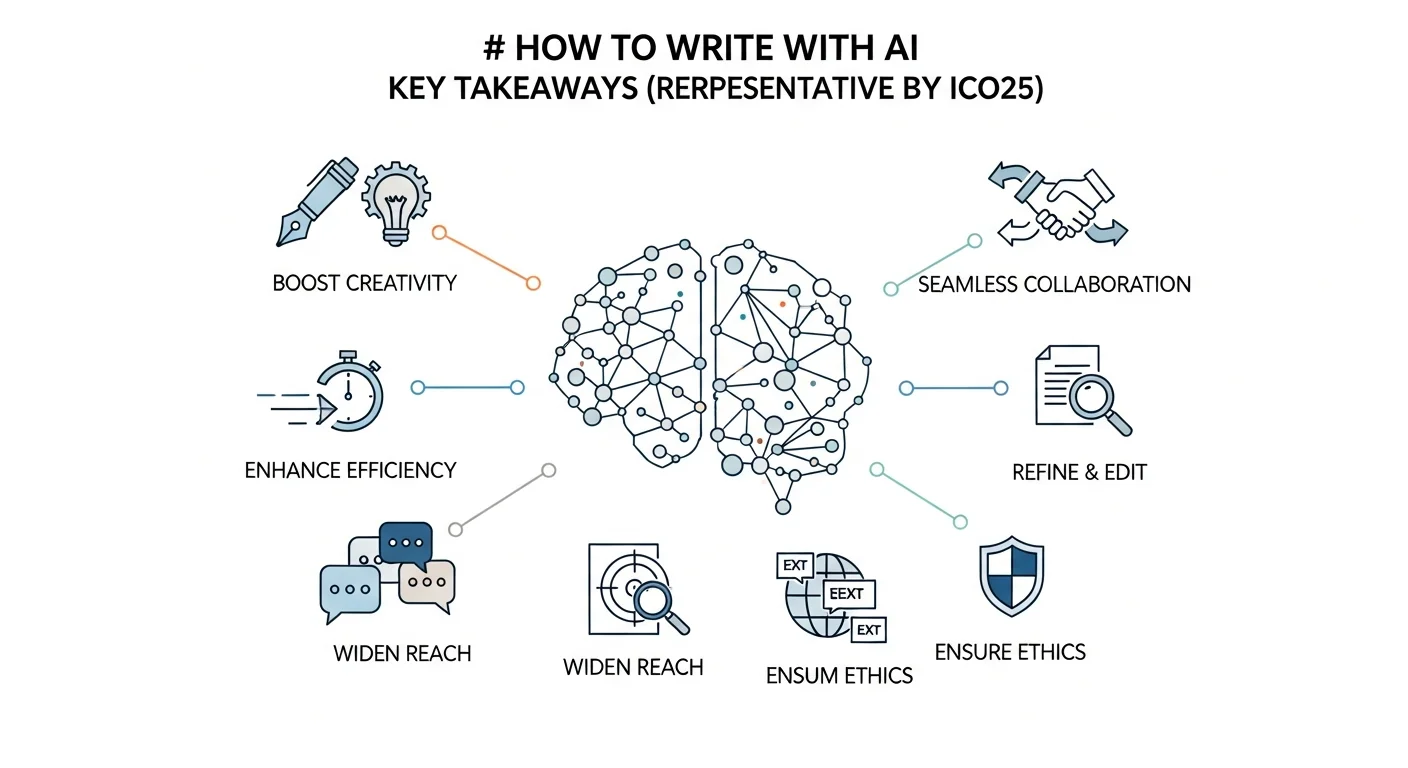
Mastering AI-assisted writing is a journey that combines technological proficiency with traditional writing skills. By following the steps outlined in this guide, you'll be well-equipped to leverage AI tools effectively while maintaining the human creativity and insight that makes content truly valuable.
Remember that AI is most powerful when used as a collaborative partner rather than a replacement for human creativity. The most successful AI-assisted writers are those who understand both the capabilities and limitations of these tools, using them to enhance their natural abilities rather than replace them.
Your Next Steps
- Start small: Choose one AI writing tool and begin with simple projects to build your confidence and skills
- Practice regularly: Set aside time each week to experiment with different AI writing techniques and prompts
- Build your prompt library: Save effective prompts and templates that you can reuse and adapt for future projects
- Join communities: Connect with other AI writers to share tips, techniques, and best practices
- Stay updated: AI writing tools evolve rapidly, so follow industry news and updates to leverage new features
- Measure results: Track your productivity improvements and content quality to refine your AI writing approach
- Develop your unique style: Use AI as a foundation while building your distinctive voice and expertise
The future of writing is collaborative, combining human creativity with AI efficiency. By mastering these skills now, you'll be positioned to take advantage of emerging AI technologies while maintaining the authenticity and quality that audiences value. Start your AI writing journey today, and discover how these powerful tools can transform your content creation process.