TSMC's Chip Roadmap Through 2029 Is a Blueprint for Who Wins the AI Race
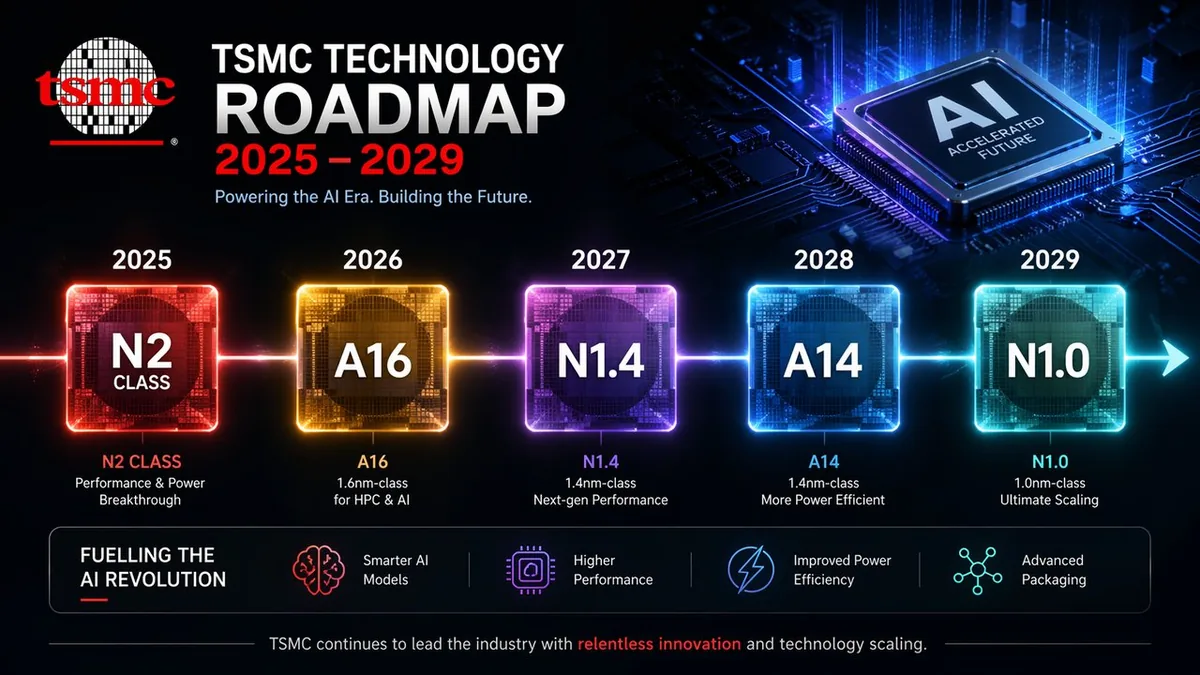
TSMC just published its process technology roadmap through 2029, and the structure of it tells you exactly how the company sees the AI hardware market splitting into two distinct tracks. One for consumer devices. One for AI infrastructure. They are on different timelines for a reason.
What's Actually Happening
TSMC's roadmap features annual new process node releases targeting client applications — smartphones, laptops, consumer electronics. These follow a predictable cadence because the consumer market demands regular product cycles. The AI and high-performance computing track, however, runs on a biennial release schedule — new nodes every two years rather than every year.
This is not because AI nodes are less important. It is because the customers — hyperscalers like Google, Microsoft, Amazon, and chip designers like Nvidia and AMD — need longer lead times to redesign chips, validate performance, and commit to multi-billion dollar production orders. The biennial cadence is designed around their reality, not Moore's Law for its own sake.
Why It Matters
The bifurcated roadmap is TSMC acknowledging that AI and consumer silicon are now fundamentally different businesses with different rhythms. Designing AI training chips takes years. Hyperscalers cannot retool their data centers annually. So TSMC is giving them stability.
What the roadmap also signals: TSMC is planning for sustained AI infrastructure demand through at least 2029. This is not a hedge — it is a commitment. Every new AI node on that roadmap represents billions in R&D and customer commitments already in place. The AI infrastructure build-out is not slowing down. Related: TSMC's Arizona packaging plant supports the same multi-year expansion.
My Take
The biennial AI node cadence is underappreciated. It means Nvidia, Google, and others can plan chip generations with stability that the consumer side of the industry does not have. That predictability is worth more than raw node speed — it lets hyperscalers make long-term data center commitments without worrying that their hardware will be leapfrogged mid-build.
For anyone watching the AI infrastructure race: TSMC's roadmap is the clearest signal that the serious players are planning in five-year increments, not quarter-to-quarter.
Frequently Asked Questions
What is a process node? A measure of transistor density and manufacturing generation — smaller nodes (like 3nm, 2nm) generally mean faster, more efficient chips.
Why annual nodes for consumer but biennial for AI? Consumer devices need annual upgrades to drive sales cycles. AI chips are integrated into multi-billion dollar data centers that cannot be replaced annually.
Which companies benefit most from this roadmap? Nvidia, AMD, Google (TPUs), Microsoft (custom AI chips), and Amazon (Trainium/Inferentia) are the primary beneficiaries.
Related Articles
- TSMC Is Building an Advanced Chip Packaging Plant in Arizona
- Google's 8th-Gen TPU Chips Challenge Nvidia