Google's 8th-Gen TPU Chips Are a Direct Challenge to Nvidia's AI Dominance
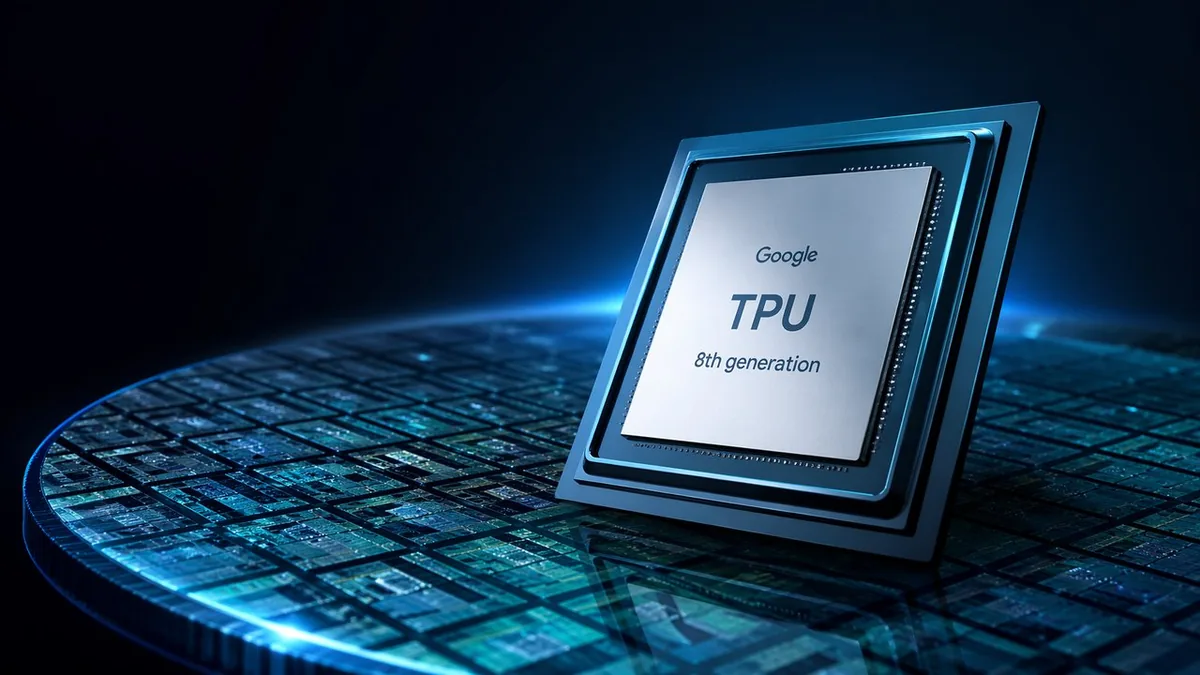
Google just unveiled its eighth-generation TPU chips — and the timing couldn't be more pointed. With TPU 8t built for training and TPU 8i optimized for inference, Google is making its most aggressive push yet to loosen Nvidia's grip on AI infrastructure.
What's Actually Happening
Google's TPU 8 lineup is a two-pronged attack on the AI hardware market. The TPU 8t handles the heavy lifting of model training — the computationally intense process of building AI systems from scratch. The TPU 8i focuses on inference, which is what actually runs when you chat with an AI or request a prediction. By splitting the workload across specialized chips, Google claims significant performance improvements over both its previous generation and — implicitly — Nvidia's offerings.
These chips power Google's own AI infrastructure, including Gemini model training and Google Cloud's enterprise AI services. That means every Google product you use is already running on this hardware. Now Google wants to sell that advantage to competitors.
Why It Matters
Nvidia has held a near-monopoly on AI chip demand since the deep learning boom began. Its H100 and H200 GPUs became so scarce that companies were putting them on waitlists for months. Google's TPUs have always been the main credible alternative — but they were largely unavailable to outside customers until Google Cloud opened up access.
With TPU 8, Google is directly competing with Nvidia at the hardware level while also being a major Nvidia customer itself. It's a hedge — if the chips take off on Google Cloud, Google reduces its dependence on Nvidia while monetizing its hardware R&D investment. Related: Google's AI expansion into Chrome shows how deeply AI infrastructure is driving its product roadmap.
My Take
Google's TPU program has always been underappreciated because the chips aren't openly sold — you rent them through Google Cloud. That limits Nvidia's actual risk here. What Google is really building is a moat: keep your best AI workloads on Google's own silicon, give enterprises a cheaper alternative, and slowly chip away at Nvidia's dominance from within the cloud.
The real test is whether Google Cloud can convince enterprises to standardize on TPUs the way AWS convinced them to standardize on x86. That's a decade-long process — but Google is clearly playing the long game.
Frequently Asked Questions
What does TPU stand for? Tensor Processing Unit — custom chips designed by Google specifically for AI and machine learning workloads.
Can I buy TPU 8 chips directly? No — they're available through Google Cloud, not as standalone hardware purchases.
Is this better than Nvidia H100? Google claims significant performance gains, but independent benchmarks are needed. The real advantage is cost and availability on Google Cloud.