TSMC Is Delaying Its Most Expensive Chip Machines — and That Is Actually Smart
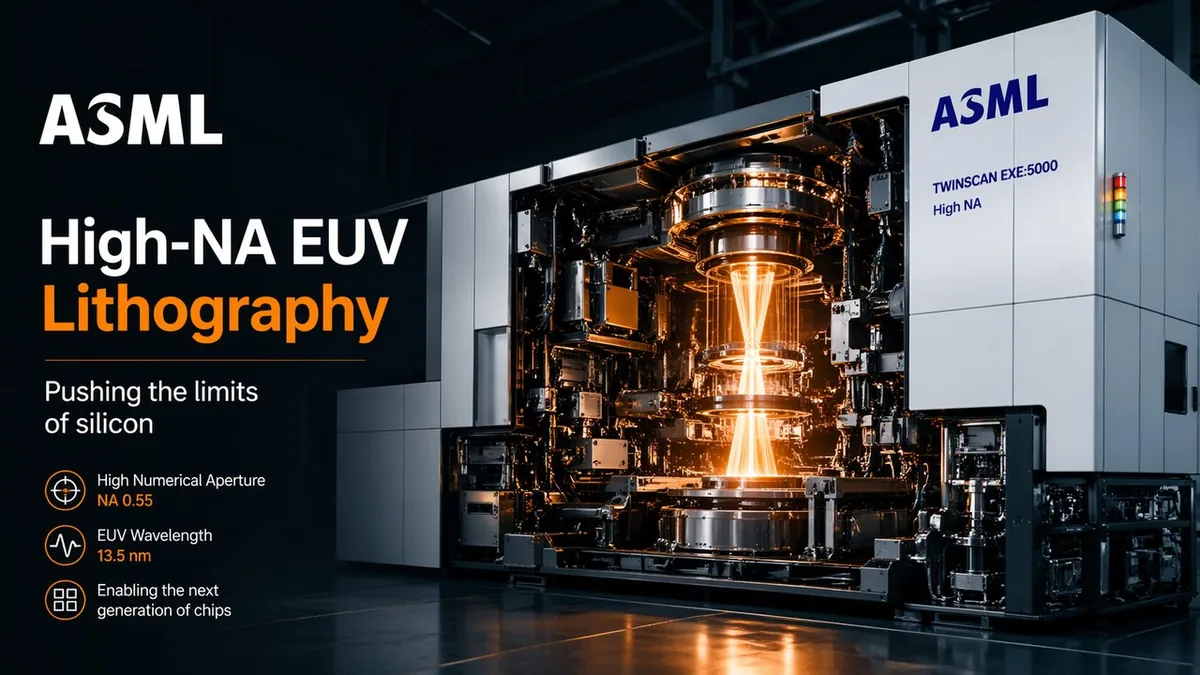
TSMC announced it will delay deploying ASML's high-NA EUV lithography machines — the most expensive semiconductor manufacturing equipment ever built, at over 350 million euros each — until 2029. This is not a setback. It is a calculated financial decision that reveals how TSMC thinks about capital allocation at the frontier of chip manufacturing.
What's Actually Happening
High-NA EUV (High Numerical Aperture Extreme Ultraviolet) is the next generation of lithography technology from ASML, designed to print even smaller transistor features than current EUV machines. Intel has been an early adopter. TSMC is taking a more deliberate approach — waiting until the technology and its economics mature before committing to full deployment.
At over 350 million euros per machine, high-NA EUV is not a purchase decision any company makes casually. TSMC's delay signals that the performance improvements do not yet justify the cost premium over current EUV equipment, at least for TSMC's production volumes and customer requirements through 2028.
Why It Matters
TSMC's decisions on manufacturing equipment set the pace for the entire semiconductor industry. When TSMC moves to a new technology, foundry customers redesign chips to take advantage of it. When TSMC waits, the whole ecosystem waits with it.
The delay also says something about TSMC's confidence in its current EUV roadmap. If high-NA EUV were urgently necessary to stay competitive, TSMC could not afford to wait. The fact that they can push it to 2029 means current technology is sufficient to maintain their process leadership through the near term. Related: TSMC's broader roadmap shows where the priorities actually lie.
My Take
TSMC has a long history of being the last major customer to commit to new manufacturing technology, then deploying it at scale faster than anyone else. They let Intel and Samsung work out the early bugs. This high-NA EUV delay fits that exact pattern.
Intel made high-NA EUV a centerpiece of its comeback story. TSMC is essentially saying: we can hit our 2nm and beyond targets without it, on schedule, for less capital. If TSMC is right, Intel's high-NA bet looks expensive. If TSMC is wrong, they have a gap to close starting in 2029.
Frequently Asked Questions
What is high-NA EUV? The next generation of ASML's extreme ultraviolet lithography machines, offering higher resolution for printing smaller chip features.
How does this compare to Intel's approach? Intel is an early high-NA EUV adopter, using it for its Intel 18A process. TSMC is waiting until at least 2029.
Does this affect chip availability? Not in the near term — TSMC's current EUV roadmap is sufficient through 2028 per their own planning.