Tesla Q1 2026 Results: Revenue Up, Driven by EV Sales and FSD Subscriptions
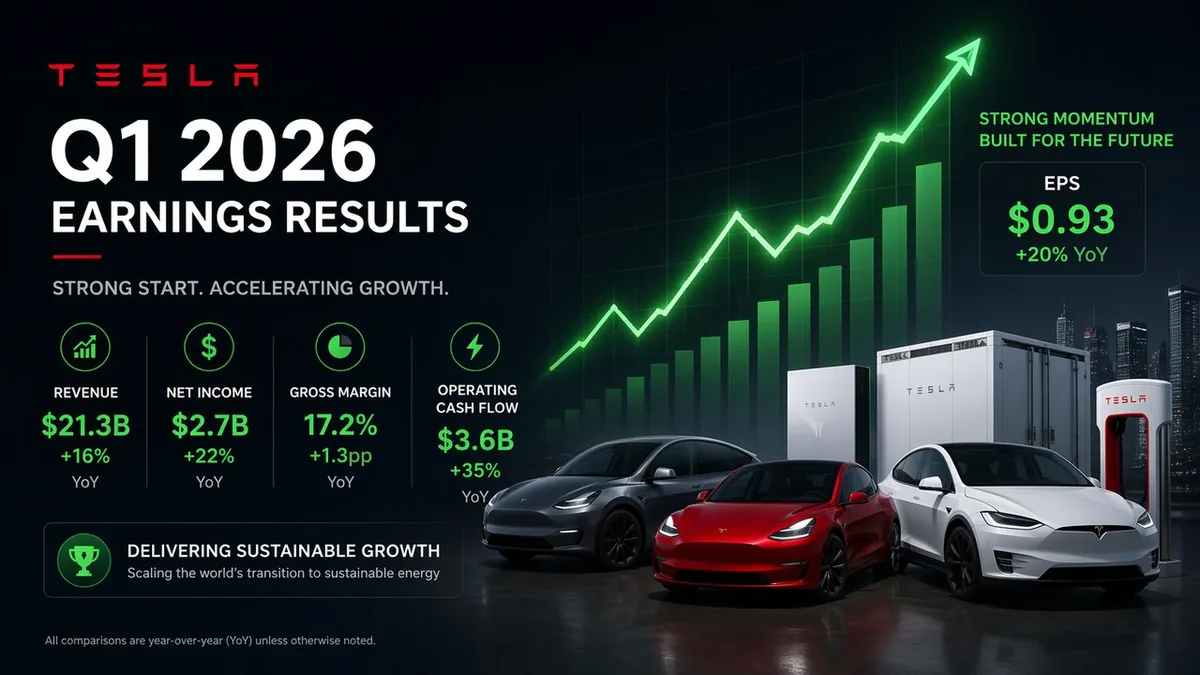
Tesla posted stronger Q1 2026 results than many analysts expected. Revenue growth was driven by electric vehicle sales and — increasingly — Full Self-Driving subscription revenue. It is a cleaner earnings story than the company had been delivering, and it comes at an important moment for investor confidence.
What's Actually Happening
Tesla's Q1 revenue growth was led by two segments. Vehicle sales remained the primary revenue driver, with delivery volume recovering from the prior quarter. FSD subscriptions are now a meaningful and recurring revenue line — customers paying monthly or annually for access to Tesla's autonomous driving software represent a fundamentally different business model than one-time hardware sales.
Energy generation and storage (Megapack, Powerwall) continued strong performance, often growing faster quarter-over-quarter than the vehicle segment. This is increasingly where Tesla's margin story lives.
Why It Matters
The FSD subscription revenue line is the one to watch long-term. Unlike a car sale, it recurs every month indefinitely. As Tesla's installed base grows and FSD capability improves, this revenue stream could become larger than vehicle revenue over time — much like how Apple's services revenue now rivals iPhone sales.
The Q1 results come alongside Tesla's announcement of a $25 billion capex plan for the year. Strong revenue provides the cash flow to support that investment without completely destroying free cash flow. Related: Tesla's $25 billion capex commitment requires revenue support to be sustainable.
My Take
The real Tesla story in 2026 is not the car numbers — it is whether FSD and Optimus can transform the company's valuation basis. Q1 earnings suggest the transition is underway: FSD subscriptions are growing, energy is growing, and vehicles are stabilizing. That is the mix Tesla needs to sustain investor confidence while spending $25 billion on future bets.
The risk is macro: if consumer spending slows and EV demand softens, the FSD and energy growth may not be enough to offset vehicle revenue pressure. Watch Q2 delivery numbers carefully.
Frequently Asked Questions
What is Full Self-Driving? Tesla's advanced driver assistance system, available as a monthly or annual subscription on top of vehicle purchase price.
How does FSD subscription revenue work? Customers pay a recurring fee for access to FSD software updates and capabilities — revenue that recurs as long as the subscription is active.
What drove vehicle sales growth? Model 3/Y deliveries recovered from prior quarter, with Cybertruck contributing incrementally to revenue mix.