Rivian R2 Production Has Started — Despite the Tornado. Here's What That Means for the Company.
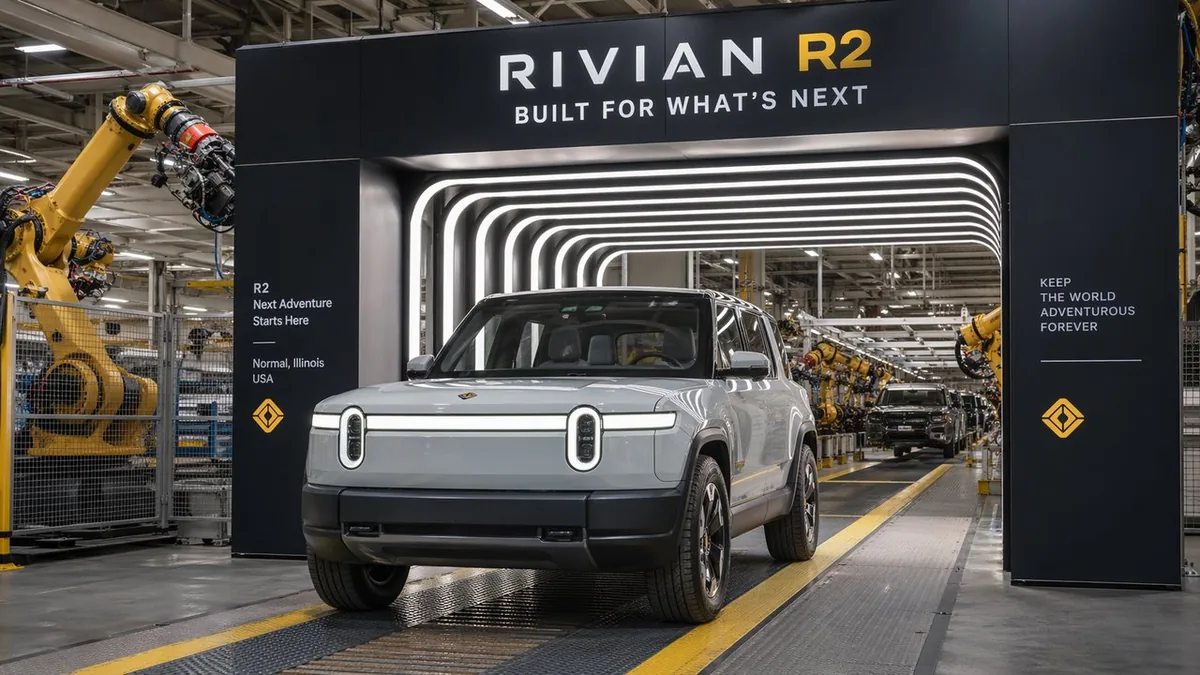
Rivian needed a win. After years of production ramp challenges, cash burn scrutiny, and investor skepticism about whether it could actually deliver on its R2 promise, the company just confirmed: R2 production has started at the Normal, Illinois factory — and it started despite the facility suffering tornado damage recently. The resilience of that startup moment matters as much as the milestone itself.
What's Actually Happening
Rivian confirmed to TechCrunch that R2 manufacturing has begun at its existing Normal factory, where it also produces the R1T and R1S. This is meaningful because the company previously announced plans to build a new Georgia facility for R2 production, but pivoted to launch R2 at Normal first to conserve capital and accelerate the timeline.
The tornado that hit the Normal facility caused damage but didn't halt production launch. Rivian's ability to begin R2 manufacturing through that disruption demonstrates operational resilience that investors and customers have been watching for.
Why It Matters
The R2 is Rivian's mass-market play. Where the R1T and R1S are premium vehicles in the $70K+ range, the R2 is designed to compete at around $45,000 — the segment where most EV buyers actually live. Getting R2 to market at volume determines whether Rivian is a niche premium brand or a genuine mainstream EV player.
Production start is the beginning, not the end, of this challenge. Ramping production to profitable volumes is where EV startups historically struggle. Tesla's "production hell" is the famous example, but Rivian itself experienced severe production bottlenecks in its R1 launch. The question isn't whether R2 started — it's how quickly they can scale to the volumes needed to turn a profit on a $45K vehicle with high material costs. For context on the EV and transportation tech space, see our piece on how SpaceX is pivoting its business focus.
My Take
This is genuinely good news for Rivian, and I mean that without the usual hedging. The company has been in an existential position — burning cash faster than it could ramp production, relying on Volkswagen investment to stay solvent, and watching its stock price reflect deep skepticism. R2 production start doesn't solve the cash problem, but it changes the narrative from "can they build it" to "can they scale it." That's a more tractable question.
The tornado detail is actually important. Companies that execute under adversity — that don't use disruptions as excuses — build the operational culture needed for a successful ramp. Rivian starting R2 production through facility damage suggests the kind of determination that production scaling requires. I'm cautiously optimistic, which is more than I could say a year ago.
FAQ
What is the Rivian R2? Rivian's upcoming mass-market electric SUV, targeting a starting price around $45,000 — significantly more affordable than the R1T and R1S flagship models.
When will R2 deliveries begin? Production has started, but Rivian hasn't announced a specific customer delivery date. Deliveries are expected to begin later in 2026 for reservation holders.
Was the factory seriously damaged by the tornado? Rivian reported damage but confirmed it didn't halt operations. The extent of repairs needed hasn't been fully disclosed.
How does this affect Rivian's cash position? R2 production at the existing Normal facility is less capital-intensive than the planned Georgia build. That cash conservation is part of why Rivian pivoted to this approach.
Related Articles
- SpaceX Is De-Emphasizing Mars
- Sony's AI Ping Pong Robot Just Beat Elite Human Players