Tesla Is Spending $25 Billion This Year — and That's Not a Typo
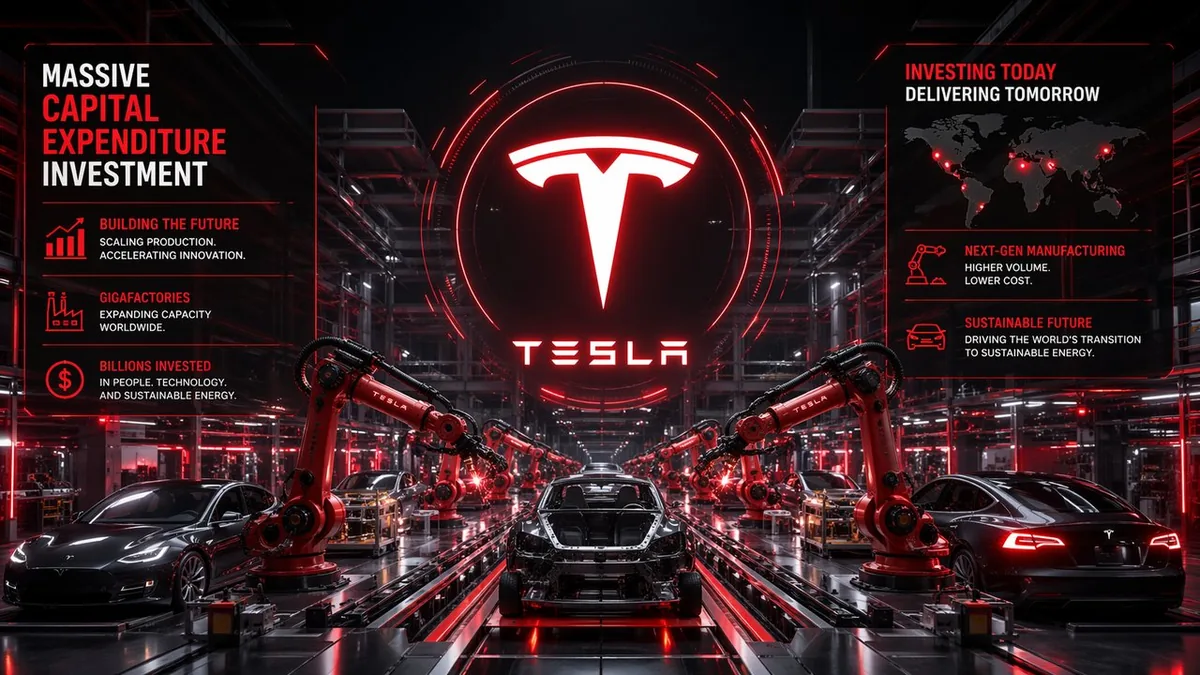
Tesla just increased its capital expenditure plan to $25 billion for the year. For context, that's more than double what most analysts expected and represents one of the largest single-year capex commitments in the company's history. Elon Musk is betting enormously on physical infrastructure at the exact moment AI seems to be the only thing investors care about.
What's Actually Happening
Tesla's $25 billion capex covers manufacturing expansion, robotics development, and energy infrastructure. The Gigafactory buildout continues — Tesla needs more production capacity to hit its volume targets as the R2 and Cybertruck ramp up. The robotics line item covers Optimus, Tesla's humanoid robot program, which Musk has repeatedly called the company's most important long-term project.
Energy storage is the third major bucket. Tesla's Megapack and Powerwall businesses have been growing faster than the vehicle business for several quarters, and the infrastructure to support that growth requires serious capital.
Why It Matters
$25 billion in capex creates cash flow pressure. Tesla generates strong revenue, but this level of spending means free cash flow stays constrained while the investments mature. Investors who want near-term profitability will be frustrated. Investors who believe in the long-term roadmap will see this as necessary.
The more interesting angle is what it signals about Musk's priorities. He's not pulling capital out of Tesla to fund his AI empire — he's doubling down on the physical world at a time when everyone else is going digital. Related: Rivian's more modest production ramp shows how rare this level of commitment is in the EV space.
My Take
Tesla's capex bet makes sense if you believe the Optimus robot becomes a mass-market product by 2027-2028. If that happens, $25 billion in manufacturing infrastructure looks like brilliant positioning. If Optimus stays a prototype, Tesla will have spent billions on factories that underperform.
The energy business is the safer bet here — Megapack demand is genuinely unconstrained right now, and building storage capacity is straightforward capital deployment. The robotics gamble is where the real risk and upside live.
Frequently Asked Questions
How does $25B compare to previous years? Tesla spent approximately $8-9 billion in capex in prior years. This is a major step-up in spending intensity.
What is Optimus? Tesla's humanoid robot program — Musk has described it as potentially Tesla's most valuable product long-term, with applications in Tesla factories and eventually broader markets.
Will this affect Tesla's stock? Heavy capex typically pressures near-term free cash flow, which can weigh on stock performance for investors focused on current earnings.